5 Best areas to Stay in Malaga 2026
This post contains affiliate links. If you book through them, I may earn a small commission at no extra cost to you.
Best Areas at a Glance
| Area | Vibe | Price Level | Best For |
|---|---|---|---|
| Centro Histórico | Cobblestone streets, museums, tapas terraces | Mid-range to Luxury | First-time visitors, culture, short stays |
| Soho / Arts District | Street art, modern food scene, creative | Mid-range | Foodies, art lovers, younger travelers |
| La Malagueta | Beachfront, residential, upscale | Mid-range to Luxury | Beach + city combo, couples, families |
| El Palo / Pedregalejo | Fishing village, espetos on the beach | Budget to Mid-range | Longer stays, seafood lovers, families |
| La Merced | Local bars, Picasso’s birthplace | Mid-range | Nightlife, independent travelers |
Centro Histórico
You can cross the entire old town in 15 minutes on foot. That’s the first thing to understand about Malaga’s center: it’s compact in a way that makes it almost impossible to waste time getting around. The Alcazaba, the Cathedral, the Picasso Museum, the Roman Theatre, Atarazanas Market, and Plaza de la Constitución are all within a few blocks of each other.
Calle Marqués de Larios is the main artery, a wide pedestrianized shopping street that cuts straight through. It’s also where the tourist markup is highest. For better tapas at fairer prices, turn off Larios onto any side street. Calle Granada and Calle Carretería both have local-favorite spots where a tapa still comes free with your drink.
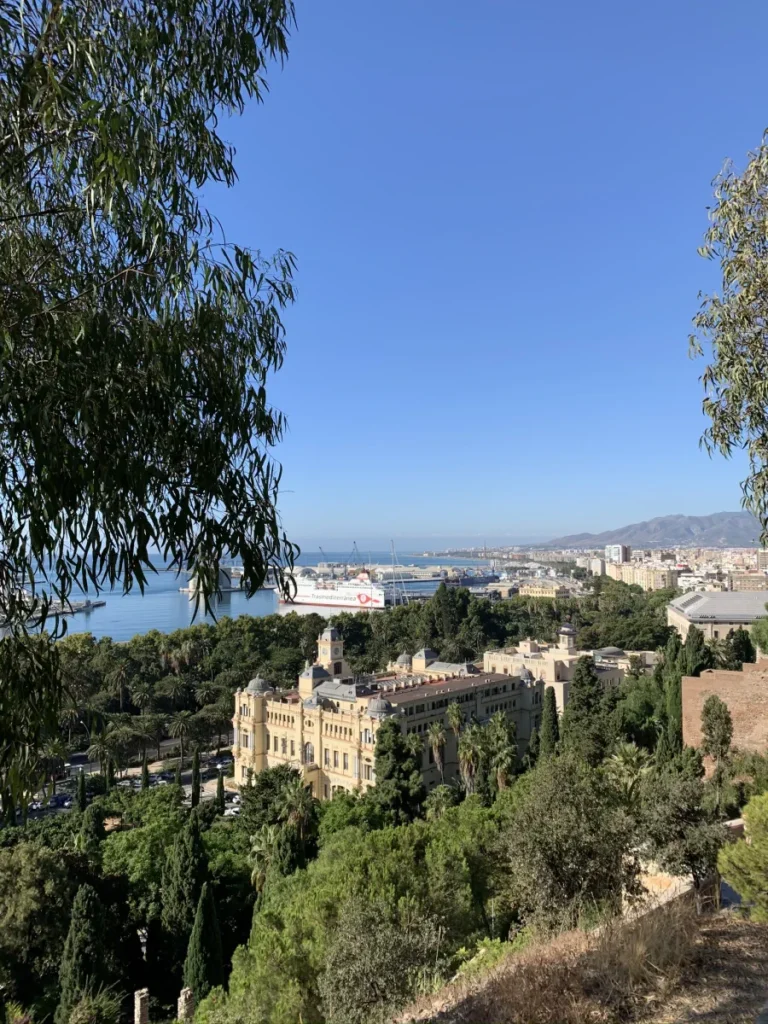
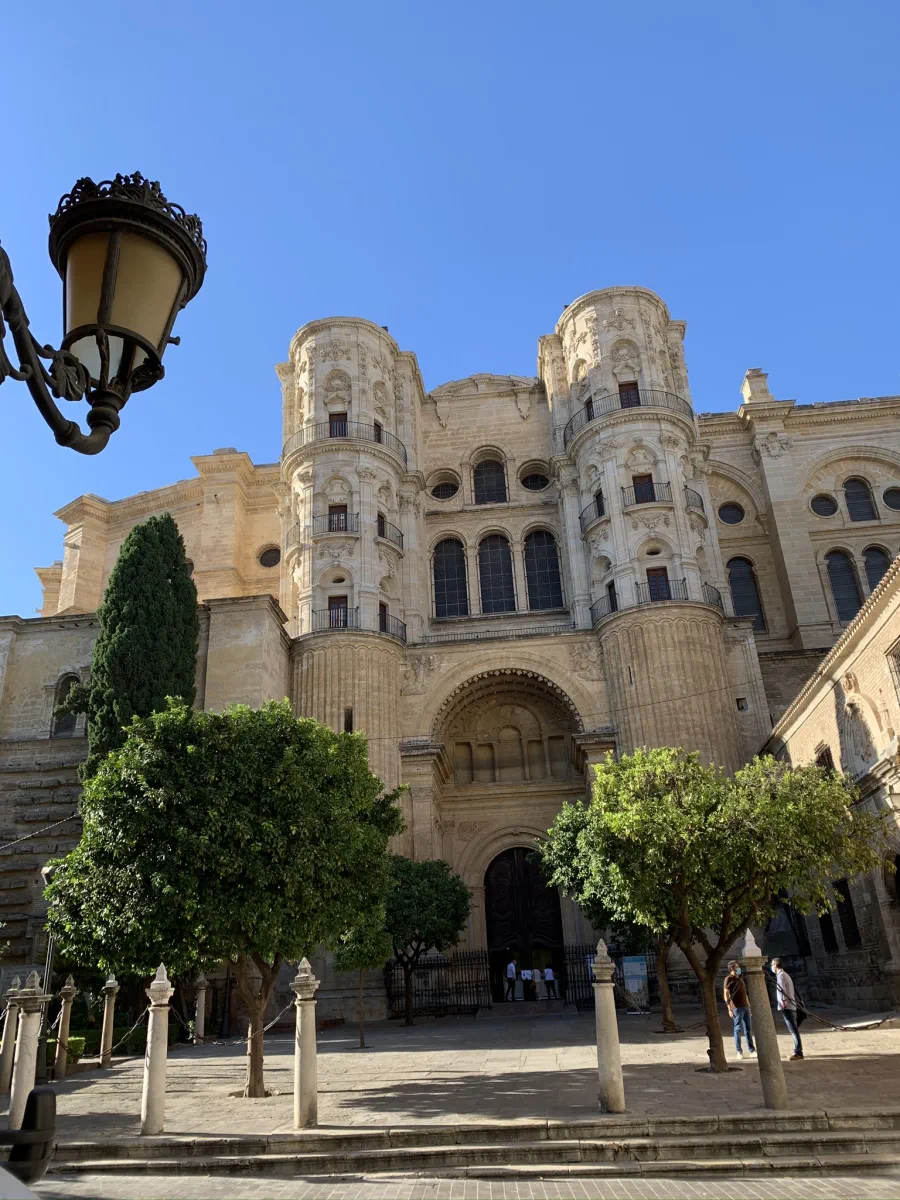
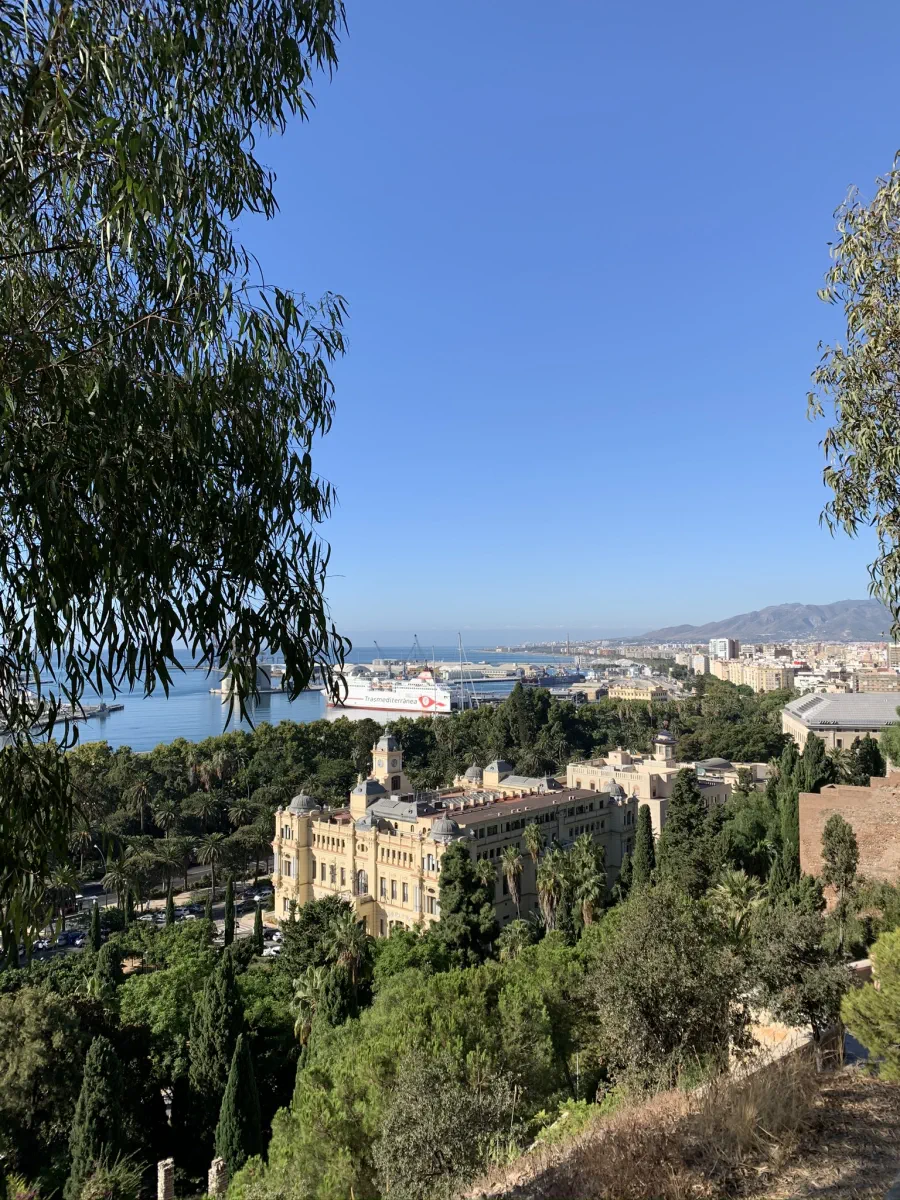
The Alcazaba sits on a hillside above the Roman Theatre, and you can see both from the same spot. Climbing further up takes you to Castillo de Gibralfaro, where the views cover the port, the bullring, and the coast stretching east toward Pedregalejo. Back down at street level, the Cathedral (locals call it “La Manquita” because its second tower was never finished) anchors the western side of the center.
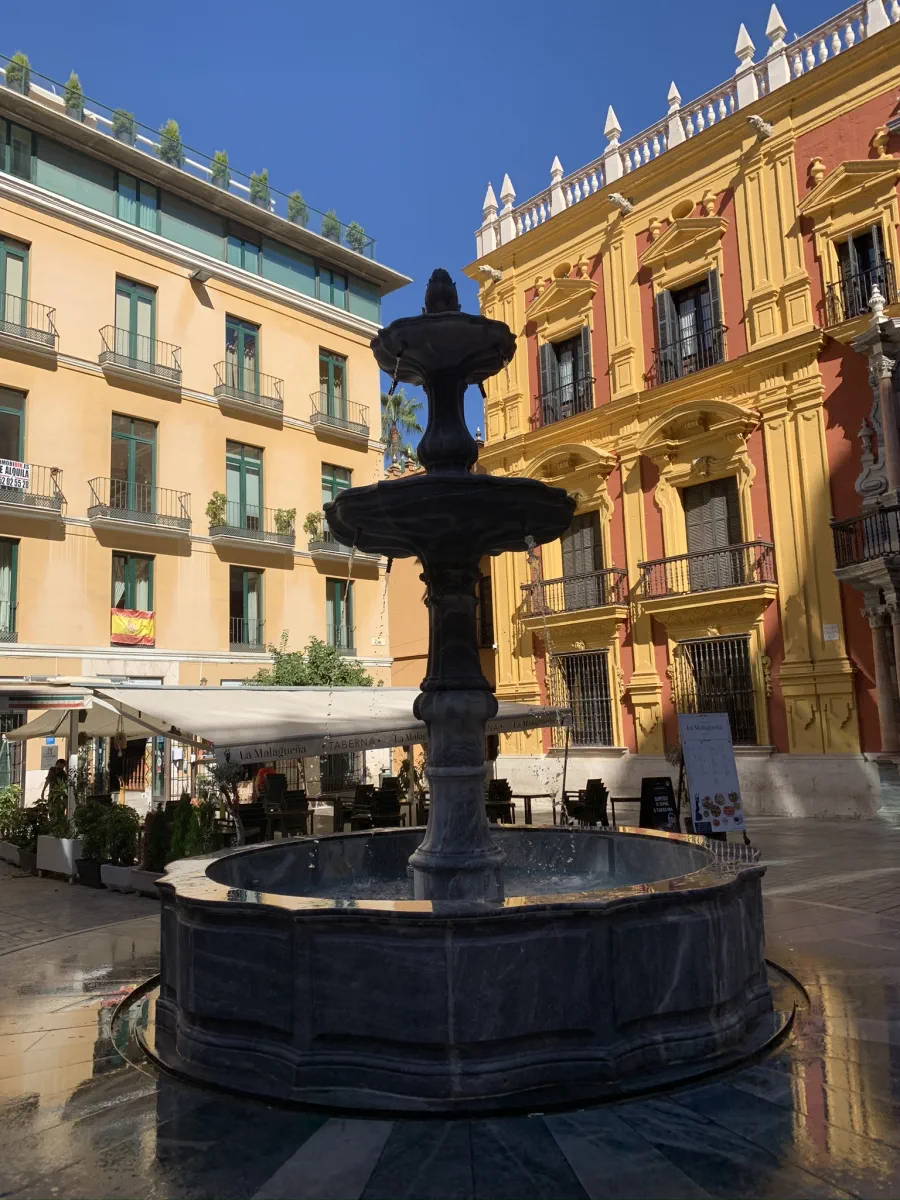
The Museo Picasso occupies the Palacio de Buenavista on Calle San Agustín, a 16th-century mansion that’s worth seeing for the building alone. And if you’re up early, Atarazanas Market (a 19th-century iron-framed hall near the Alameda) is the place to buy olives, cheese, and fresh fish alongside locals doing their morning shopping.
Transport connections are good. María Zambrano train station is about a 15-minute walk. The Atarazanas metro stop sits at the southern edge of the center. But honestly, if you’re staying in Centro Histórico, you’ll walk everywhere. The neighborhood is flat, pedestrian-friendly, and dense enough that public transport is mostly unnecessary.
The downside is noise. Centro stays busy late, especially around Plaza de la Constitución and the streets leading to it. If you’re a light sleeper, ask for a room facing an interior courtyard. And in peak summer, the narrow streets get crowded. Budget options within the old town itself are limited; this is mid-range to luxury territory.
For a first visit to Malaga, especially a stay of one to three nights, Centro Histórico is the right base. Everything is walkable, the sightseeing density is high, and you won’t need to figure out bus routes or metro transfers.
Where to Book
H10 Croma Málaga (4.7 stars, 1,300+ reviews) on Calle Prim puts you right in the center with a modern feel. Guests highlight the consistently high service quality and well-designed rooms.
Hotel NH Málaga (4.6 stars, 8,000+ reviews) on Calle San Jacinto is one of the most-reviewed hotels in the city. Guests frequently mention surprise upgrades and a helpful front desk team.
Hotel Vincci Selección Posada del Patio (4.6 stars, 2,100+ reviews) on Pasillo de Santa Isabel sits at the southern edge of the old town. Reviewers note that the staff treat guests with genuine VIP-level attention, not the scripted version.
Soho / Arts District
A Shepard Fairey mural on one wall, an Okuda piece across the street, and a free contemporary art museum around the corner. Soho is Malaga’s creative district, wedged between the Alameda Principal and the port, and it takes about five minutes to walk from here into the old town.
The MAUS Project (Malaga Arte Urbano Soho) turned the neighborhood into an open-air gallery. You’ll find large-scale murals on Calle Casas de Campos, Calle Tomás Heredia, and Calle Martínez Campos. The D*Face piece is hard to miss. The Okuda work covering the facade of Hotel Bahía on Calle Somera is one of the most photographed buildings in the city. And the CAC Málaga (Centro de Arte Contemporáneo) on Calle Alemania has free entry.
The food scene here is arguably better than Centro’s, and cheaper. Modern Andalusian restaurants, craft beer spots, and gourmet places have moved in alongside the street art. The pricing reflects a neighborhood that hasn’t quite caught up to its own quality. Expect to pay mid-range rates for accommodation that would cost more a few blocks north in the old town.
Soho also happens to be within walking distance of María Zambrano station, which is useful if you’re arriving by train or AVE from Madrid. And the Centre Pompidou Málaga (the one in the colored glass cube at Muelle Uno) is right on the southern border, technically in the port area but a two-minute walk.
La Malagueta beach is about 15 minutes on foot heading east. So you get city-center access, a strong food and art scene, and the beach within reach, all at prices below what Centro charges. For travelers under 40 who care more about eating well and seeing street art than being steps from the Cathedral, Soho is the smarter pick.
La Malagueta
Playa de la Malagueta runs about 1.2 kilometers along Malaga’s central coast, and it’s the main reason to stay here. The beach is within walking distance of everything in the old town (10-15 minutes), but the atmosphere switches from cobblestones and museums to wide avenues, seafront promenades, and residential blocks.
Paseo de la Farola runs along the waterfront and connects to the Muelle Uno port area, where the Centre Pompidou sits inside its colored glass cube. The Plaza de Toros (an 1874 bullring that now also hosts concerts) marks the inland edge of the neighborhood. Between the two, chiringuitos serve fried fish on the sand and hotel rooftop bars look out over the port and cathedral.
The neighborhood is quieter at night than Centro or Soho. Streets are wider, traffic is calmer, and you’re far enough from the nightlife streets that sleep isn’t an issue. Families benefit from the flat terrain and the beach being right outside. Couples get the rooftop bar scene and the Muelle Uno dining strip.
Price-wise, La Malagueta runs upper mid-range to luxury. It’s where Malaga’s higher-end beachfront properties are concentrated. The trade-off is that it doesn’t have the food scene of Soho or the sightseeing density of Centro. But if your ideal day is beach in the morning and a museum walk in the afternoon, La Malagueta gives you both without needing transport.
Where to Book
Hotel Miramar (4.7 stars, 5,400+ reviews) on Paseo Reding is the standout. Guests call it the best hotel in Malaga outright. Right on the beachfront, 15-20 minutes’ walk into the center, and the service consistently matches its five-star billing.
El Palo / Pedregalejo
Skip this section if you’re visiting Malaga for two nights. But if you’re staying a week or more, Pedregalejo might be the best neighborhood in the entire city.
It’s about 5 kilometers east of the center, which means you’re not walking to the Picasso Museum. Bus line 11 covers the route in roughly 20 minutes. What you get instead is a former fishing village with narrow streets, old cottages, and a seafront promenade (Paseo Marítimo) that connects Pedregalejo and El Palo along a string of small coves and beaches.
The chiringuitos here are the real thing. Espetos, sardine skewers cooked over open fires right on the sand, are Malaga’s signature dish, and this is where locals eat them. Fried fish, cold beer, and a view of the Mediterranean. The prices are noticeably lower than anything in the center, and the quality is usually better.
Baños del Carmen, a historic beach club on the eastern edge, hosts cultural events and concerts through the summer. The beaches are calmer and less crowded than La Malagueta, with a family-friendly, unhurried pace. Accommodation here is budget to mid-range, mostly apartments and small hotels.
The downside is dependence on the bus. If you want to see the Alcazaba, visit a museum, or go out in the center at night, you’re looking at a 20-minute ride each way. For digital nomads, families with young kids, or anyone who prioritizes beach life and authentic seafood over sightseeing, that trade-off works out well.
La Merced
Plaza de la Merced is where Picasso was born (number 15, now a museum) and where Malaga goes out at night. The square fills up in the evenings with a crowd that’s noticeably more local than what you’ll find on Calle Larios. Bars ring the perimeter, and the energy picks up as the night goes on.
The area sits just northeast of the old town, close enough that you can walk to the Cathedral or the Alcazaba in under ten minutes. It’s essentially an extension of Centro Histórico with lower prices and better nightlife. Mid-range accommodation here costs less than equivalent rooms a few streets south in the tourist core.
One warning: Plaza de la Merced gets loud on weekends. If you’re booking a room facing the square, bring earplugs or choose a higher floor. For travelers who want the old town on their doorstep but prefer drinking with locals over tourist-oriented dining, La Merced is the neighborhood.
Budget Breakdown
Budget (under EUR 100/night)
El Palo and Pedregalejo have the cheapest accommodation in tourist-friendly areas. Soho and La Merced also have options at the lower end of mid-range. Low season (November through February, excluding Christmas) drops prices across Malaga by 40-50%. Late January is typically the cheapest window of the year.
Mid-range (EUR 100-200/night)
This covers most of Centro Histórico and Soho, plus the better-located options in La Malagueta. Shoulder season (April through June, September through October) gives you warm weather and rates well below summer. Early October is the sweet spot: still beach-warm, but noticeably quieter and cheaper than September.
Luxury (EUR 200+/night)
Concentrated in La Malagueta (beachfront properties) and the highest-rated hotels in Centro. Summer weeks and Feria de Málaga (mid-August) push these past EUR 300. Semana Santa (Easter week) also commands premium pricing as the city fills with procession visitors.
How to Choose the Right Area
- First visit, 1-3 nights: Centro Histórico. Everything is walkable, and you’ll cover the main sights without needing transport.
- Couples: La Malagueta for beach and rooftop bars, or Soho for food and street art.
- Families: La Malagueta (beach + flat terrain + quiet nights) or Pedregalejo (calmer beaches, lower prices).
- Budget: Pedregalejo for the lowest rates with beach access, or Soho for central location at mid-range pricing.
- Nightlife: La Merced. Skip Centro if you want to drink with locals.
- Longer stays (1 week+): Pedregalejo. The espeto chiringuitos and lower prices get better the longer you stay.
Booking Tips for 2026
When to book
Shoulder season (April through June, September through October) is the best window. Summer rates, particularly in August, are the most expensive of the year. Two events make advance booking essential: Semana Santa (Easter week) fills center hotels months ahead with procession visitors, and Feria de Málaga (August 15-22 in 2026) pushes occupancy past 90% citywide with over a million visitors. For either, book three to six months early.
No tourist tax
Unlike Barcelona or the Balearic Islands, Andalusia does not charge a tourist tax. The price you see at checkout is the price you pay, with no per-night surcharge added. This has been discussed politically but remains unimplemented as of 2026.
The rental situation
Malaga froze all new tourist rental licenses under Andalusia’s Decree-Law 1/2025. Existing licensed properties (look for a VFT registration number) continue to operate, but supply is shrinking. Since July 2025, a national NRU registration number is required for any property listed on rental platforms. If a listing doesn’t show a VFT or NRU number, it’s operating illegally and risks cancellation mid-stay. Hotels are the safer option.
Getting from the airport
The Cercanías C1 train runs from the airport to the city center in 12 minutes for EUR 1.80. Trains depart every 20 minutes. Taxis cost EUR 20-25 including the EUR 5.50 airport surcharge (updated January 2026). The express bus (Line A, EUR 4.00) is only useful if you’re staying near the port.
Frequently Asked Questions
Where should I stay in Malaga in 2026 for the first time?
Centro Histórico. The entire old town is walkable in 15 minutes, and you’ll be within a few blocks of the Alcazaba, Picasso Museum, Cathedral, and the main dining streets. For a short visit, nothing else makes as much sense.
Is Malaga safe?
Very safe overall. Crime fell 2% in the first half of 2025, and the tourist areas (Centro, Soho, La Malagueta, Pedregalejo) are well-patrolled. Pickpockets operate on Calle Larios, near the Alcazaba entrance, and around the Picasso Museum, same as in any popular European city. Standard precautions apply.
When is the cheapest time to visit?
Late January through early February. Prices drop 40-50% below summer rates, and the weather in Malaga is still mild (12-17°C). For warm beach weather at reasonable prices, aim for late September or early October.
Do I need the metro?
Probably not. The metro has only two lines and doesn’t reach the airport, the beaches, or the eastern neighborhoods. The Cercanías train is more useful for the airport, and the EMT bus network covers Pedregalejo (line 11). If you’re staying in Centro, Soho, or La Malagueta, you’ll walk everywhere.
Is there a tourist tax?
No. Andalusia does not charge a tourist tax as of 2026. Unlike stays in Barcelona or Mallorca, you won’t pay any per-night accommodation surcharge in Malaga.
Get Spain travel tips in your inbox
Occasional, genuinely useful emails — best times to visit, local tips, and deals. No spam.
Plan your trip to Spain
- Trip.com: A great source for finding flights and airport connections. I have noticed that it finds flight connections that some other search engines miss.
- Booking.com: My favourite site for booking hotels and apartments (and occasionally flights). They have the best filters and I like the user friendly interface.
- Hotels.com: The most popular hotel booking platform in many countries, US included.
- Get Your Guide: A massive selection of tours and excursions. They have tons of options available in Spain, including walking tours, cooking classes, museum options, boat tours and more!
- DiscoverCars: Want to explore charming villages and get out of the busy cities? DiscoverCars pools together the best offers from car rental operators for your convenience.
- Omio: Want to find the best option to move between cities in Spain? I use Omio for that. Plus you get to book the ticket from the same amazing platform.
- Klook: Need a local SIM card for your trip to Spain? A stress free holiday nowadays (unfortunately) might start from a good connection, so get an affordable eSIM here.
- VisitorCoverage: Not interested in checking out Spanish public health care system on your holiday? (like I've managed to do..) A cheap travel insurance gets that stress out of the way.
Some links above are affiliate links. If you book through them I may earn a small commission, at no extra cost to you.