Benidorm Travel Guide: Beyond the Stereotypes
This post contains affiliate links. If you book through them, I may earn a small commission at no extra cost to you.
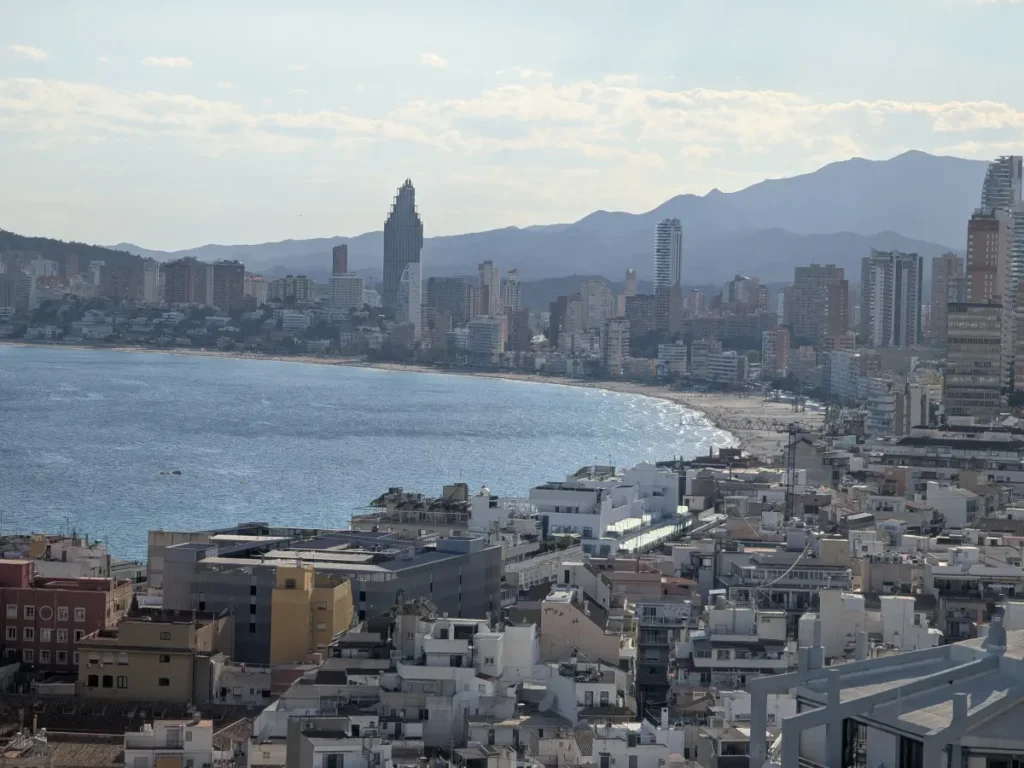
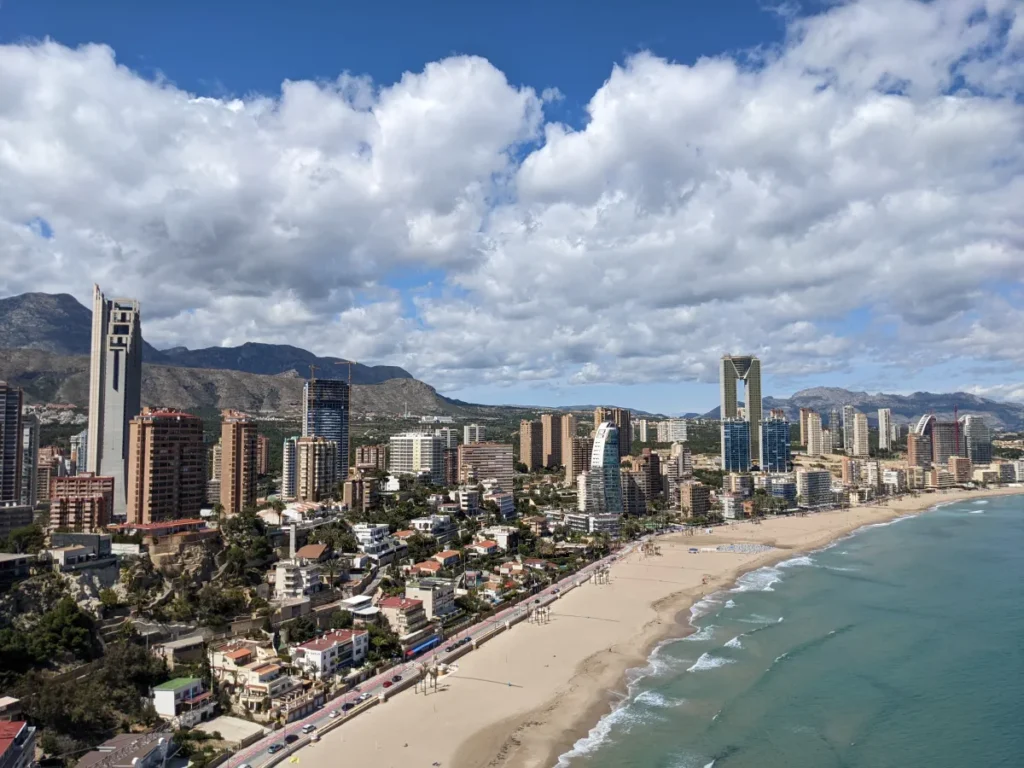
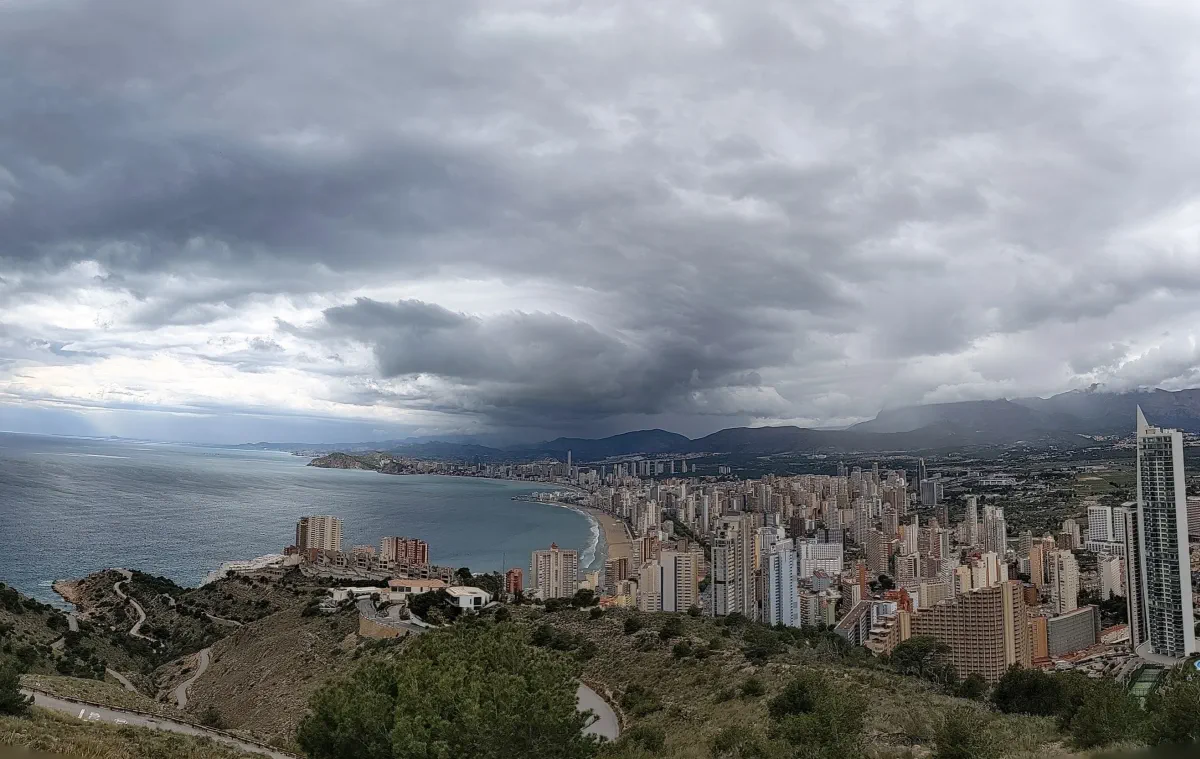
Benidorm has more high-rise buildings per capita than New York. That’s not a joke – it’s actually the point. In the 1960s, the town’s mayor decided to build up instead of out, packing tourists into towers rather than letting villas sprawl along the coast. The result is a dense, walkable city surrounded by untouched coastline and mountains. It’s the opposite of what most people expect when they hear “Benidorm.”
The British stereotype – hen dos, sunburnt blokes, all-day English breakfasts – isn’t wrong, exactly. It’s just incomplete. Benidorm is also a compact Spanish city with a genuinely good old town tapas scene, two Blue Flag beaches with different personalities, and some of the cheapest eating out you’ll find on the Spanish coast. If you write it off without visiting, you’re making the same mistake as the people who never leave the Levante strip. I was there just earlier this week (mid 05/2026) and witnessed the good, the bad and the ugly without even staying there till the late evening. Read more for some hidden little corners and practical tips.
The Two Beaches: Levante vs Poniente
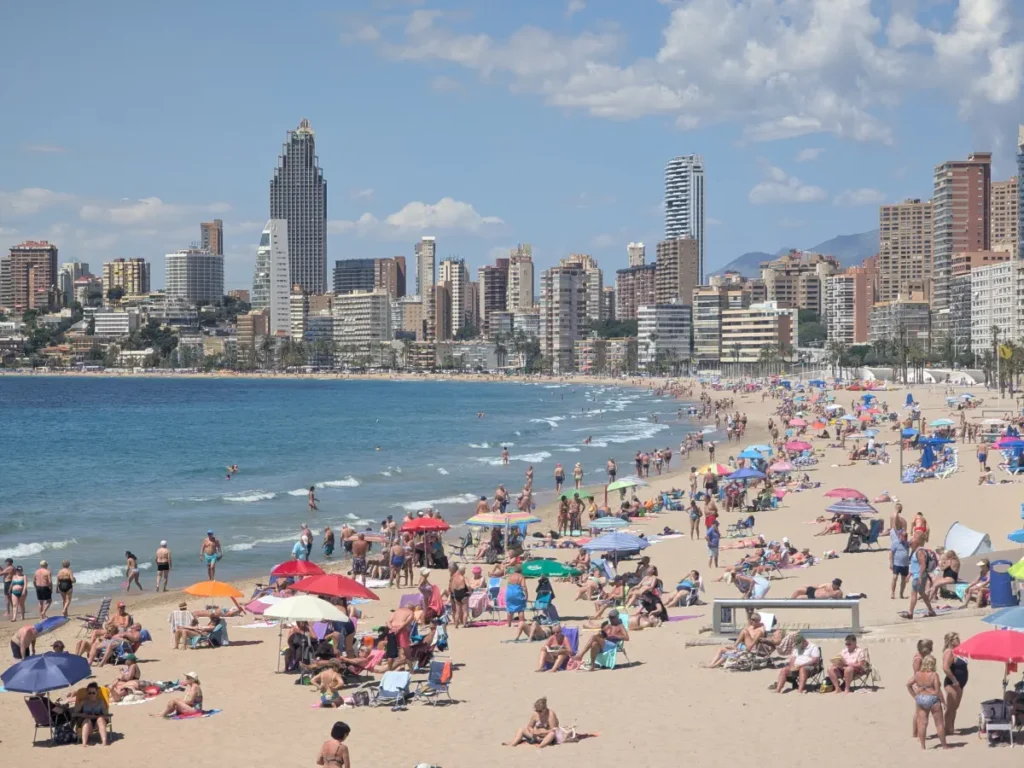
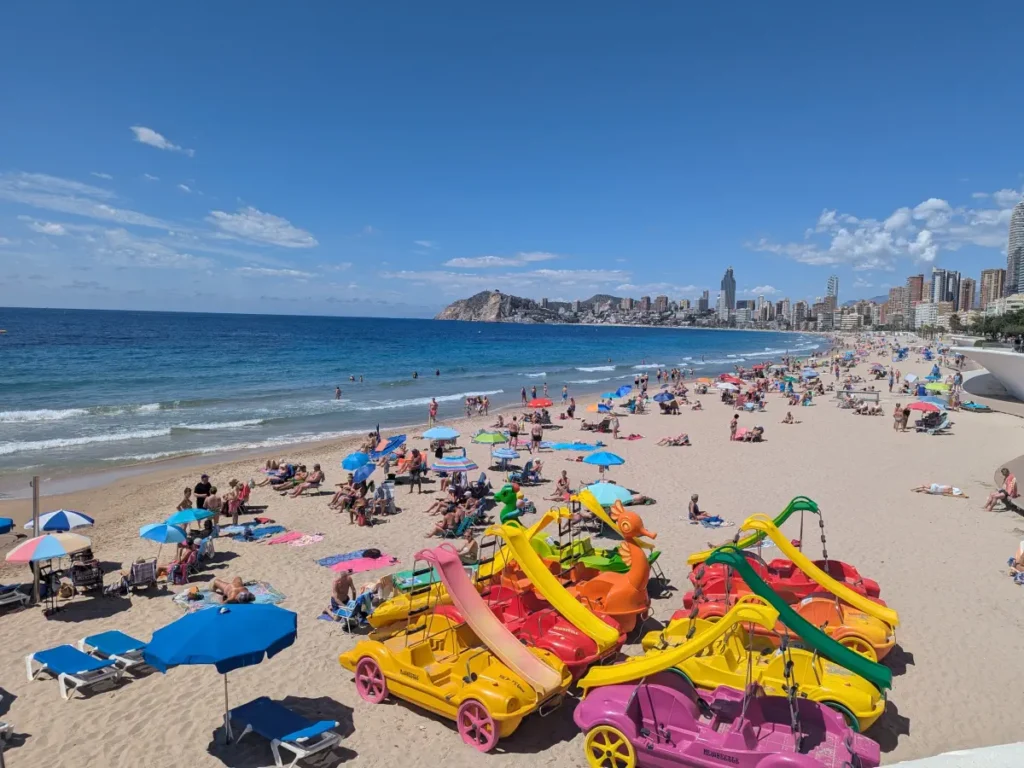
Benidorm sits on a headland with a beach on each side, and they feel like different towns. The old town casco antiguo perches on the rocky bit in the middle, connecting the two.
| Levante Beach | Poniente Beach | |
|---|---|---|
| Length | ~2 km | ~3 km |
| Vibe | Busy, social, high-energy. Promenade lined with bars and restaurants. | Calmer, more relaxed. Popular with Spanish families. |
| Sand | Fine golden | Fine golden |
| Blue Flag | Yes | Yes |
| Crowds | Packed in summer, especially near the strip | Wider beach, easier to find space |
| Best for | People-watching, nightlife proximity, first-timers | Families, couples, anyone wanting a quieter day |
There’s also Mal Pas, a tiny 120m cove tucked below the old town facing Benidorm Island. It’s sheltered, quiet, and sits next to the La Llosa marine reserve – decent snorkelling if you bring your own gear.
The Old Town (Casco Antiguo)
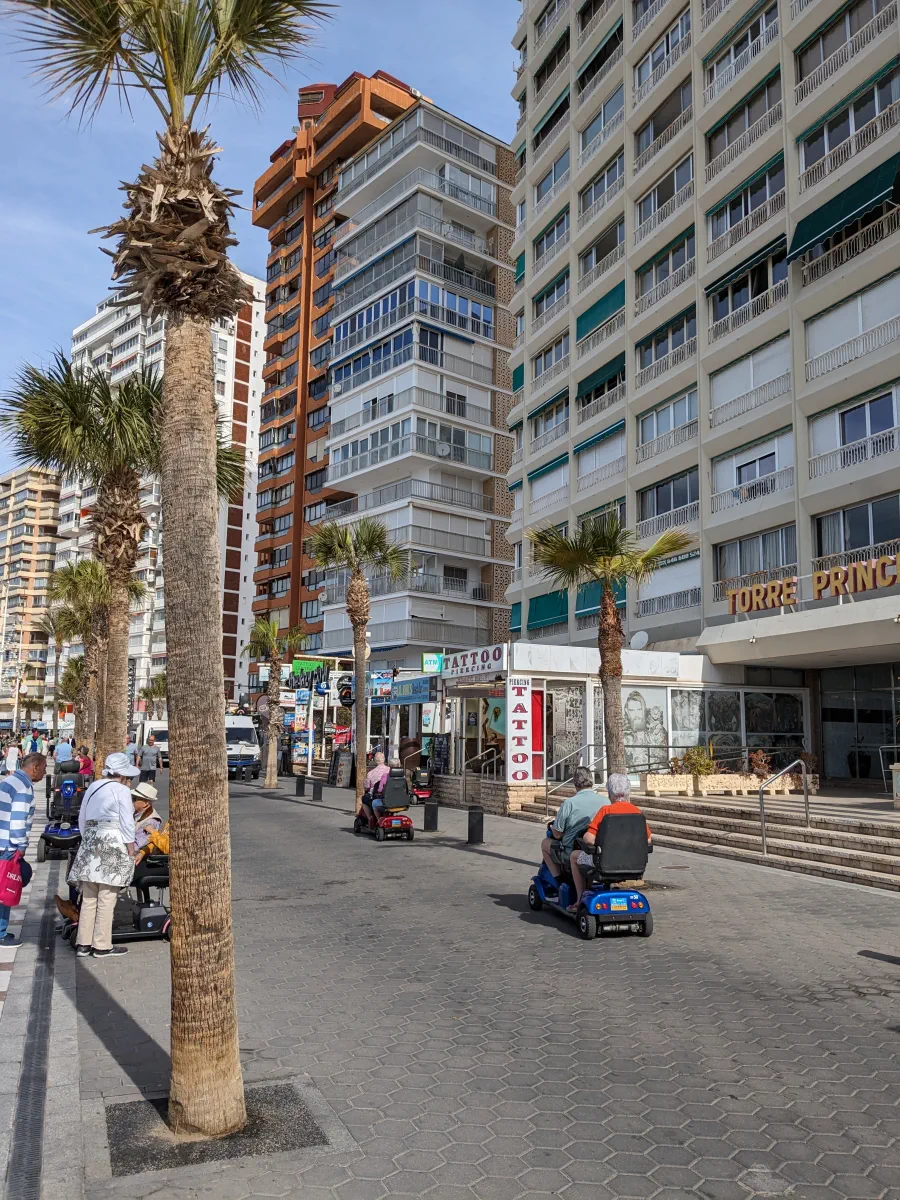
The old town sits on the headland between the two beaches. Narrow cobbled streets, whitewashed houses, and the kind of small tapas bars where the waiter doesn’t hand you a laminated English menu – he just tells you what’s good today. At least in some of the places. And the menu in English is practically always available.
This is where most British tourists never go, which is baffling because it’s a ten-minute walk uphill from either beach. The tapas here is authentic and cheap. A menú del día – three courses, bread, a drink – runs 10-15€ at the family-run places. Individual tapas go for 3-6€. A glass of wine is 2€. You can eat and drink very well for almost nothing.
We enjoyed a great lunch with pinchos in Calle de Santo Domingo that easily beat the Alicante options for less than 10€ per person (drinks excluded). There were tons of amazing looking restaurants here and we just sat down in one where they had space. Most of them were totally packed.
At the tip of the headland is the Balcón del Mediterráneo, a viewpoint with curved white balustrades looking out over both beaches and the sea. It’s at its best at sunset, but it’s worth a look any time – it puts the geography of Benidorm into perspective. And gives you some very Instagrammable photos.
The old town is also Benidorm’s most established gay-friendly area, with 30+ welcoming bars concentrated in a small area. The atmosphere is relaxed and inclusive.
Nightlife and Entertainment
Benidorm’s nightlife has layers. Which layer you end up in depends on what you’re looking for.
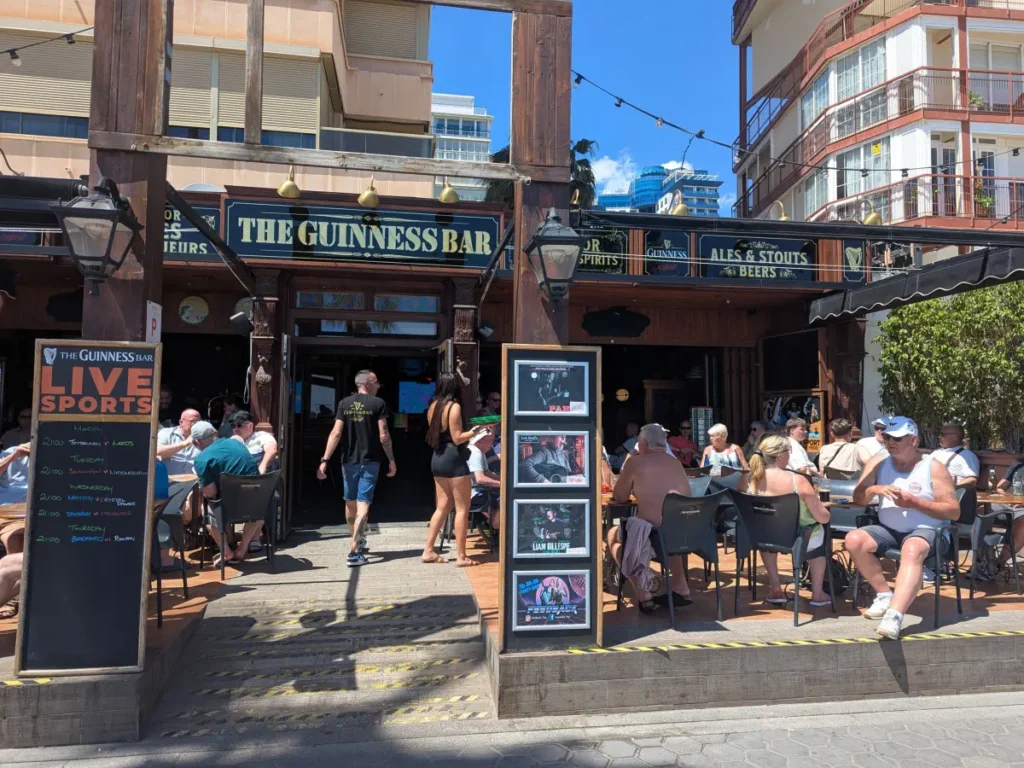
The strip runs parallel to Levante beach – a long stretch of pubs, bars, and clubs that’s busiest from June through September. It’s loud, cheerful, and unapologetically British in places. You’ll find everything from karaoke to tribute acts to clubs open until dawn. If you’ve been to Magaluf or Blackpool, you know the general territory.
English Square (the junction of Avenida de Mallorca and Calle Gerona) is the hub of the British nightlife scene. Karaoke, cabaret, tribute acts. It does what it does well – just don’t expect subtlety. We stumbled here by accident as we wanted to play a couple of rounds of pool around 6pm. The atmosphere was already warming up and I would really be interested in seeing how crazy it gets here later in the evening. Might not be everybody’s cup of tea (or a pint of lager), though..
Benidorm Palace is worth knowing about even if cabaret isn’t normally your thing. It’s a 1,600-seat dinner-show venue that’s been running for decades – think Las Vegas-style production with dancers, acrobats, and variety acts. Their current show is called ELEMENTS. Prices range from 36€ for the show only up to 100€ for the platinum-with-backstage package. Dinner starts at 20:00, show runs from 22:00 to midnight. It’s cheesy in the best possible way. I’ve seen the show and the value for money beats Cirque du Soleil easily. I recommend booking your seats early. A practical tip: if you also include dinner with the show, you also get a better table.
Old town bars are the alternative to all of the above. Smaller, more atmospheric, a mix of Spanish-owned spots and British-run pubs. The kind of places where you sit outside on a terraza with a 2€ wine and talk to strangers. No cover charges, no dress codes, no queues. This is the atmosphere that I love about Spain.
Family-Friendly Benidorm
Benidorm actually works well for families, mostly because everything is close together and the infrastructure is solid. Three theme parks sit in the Sierra Helada area on the eastern edge of town:
| Park | What it is | Best for | Notes |
|---|---|---|---|
| Terra Mitica | Theme park – ancient civilisations (Egypt, Greece, Rome, Iberia) | Older kids and adults. Younger children mainly enjoy the Egypt and Rome areas. | Online tickets save 4-6€. Quiet on weekdays – no queues but also no atmosphere. |
| Aqualandia | Water park – one of Europe’s largest | All ages. Child pricing for ages 4-12, senior for 65+. | Next door to Terra Mitica. Summer only. |
| Mundomar | Marine animal park – 80+ species | Younger kids especially. 30-minute dolphin show, sea lion show, bird show. | Premium swim-with-dolphins experiences available at extra cost. |
Beyond the parks, Benidorm is flat and walkable. Levante, Poniente, and the old town are all connected by the seafront promenade, so you’re never far from anywhere with a pushchair. The Rincón de Loix area at the far eastern end of Levante is popular with families – apartment-style accommodation, supermarkets, parks, and easy access to the theme parks.
Day Trips from Benidorm
Benidorm is well-placed for day trips. The coastline changes dramatically within twenty minutes, and the mountains behind are properly beautiful.
| Destination | Distance | Highlights |
|---|---|---|
| Altea | ~11 km (13 min drive) | Whitewashed old town on a hill, church with iconic blue-tiled dome, art galleries, Plaza de la Iglesia with terrace cafés. Quiet, bohemian character. A different world from Benidorm. |
| Villajoyosa | ~10 km south (20 min by Tram Line 1) | Colourful painted fishermen’s houses along the seafront. Valor Chocolate Museum: free tours Mon-Fri (English at 10:00 and 16:00). Valor has been making chocolate since 1881. Fresh seafood by the fishing port. |
| Guadalest | ~25 km (45 min drive) | Medieval hilltop village. Castle ruins (Peñón de la Alcalá), turquoise reservoir, narrow streets, artisan shops. Touristy but spectacular. |
| Alicante | ~45 km south (40 min drive) | Santa Bárbara Castle, Explanada de España promenade, old town (Barrio de Santa Cruz), Central Market, MARQ museum, San Juan beach. |
Weather and When to Visit
Benidorm gets around 3,000 hours of sunshine a year. Even in January, you’re looking at average highs of 15°C and six hours of sun. It doesn’t feel like the Costa del Sol, but it doesn’t feel like Manchester either.
| Month | High °C | Low °C | Rain (mm) | Sea °C | Sun (hrs) |
|---|---|---|---|---|---|
| Jan | 15 | 6 | 32 | 14 | 6 |
| Feb | 16 | 6 | 33 | 14 | 6 |
| Mar | 18 | 7 | 34 | 14 | 7 |
| Apr | 19 | 9 | 38 | 16 | 8 |
| May | 22 | 12 | 32 | 18 | 9 |
| Jun | 26 | 16 | 22 | 22 | 10 |
| Jul | 29 | 19 | 10 | 25 | 11 |
| Aug | 30 | 20 | 18 | 26 | 10 |
| Sep | 28 | 17 | 42 | 25 | 8 |
| Oct | 23 | 14 | 76 | 22 | 7 |
| Nov | 19 | 9 | 53 | 19 | 6 |
| Dec | 16 | 7 | 45 | 16 | 5 |
June to September is prime beach season. The sea hits 22-26°C, rain practically disappears in July, and everything is open. It’s also when Benidorm is at its busiest and most expensive.
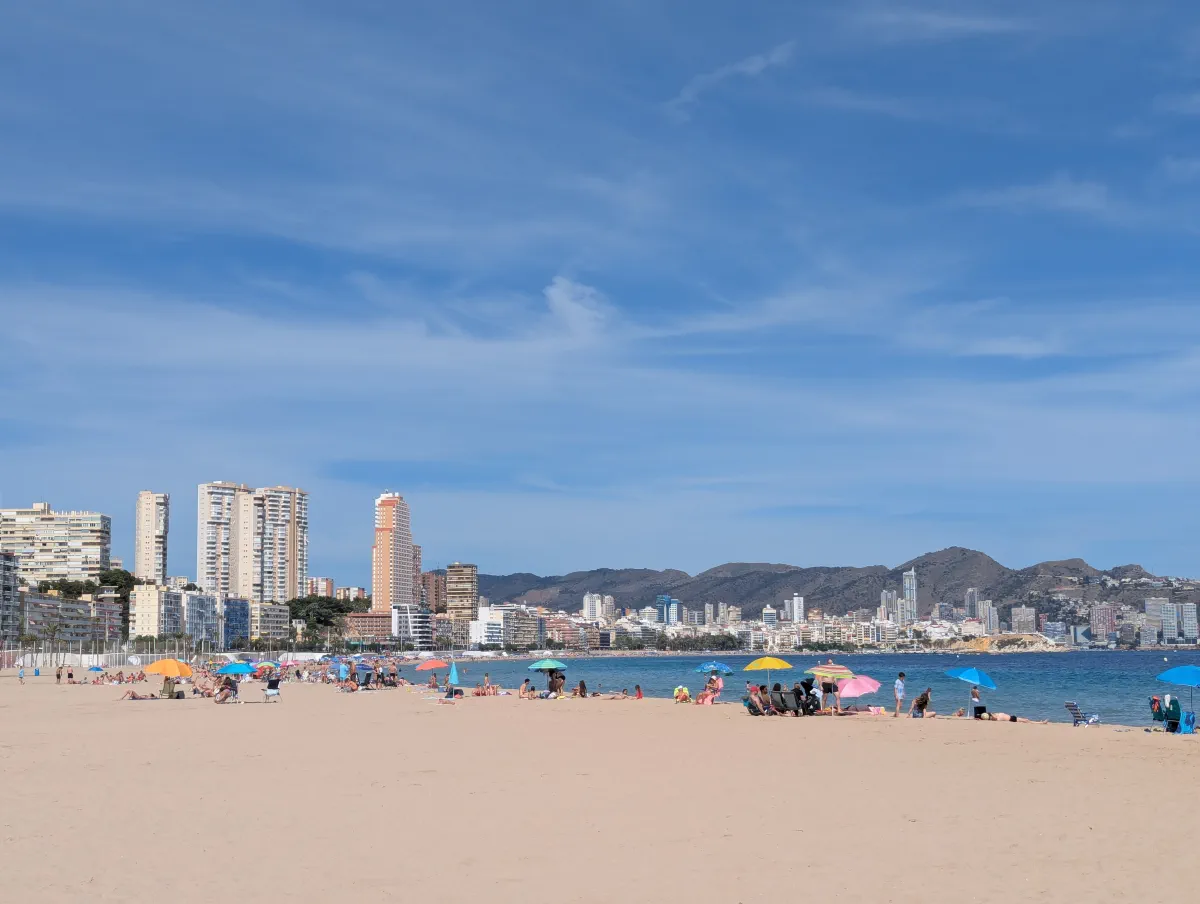
May and October are the sweet spot for sightseeing. Warm enough for the beach on good days, quiet enough to actually enjoy the old town. October is technically the wettest month (76mm), but the rain tends to come in short, heavy bursts rather than grey drizzle.
November to February is a different Benidorm altogether. The town fills with retired Europeans – Scandinavians, Germans, Brits – escaping northern winters. The temperature hovers around 15-16°C, which is jacket weather but still pleasant for walking. Prices drop, restaurants are quieter, and the pace slows right down. If you’re not chasing beach weather, it’s a genuinely nice time to visit.
Budget: Benidorm Is Cheap
This is probably the most useful thing anyone can tell you about Benidorm: eating out is so affordable that self-catering barely saves you money. Prices here seem a bit cheaper than in Alicante, for example.
| Item | Typical price |
|---|---|
| Menú del día (3 courses + drink) | 10-17€ (about £9-15) |
| Individual tapa | 3-6€ |
| Beer (half litre, draught) | 2-4.50€ (average 3€) |
| Glass of wine | 2-4€ |
| Coffee (cappuccino) | 1.50-3€ |
| Dinner (inexpensive restaurant) | 10-22€ |
| Mid-range dinner for two (no drinks) | 40-80€ (average 45€) |
| 1.5L water (supermarket) | 0.50€ |
| Beer 500ml (supermarket) | 0.69€ |
VAT at 10% is already included in all menu prices. Tipping is optional – there are no automatic service charges. Mercadona, Carrefour, Lidl, and Aldi all have stores in town if you want to self-cater, but honestly, a menú del día at a local place costs less than cooking for yourself and comes with wine.
Practical Info
Getting There
Alicante-Elche Airport (ALC) is the gateway. Ryanair and easyJet fly direct from most major UK airports – Manchester, Birmingham, Edinburgh, all the London airports. Flight time is around two and a half hours.
From the airport, ALSA runs direct buses to Benidorm. They depart from the 2nd floor (departures level), run roughly every 30 minutes from 07:00 to 23:00, and cost 9-12€ one way (about 18€ return). The journey takes 45-55 minutes and drops you at Benidorm’s bus station on Calle Francisco Llorca Antón.
Getting Around
Benidorm is compact and walkable. Levante, Poniente, and the old town are all connected by the seafront promenade. You don’t need a car unless you’re doing day trips to Guadalest or the mountains. The tram (Line 1) runs south to Villajoyosa and north to Altea, which covers two of the best day trips without a car.
Language
You’ll get by with English in the tourist areas – most restaurant staff speak enough, and many menus are translated. In the old town and Poniente, Spanish goes further. A few words of Spanish (por favor, gracias, la cuenta) are appreciated everywhere and occasionally necessary. Catalan/Valencian appears on official signs but isn’t needed for visitors.
Check out here for the best accommodation deals for Benidorm
Frequently Asked Questions
Is Benidorm just for package holiday tourists?
No. The Levante strip caters to that market, but the old town between the two beaches has excellent independent tapas bars and restaurants. Poniente beach attracts mostly Spanish families. The stereotype comes from one part of a much larger, more varied town.
Is Benidorm safe?
Very. It’s a well-lit, busy town with a visible police presence. The main risk is the same as any tourist resort – pickpockets in crowded areas and on the beach. Use common sense with valuables and you’ll be fine. For the rest of Spain, is Spain safe? An honest answer covers the scams and resort rules worth knowing.
When is the cheapest time to visit Benidorm?
November to February. The town fills with long-stay retired visitors escaping northern European winters, so hotels offer significant discounts. Restaurants and bars are open year-round. Expect daytime temperatures around 15-16°C – fine for walking and eating out, less so for swimming.
Can I get by without a car in Benidorm?
Easily. The town is flat and walkable, and the tram covers day trips to Villajoyosa and Altea. For Guadalest or inland villages you’d need a car or organised excursion, but within Benidorm itself, a car is more hassle than it’s worth.
Is Benidorm good for families?
Yes, particularly the Poniente side and the Rincón de Loix area near the theme parks. Three major parks (Terra Mitica, Aqualandia, Mundomar) are within the town limits. Beaches are Blue Flag, and the promenade is pushchair-friendly.
Get Spain travel tips in your inbox
Occasional, genuinely useful emails — best times to visit, local tips, and deals. No spam.
Plan your trip to Spain
- Trip.com: A great source for finding flights and airport connections. I have noticed that it finds flight connections that some other search engines miss.
- Booking.com: My favourite site for booking hotels and apartments (and occasionally flights). They have the best filters and I like the user friendly interface.
- Hotels.com: The most popular hotel booking platform in many countries, US included.
- Get Your Guide: A massive selection of tours and excursions. They have tons of options available in Spain, including walking tours, cooking classes, museum options, boat tours and more!
- DiscoverCars: Want to explore charming villages and get out of the busy cities? DiscoverCars pools together the best offers from car rental operators for your convenience.
- Omio: Want to find the best option to move between cities in Spain? I use Omio for that. Plus you get to book the ticket from the same amazing platform.
- yesim: Need a local SIM card for your trip to Spain? A stress free holiday nowadays (unfortunately) might start from a good connection, so get an eSIM with unlimited or prepaid data.
- NordVPN: Hotel, café and airport Wi-Fi in Spain is shared with everyone else on it. A VPN keeps your banking and bookings private, and lets you watch the services you already subscribe to at home while you are away.
- VisitorCoverage: Not interested in checking out Spanish public health care system on your holiday? (like I've managed to do..) A cheap travel insurance gets that stress out of the way.
Some links above are affiliate links. If you book through them I may earn a small commission, at no extra cost to you.