Where to Stay in Barcelona 2026: 6 Best Neighbourhoods
This post contains affiliate links. If you book through them, I may earn a small commission at no extra cost to you.
Best Areas at a Glance
| Area | Vibe | Price Level | Best For |
|---|---|---|---|
| Eixample | Wide grid streets, Gaudí architecture | Budget to Luxury | First-time visitors, families |
| El Born | Medieval lanes, cocktail bars | Mid-range to Luxury | Couples, foodies |
| Gothic Quarter | Medieval labyrinth, lively plazas | Mid-range to Luxury | History lovers, atmosphere seekers |
| Barceloneta | Beachfront, seafood, laid-back | Mid-range | Beach holidays, summer trips |
| Gràcia | Small-town plazas, independent shops | Budget to Mid-range | Longer stays, repeat visitors |
| Poble Sec | Residential, pintxos bars | Budget to Mid-range | Food lovers, value seekers |
Eixample
The 19th-century grid that Ildefons Cerdà designed around the old city is, for most visitors, the smartest base in Barcelona. Wide sidewalks with chamfered corners at every intersection make navigation dead simple. You can walk in any direction and know exactly where you are. Strollers roll easily. Suitcases don’t get stuck on cobblestones. And you’re never more than a few blocks from a metro station.
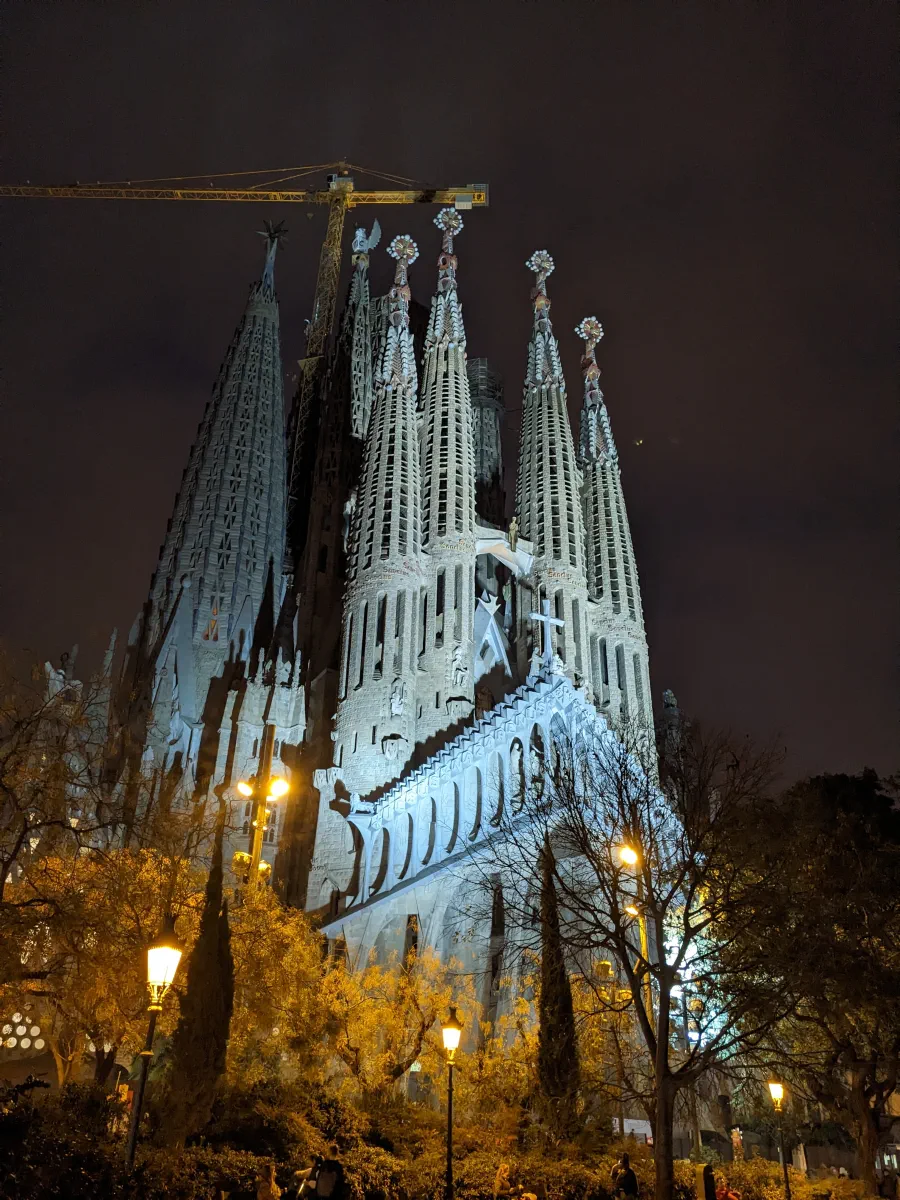
Passeig de Gràcia runs through the center of the neighborhood, and it’s where you’ll find some of Barcelona’s best-known buildings. Casa Batlló sits at number 43 and La Pedrera (Casa Milà) at number 92, both on the same boulevard.
The Mandarin Oriental (4.7 stars, nearly 4,000 Google reviews) occupies number 38-40 on that same stretch. Guests consistently mention the attentive staff. A few blocks north, the Majestic Hotel & Spa (4.6 stars, over 5,400 reviews) has been on Passeig de Gràcia since 1918.
Sagrada Familia is technically part of Eixample too, on the eastern side. The area around the basilica is more residential and quieter, with lower hotel prices than the Passeig de Gràcia corridor. If you want Eixample’s convenience without the premium, look at hotels in the Sagrada Familia sub-neighborhood. You’ll have direct metro access on lines L2 and L5.
The Passeig de Gràcia metro station is a major hub where three lines (L2, L3, L4) converge, which means you can reach the Gothic Quarter in two stops, Barceloneta beach in four, and Sagrada Familia in three. Few neighborhoods in Barcelona match this level of connectivity.
Dining spreads across the grid in every direction. Rambla de Catalunya (the quieter parallel street one block west of Passeig de Gràcia) has terraces that fill up in the evenings. The western half of Eixample, known locally as Gayxample, has a concentration of LGBTQ+ bars and nightclubs, though the nightlife here is calmer than in the old city.
Safety is a genuine advantage. Eixample is one of Barcelona’s safest central neighborhoods. The wide, well-lit streets and steady foot traffic mean you can walk back to your hotel at midnight without thinking twice. For families with young children, this matters more than most travel guides acknowledge.
The one downside: Eixample doesn’t feel medieval or atmospheric the way the Gothic Quarter does. If you want narrow stone alleys and the sense of stepping back in time, this isn’t it. But for a first visit where you want everything to be easy, Eixample is the right call. And if you don’t mind walking, the barrios aren’t too far from each other.
El Born
Cobblestone alleys, artisan shops, and the 14th-century Santa Maria del Mar. El Born has the atmosphere of the Gothic Quarter with half the tourist density. I really love this neighborhood and prefer it even over the Gothic Quarter (El Gòtic).
The neighborhood centers on Passeig del Born, a wide pedestrian promenade that was a medieval jousting ground. Today the buildings lining it house cocktail bars and restaurants that don’t really wake up until 11pm. During the day, Carrer dels Flassaders is better for coffee and browsing independent boutiques. The Picasso Museum runs along Carrer de Montcada, a street of converted medieval mansions. And Parc de la Ciutadella is right on the eastern edge, which gives the neighborhood breathing room that the Gothic Quarter doesn’t have.
Motel One Barcelona: Ciutadella (4.6 stars, over 2,800 reviews) sits near the park entrance. Multiple guests note that rooms are ready well before standard check-in time. It’s a good mid-range option in a neighborhood that otherwise skews expensive.
Metro access comes via Jaume I (L4), which puts you one stop from the Gothic Quarter and four stops from Barceloneta beach. Arc de Triomf (L1) covers the northern edge. The neighborhood is compact enough that you’ll walk most of it without needing transit.
El Born is pricier than the Gothic Quarter for equivalent accommodation quality. Budget options are scarce. But the trade-off is a neighborhood that feels curated rather than overrun. Couples, especially, tend to prefer it. Just don’t stay close to the Passeig Del Born, the party street of this neighborhood, if you value your sleep.
Safety is a step up from the Gothic Quarter. Pickpocket activity is lower, though you should still take the same precautions you’d take anywhere in central Barcelona. The late-night noise around Passeig del Born can be an issue if your hotel faces the promenade, so check room placement when booking.
Gothic Quarter
Two things to know before booking here: the medieval streets are extraordinary, and they get loud after 11pm.
The Barri Gòtic is a labyrinth of pedestrianized alleys between La Rambla and Via Laietana. Barcelona Cathedral (construction started in 1298) anchors the center. Plaça Reial, just off La Rambla, is a palm-lined square ringed by restaurants and bars that stays packed well past midnight. Carrer del Bisbe has the neo-Gothic bridge that shows up in every Barcelona photo. And tucked between buildings on Carrer del Paradís, you can find three Roman columns from the Temple of Augustus. Most of this is within a five-minute walk of itself.
The problem is noise. Plaça Reial and the streets around it are the heart of Barcelona’s nightlife. If your room faces one of these streets, expect music and conversation drifting up until 3am or later. Some hotels offer interior-facing rooms that block the worst of it. Ask specifically when booking.
Pickpockets are a real concern after dark, particularly near Plaça Reial and along Carrer Ferran. This isn’t a reason to avoid the neighborhood, but it’s a reason to leave valuables in your hotel safe and keep your phone in a front pocket. During the day, the area is fine with normal precautions.
Getting around is easy. Liceu (L3) and Jaume I (L4) are the nearest metro stations, and Plaça Catalunya (L1, L3) sits at the northern boundary. Prices run mid-range to luxury, with budget options limited. The Gothic Quarter works best for history lovers and couples who prioritize atmosphere and don’t mind trading quiet sleep for being at the center of things.
Barceloneta
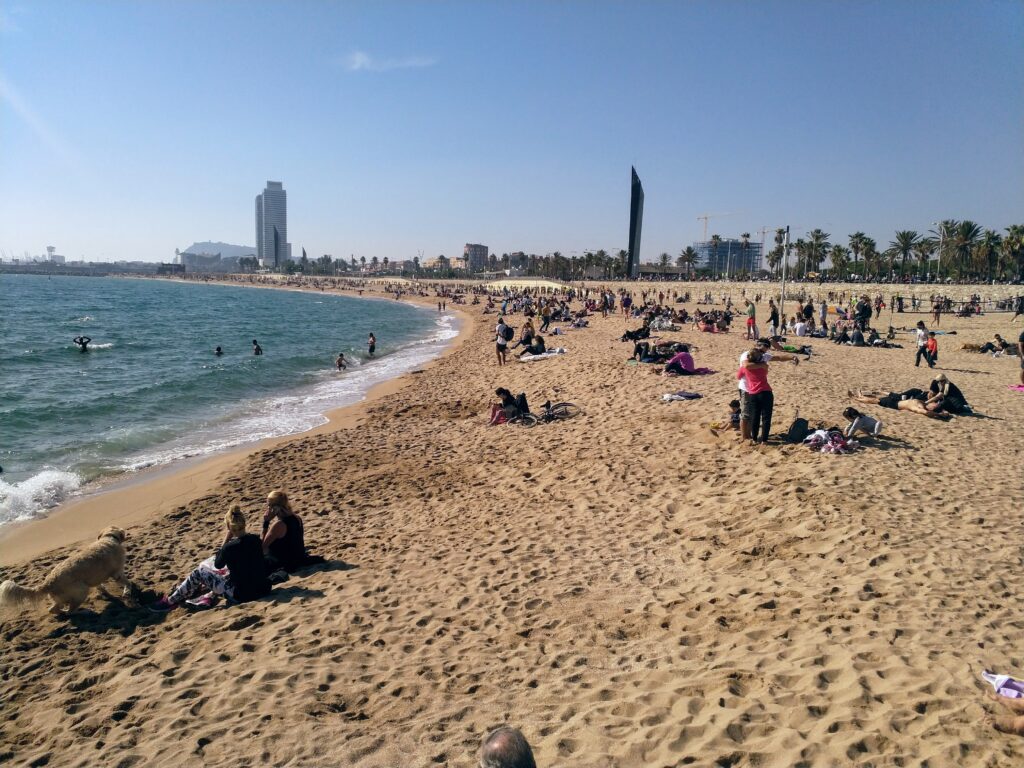
Three kilometers of beachfront promenade, chiringuitos serving cold beer on the sand, and a village feel once you step off the seafront. Barceloneta is Barcelona’s beach neighborhood, and it plays that role well.
The main artery, Passeig de Joan de Borbó, connects the Barceloneta metro station (L4) to the beach. Along it you’ll find paella restaurants and fish joints, some tourist-oriented, some genuinely good. Check out Google Maps reviews before eating. Step into the tight grid of streets behind the seafront and the vibe shifts. Laundry hangs between balconies. Elderly residents sit on chairs outside their doors. It feels like a Mediterranean fishing village that happens to be inside a major city.
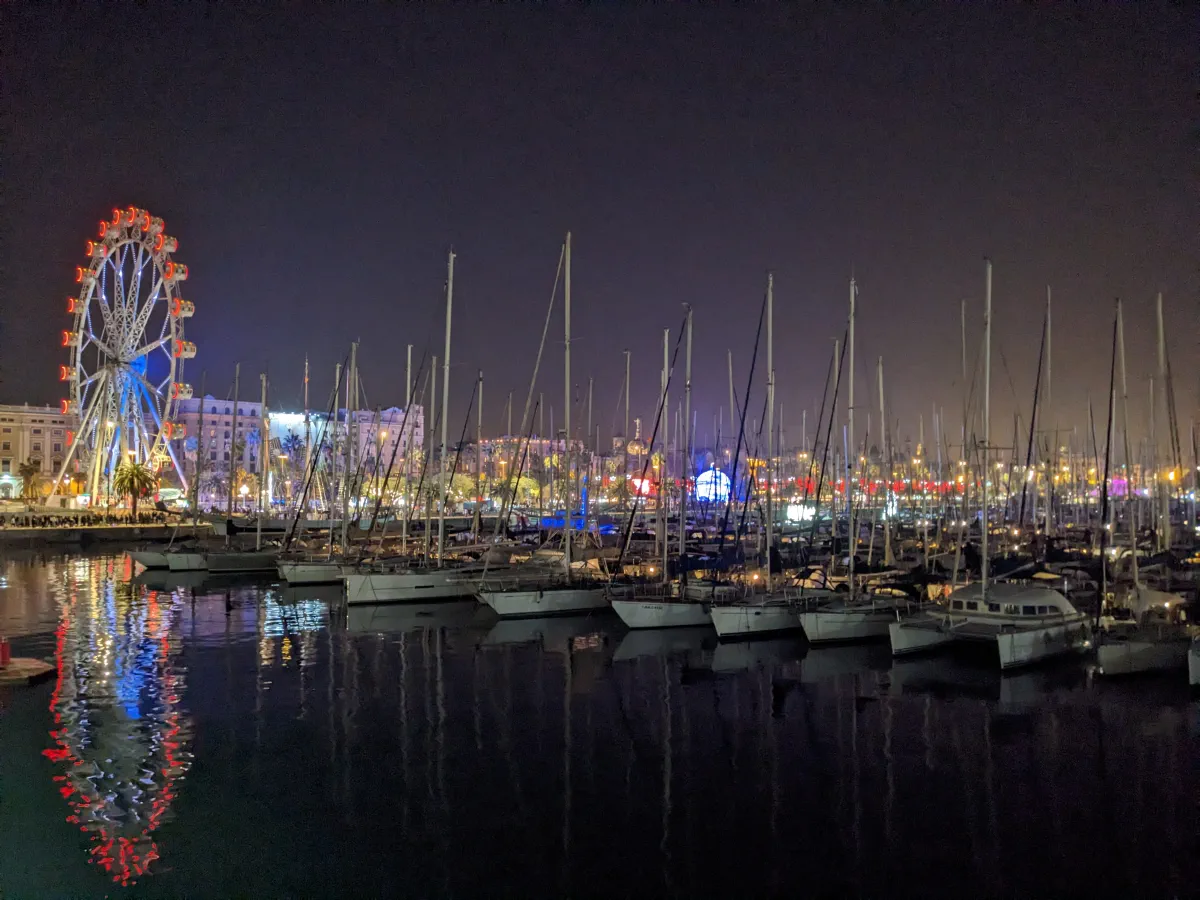
Hotel Arts Barcelona (4.5 stars, over 4,600 reviews) sits at the Port Olímpic end of the beachand is one of the more luxurious hotels in Barcelona. I have a friend who really appreciates good hotels and he was really impressed by Arts. The location is great too as you will be close to the beach and the harbour area in the image below with tons of actually good quality restaurants near by.
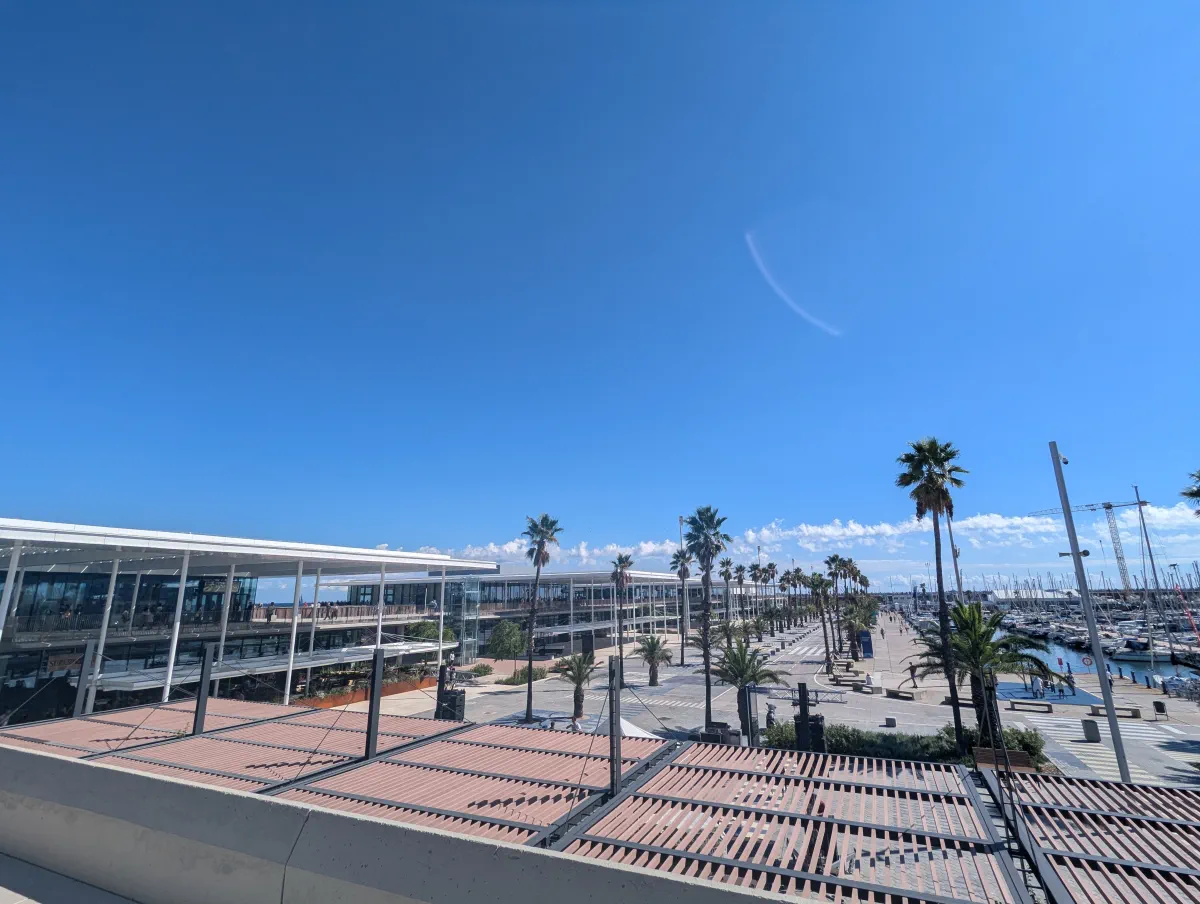
For a more affordable option, Acta Voraport (4.5 stars, over 2,300 reviews) is about ten minutes’ walk from the waterfront and within walking distance of most central attractions.
The catch: Barceloneta is on the L4 yellow line only, which means reaching Eixample or Sagrada Familia requires a transfer. And the subway areas underground can get really hot summer time. Also, in July and August, the beach gets genuinely overcrowded. If your trip is about Gaudí architecture or museum-hopping, you’ll spend a lot of time on the metro. But for a summer beach holiday or a trip where you want sand and seafood as your daily default, this is the neighborhood.
Gràcia
Barcelona annexed Gràcia in 1897, and the neighborhood still acts like it didn’t notice. It has its own plazas, its own rhythm, and almost no chain stores.
Plaça del Sol is the unofficial center, ringed by bars where locals gather for evening drinks. It gets noisy on weekends (if that matters for your accommodation, check proximity). Plaça de la Virreina is quieter, more residential. Plaça de la Vila de Gràcia has a clock tower and a calmer energy. These plazas function as outdoor living rooms, and spending an evening at one of them is the main draw of staying here.
Park Güell is an uphill walk (or a bus ride) from central Gràcia. Casa Vicens, Gaudí’s first house, is on Carrer de les Carolines. Fontana (L3) is the main metro station, and it puts you at Passeig de Gràcia in two stops. So the center is accessible. But you’re not in it.
Accommodation here is mostly apartments and small hotels, priced budget to mid-range. Gràcia works best for stays of four nights or more, for people who’ve already seen the Sagrada Familia and La Rambla on a previous trip and want to live more like a local. The independent restaurants, brunch spots, and bars are the reward. First-time visitors usually find it too far from the main sights.
On the plus side: Gràcia is one of Barcelona’s safest neighborhoods. Low crime, good street lighting, strong community feel. You can walk home at any hour without concern.
Poble Sec
Carrer Blai is the reason to stay here. This 500-meter pedestrian street is Barcelona’s pintxos, or pinchos as they are called in Spanish, capital: over a dozen bars with outdoor terraces serving pintxos for about 1.5€ each. It runs through the middle of Poble Sec, a residential neighborhood between Avinguda del Paral·lel and the slopes of Montjuïc. I used to live quite close by and at least once a month came here for some tasty food and affordable drinks.
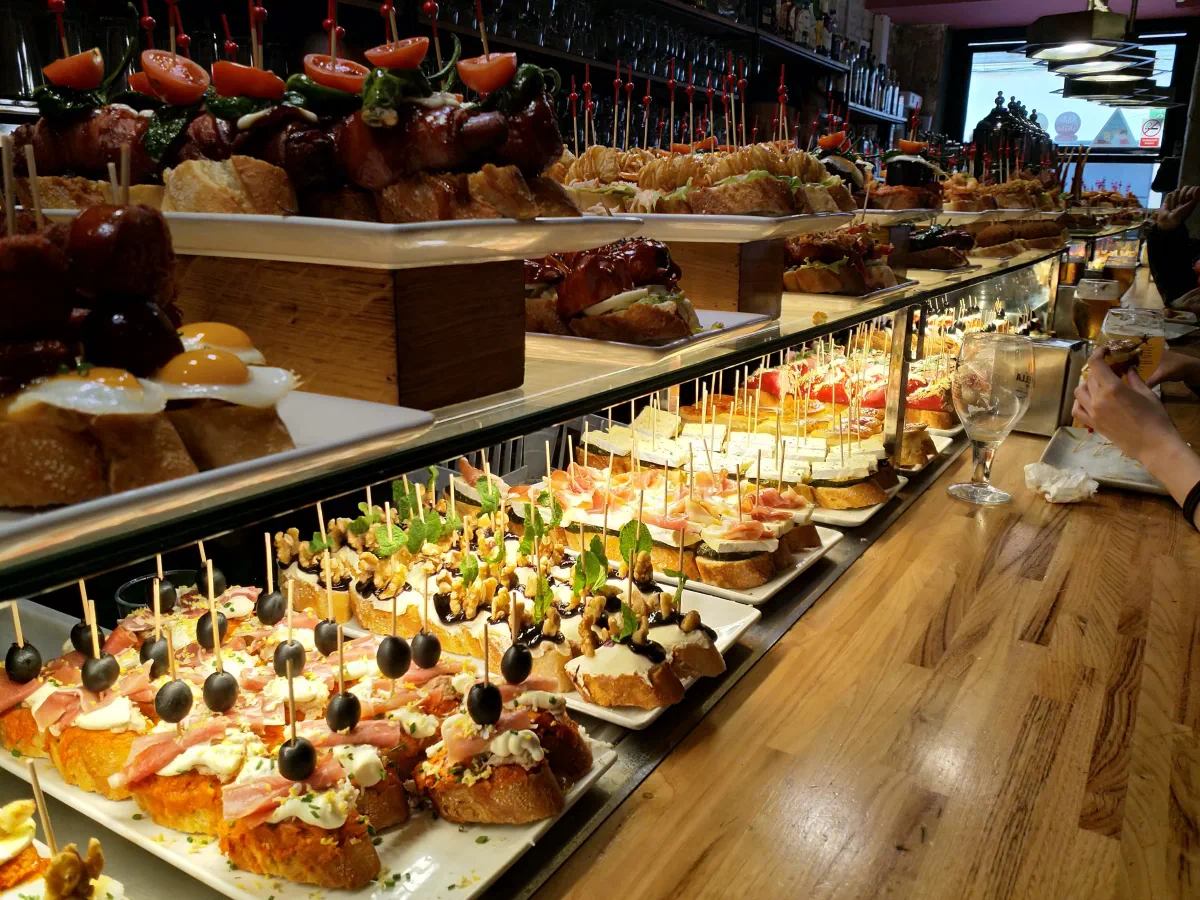
The area is quiet, local, and well-priced. Montjuïc’s museums (MNAC, Fundació Joan Miró, CaixaForum) are a short walk or cable car ride uphill. Paral·lel metro station (L2, L3) connects you to the center in minutes. For the quality of dining and the proximity to both Montjuïc and the old city, Poble Sec is underpriced compared to any of the neighborhoods listed above.
Budget Breakdown
Budget (under EUR 100/night)
Gràcia, Poble Sec, and the Sagrada Familia end of Eixample have the best options at this price point. Low season (November through February, excluding MWC week) brings prices across Barcelona down significantly. Apartments and guesthouses offer better value than hotels at this tier.
Mid-range (EUR 100-200/night)
The sweet spot for most visitors. This gets you a well-located hotel in Eixample, El Born, or Barceloneta. Motel One near El Born and Acta Voraport near Barceloneta both fall in this range and have consistently high guest ratings. Shoulder season (April through May, September through October) is the best window: warm weather, lower rates than summer.
Luxury (EUR 200+/night)
Concentrated along Passeig de Gràcia in Eixample and at the waterfront. The Mandarin Oriental and the Majestic are the standouts on Passeig de Gràcia. Hotel Arts dominates the beach end. Summer and event weeks (MWC, Primavera Sound) push these well past EUR 300 per night.
How to Choose the Right Area
- First time in Barcelona: Eixample. It’s safe, walkable, well-connected, and you can reach every major sight without transfers.
- Couples: El Born for atmosphere and dining, or the Gothic Quarter if you prioritize history over sleep quality.
- Families: Eixample (wide sidewalks, safe, quiet at night). Avoid the Gothic Quarter (cobblestones, stairs, late-night noise).
- Beach trip: Barceloneta in summer. Skip it November through March.
- Repeat visitors: Gràcia for local life, Poble Sec for food.
- Budget: Gràcia or Poble Sec for the best value. Book in shoulder season for warm weather without peak pricing.
Booking Tips for 2026
When to book
Shoulder season (April through May, September through October) gives you the best balance of weather and price. Summer rates, particularly in August, run significantly higher than the rest of the year. January is the cheapest month.
Three events in 2026 cause major price spikes. Mobile World Congress (March 2-5) pushes hotel rates up dramatically and fills the city with business travelers. Book three to six months ahead if your trip overlaps. Primavera Sound (June 4-6) and La Mercè (September 23-27) also spike prices. For La Mercè, book two to three months ahead.
Tourist tax
Barcelona charges a tourist tax per person per night (maximum seven nights). In 2026, expect EUR 7-11 per person per night depending on your accommodation’s star rating, with five-star hotels at the top end. Children under 16 are exempt. The tax is sometimes included in the displayed price and sometimes added at checkout, so check before you book. These rates are increasing annually through 2029.
The Airbnb situation
Barcelona is phasing out all short-term rental licenses by November 2028. No new licenses are being issued, and legal listings are declining. If you book a short-term rental, verify that it has an HUTB license number displayed in the listing. Unlicensed properties risk fines up to EUR 600,000 for the operator, and guests may be asked to leave. Hotels and licensed aparthotels are the safer bet going forward.
Getting from the airport
The Aerobus runs every 5-10 minutes to Plaça Catalunya and costs EUR 7.45 one-way. Metro line L9 Sud also reaches both terminals (EUR 5.90, and your standard T-Casual travel card is not valid for this route). Taxis run EUR 39-47 to the city center.
Pro tip: Use bus 46 to get to the airport with the price of a normal bus. You can also use your T-Casual card for this bus. I have a friend who has lived in Barcelona for 5+ years, and even he didn’t know about this little secret!
Interestingly, this is the only bus line that can’t be found on Google Maps, which makes me think that the city might have intentionally excluded that to get more income from the much more expensive options.
Frequently Asked Questions
Where should I stay in Barcelona in 2026 for the first time?
Eixample. It’s the safest central neighborhood, has the best metro connections (three lines at Passeig de Gràcia station), and puts you within walking distance of Casa Batlló, La Pedrera, and a direct metro ride to Sagrada Familia. Families, couples, and solo travelers all work here.
Is it still possible to book an Airbnb?
Legal listings still exist but are declining as licenses expire. All short-term rental licenses will be gone by November 2028. Look for an HUTB license number in the listing. Hotels are the more reliable option in 2026 and beyond.
How much is the tourist tax?
EUR 7-11 per person per night in 2026, depending on your hotel’s star rating. Maximum seven nights charged. Children under 16 are exempt. Check whether your booking price includes it.
When is the cheapest time to visit?
November through February (excluding MWC week in early March). January tends to be the cheapest month. For warm weather at lower prices, aim for April through May or late September through October.
Do I need a metro card?
The T-Casual card (10 trips, EUR 13) is the best value for stays of a few days. It must be loaded onto a T-Mobilitat contactless card. For longer stays or heavy metro use, the Hola BCN card offers unlimited travel for 2-5 days and includes the airport metro line.
Get Spain travel tips in your inbox
Occasional, genuinely useful emails — best times to visit, local tips, and deals. No spam.
Plan your trip to Spain
- Trip.com: A great source for finding flights and airport connections. I have noticed that it finds flight connections that some other search engines miss.
- Booking.com: My favourite site for booking hotels and apartments (and occasionally flights). They have the best filters and I like the user friendly interface.
- Hotels.com: The most popular hotel booking platform in many countries, US included.
- Get Your Guide: A massive selection of tours and excursions. They have tons of options available in Spain, including walking tours, cooking classes, museum options, boat tours and more!
- DiscoverCars: Want to explore charming villages and get out of the busy cities? DiscoverCars pools together the best offers from car rental operators for your convenience.
- Omio: Want to find the best option to move between cities in Spain? I use Omio for that. Plus you get to book the ticket from the same amazing platform.
- Klook: Need a local SIM card for your trip to Spain? A stress free holiday nowadays (unfortunately) might start from a good connection, so get an affordable eSIM here.
- VisitorCoverage: Not interested in checking out Spanish public health care system on your holiday? (like I've managed to do..) A cheap travel insurance gets that stress out of the way.
Some links above are affiliate links. If you book through them I may earn a small commission, at no extra cost to you.