Where to Stay in Alicante: 4 Best Areas Compared
This post contains affiliate links. If you book through them, I may earn a small commission at no extra cost to you.
Best Areas at a Glance
| Area | Vibe | Price Level | Best For |
|---|---|---|---|
| Casco Antiguo / Old Town | Historic, narrow alleys, nightlife below | Budget to Mid-range | Couples, culture-seekers, nightlife |
| Centro / City Center | Polished, walkable, central | Mid-range to Luxury | First-time visitors, convenience |
| Playa de San Juan | Relaxed, beachy, residential | Budget to Luxury | Families, beach holidays, long stays |
| La Albufereta | Quiet, local, sheltered cove | Mid-range | Small children, calm water, low crowds |
Casco Antiguo / Old Town
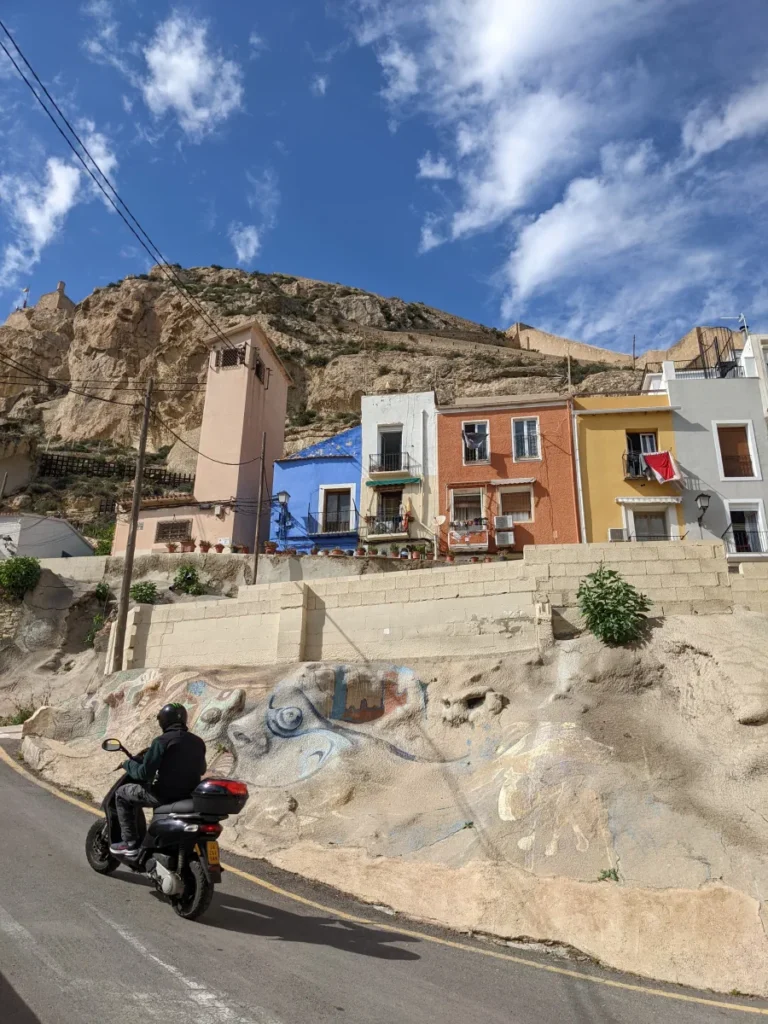
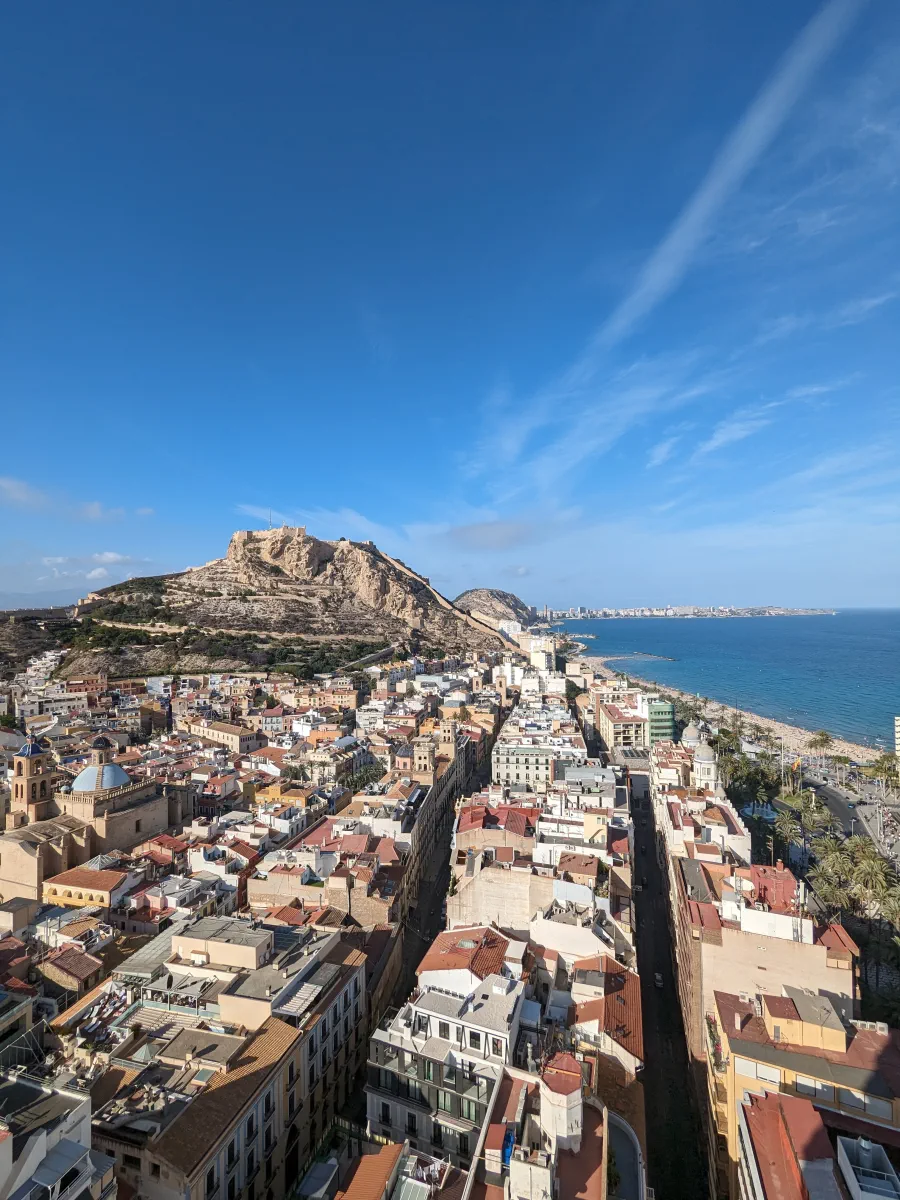
The Old Town is really two neighborhoods stacked on top of each other. Up the hill, Santa Cruz wraps around the slopes of Mount Benacantil beneath Santa Barbara Castle. Whitewashed houses line cobbled alleys so narrow you could touch both walls. It’s quiet during the day, almost village-like, with flower pots spilling off balconies.
Below, El Barrio is a different story. This is where Alicante goes out. The bars and tapas joints along its pedestrian streets don’t really get going until 11pm, and the music (salsa, jazz, whatever’s on) keeps running until early morning. If you’re a light sleeper, book on the Santa Cruz side and walk down when you want the action.
The area is walkable but steep. Getting up to Santa Cruz means climbing, though an elevator on the Postiguet beach side takes you straight up to Santa Barbara Castle. At the bottom of the hill, you’re a few minutes’ walk from Postiguet beach, and the Basilica de Santa Maria and Concatedral de San Nicolas are right in the neighborhood.
Accommodation here skews toward boutique guesthouses and apartments rather than big chain hotels. Prices sit in the budget to mid-range bracket, which makes it one of the cheaper central options. Just keep in mind: the steep streets and late-night noise from El Barrio make this a poor fit for families with young kids.
Centro / City Center
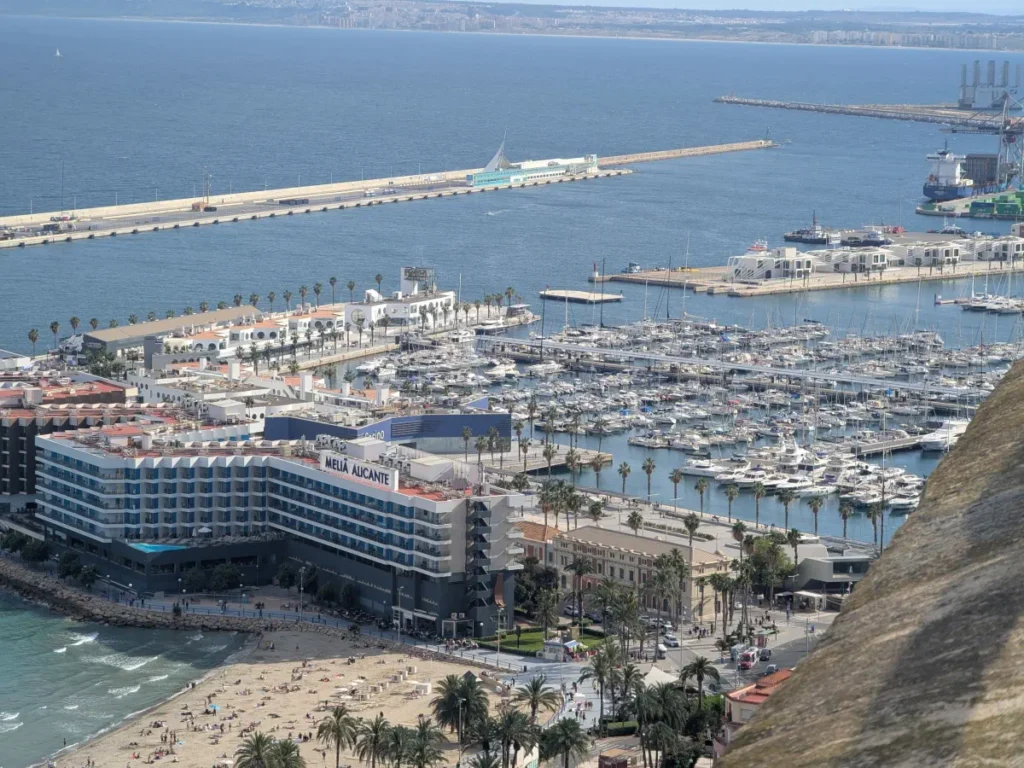
Most first-time visitors end up here, and honestly, it’s hard to argue against it. The center is flat, easy to navigate on foot, and puts you within walking distance of basically everything: Postiguet beach to the east, the train and bus stations to the west, Mercado Central for food shopping, and the Explanada de Espana, that palm-lined waterfront promenade with its distinctive mosaic tiles.
This is the priciest area in Alicante. Hotels along the Explanada tend toward the upper end, with mid-range rooms starting around EUR 91 per night in low season and luxury options closer to EUR 148. Expect those numbers to roughly double in July and August. The tradeoff is convenience: everything is walkable, the port and marina are right there, and you won’t need a tram or taxi for most activities.
Playa de San Juan
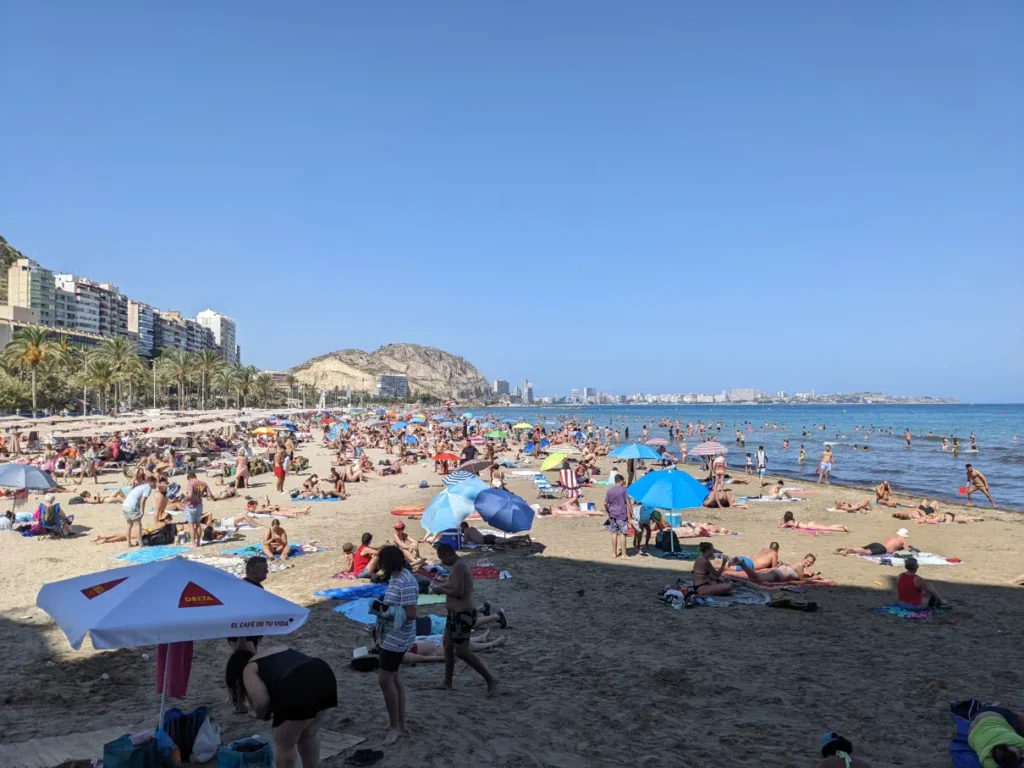
Seven kilometers of sand and 85 meters wide. Playa de San Juan is the kind of beach where you can actually spread out, even in August.
The neighborhood around it feels more residential than touristy. Locals come here for weekend paella at the beachfront restaurants, and the chiringuitos (beach bars) stay lively through summer evenings. There’s surfing, kayaking, and jet skiing if you want it, and the southern end near Playa de las Huertas has some of the clearest water along this stretch of coast.
The catch: you’re 7 to 13 kilometers from the city center, so walking there isn’t realistic. Tram lines L4 and L5 run from Luceros station in about 20 to 30 minutes for EUR 1-3 per ride, and service is frequent. It’s a minor inconvenience but worth noting if your trip is more sightseeing than sunbathing.
Prices cover the full range. Weeknight rates average around EUR 93, weekends closer to EUR 160. Generally a bit cheaper than the city center for the same quality level. The shallow water entry, lifeguard coverage, and sheer space make it the strongest pick for families, especially those staying a week or more.
La Albufereta
A small, sheltered cove about 400 meters long, tucked between the city center and Playa de San Juan. The Cabo de Huertas headland blocks most of the waves, which means calm, shallow water that barely reaches your knees for the first several meters. Kids can splash around safely. Adults can snorkel along the rocky edges.
This is a neighborhood, not a resort zone. Accommodation is mostly apartments and holiday rentals at mid-range prices, and the area is quiet enough that you’ll hear the sea at night. The center is about five minutes away by car or tram, so you’re not isolated. But if nightlife or restaurant variety matters to you, this isn’t the spot. It’s a base for people who want a calm beach and an early bedtime.
Budget Breakdown
Budget (under EUR 90/night)
The Old Town and Playa de San Juan both have options at this level, mostly guesthouses and apartments. In low season (November through March), you can find rooms across Alicante for around EUR 88 per night. January tends to be the cheapest month, running about 33% below peak rates. Apartments are better value than hotels at this tier, especially for stays of four nights or more.
Mid-range (EUR 90-150/night)
This is where most visitors land. Centro hotels along the Explanada start around EUR 91 in low season. La Albufereta apartments fall squarely in this range. In shoulder season (May through June, September through October), mid-range rooms across the city run EUR 100-140 per night, and you get warm beach weather without the crowds.
Luxury (EUR 150+/night)
Concentrated in the city center. Low-season luxury starts around EUR 148 per night and climbs past EUR 275 in July and August. Beachfront options at Playa de San Juan also reach this tier on summer weekends. If you’re booking luxury in peak season, reserve two to three months ahead.
How to Choose the Right Area
- Beach vs. old town: If your priority is sand and water, Playa de San Juan or La Albufereta. If you’d rather walk cobblestone streets and eat tapas at midnight, the Old Town. Want both? The city center splits the difference, with Postiguet beach a short walk east.
- Families: Playa de San Juan for older kids who want space to run, La Albufereta for toddlers and young children who need calm, shallow water. Avoid the Old Town (steep streets, nightlife noise).
- Couples: Santa Cruz in the Old Town for atmosphere, or the city center for walkable restaurants and the Explanada at sunset.
- Budget travelers: Old Town guesthouses or Playa de San Juan apartments. Book in shoulder season for the best balance of price and weather.
- No car: Stick to the city center or Old Town. Everything is walkable. Playa de San Juan works too, but you’ll depend on the tram (frequent, cheap, but adds 20-30 minutes each way).
Booking Tips
Shoulder season (May through June, September through October) is the sweet spot. Prices drop 25-40% from peak summer, but the weather is still warm enough for the beach. Alicante’s average hotel occupancy sits around 42%, so outside of July and August, you have leverage.
If you’re renting an apartment, check that the listing shows a VUD tourist license number. Alicante put a moratorium on new rental licenses in late 2024 (extended through January 2027), so only licensed properties should appear on major platforms. No VUD number is a red flag.
For July and August, book two to three months in advance. Playa de San Juan beachfront fills up fastest. Easter week (Semana Santa) also causes a brief price spike.
One practical detail: all accommodation providers in Spain must register guests with the Guardia Civil within 24 hours of check-in. Have your passport or ID ready when you arrive.
Getting from the airport to your accommodation is straightforward. Bus C6 runs every 20 minutes to the city center. A taxi costs EUR 20-25 to Centro or the Old Town, and EUR 30-35 to Playa de San Juan.
Frequently Asked Questions
What is the best area to stay in Alicante for first-time visitors?
The city center (Centro). It’s flat, walkable, and puts you close to Postiguet beach, the Explanada promenade, Mercado Central, and the train station. You won’t need public transport for most activities.
Is Playa de San Juan worth the distance from the center?
Yes, if beach time is your main focus. The tram takes 20-30 minutes and costs EUR 1-3 per ride. For a week-long beach holiday, the wider sand and calmer vibe more than make up for the commute.
When is the cheapest time to book?
November through March, with January being the cheapest month (about 33% below summer rates). For warm weather at lower prices, aim for May through June or September through October.
Do I need a car?
Not if you’re staying in the city center, Old Town, or along the tram line to Playa de San Juan. The tram and bus network covers the main areas well. A car is only useful if you plan day trips along the Costa Blanca.
Are apartments cheaper than hotels?
Generally yes, especially for families or stays longer than four nights. Make sure the listing has a VUD license number, and compare total costs (some apartments charge cleaning fees that close the gap).
Get Spain travel tips in your inbox
Occasional, genuinely useful emails — best times to visit, local tips, and deals. No spam.
Plan your trip to Spain
- Trip.com: A great source for finding flights and airport connections. I have noticed that it finds flight connections that some other search engines miss.
- Booking.com: My favourite site for booking hotels and apartments (and occasionally flights). They have the best filters and I like the user friendly interface.
- Hotels.com: The most popular hotel booking platform in many countries, US included.
- Get Your Guide: A massive selection of tours and excursions. They have tons of options available in Spain, including walking tours, cooking classes, museum options, boat tours and more!
- DiscoverCars: Want to explore charming villages and get out of the busy cities? DiscoverCars pools together the best offers from car rental operators for your convenience.
- Omio: Want to find the best option to move between cities in Spain? I use Omio for that. Plus you get to book the ticket from the same amazing platform.
- Klook: Need a local SIM card for your trip to Spain? A stress free holiday nowadays (unfortunately) might start from a good connection, so get an affordable eSIM here.
- VisitorCoverage: Not interested in checking out Spanish public health care system on your holiday? (like I've managed to do..) A cheap travel insurance gets that stress out of the way.
Some links above are affiliate links. If you book through them I may earn a small commission, at no extra cost to you.