Where to Stay in Madrid: Best Neighborhoods Ranked
This post contains affiliate links. If you book through them, I may earn a small commission at no extra cost to you.
Madrid’s metro is Europe’s second largest, hotel prices swing wildly between neighborhoods barely a kilometer apart, and the difference between a great stay and a frustrating one often comes down to picking the right district. This guide breaks down every major area, with specific prices, transport connections, and honest opinions on who should (and shouldn’t) book where.
| Neighborhood | Vibe | Price Level | Best For |
|---|---|---|---|
| Sol / Gran Vía | Central, tourist-heavy, always loud | Mid-range to Luxury | First-time visitors, sightseeing |
| Barrio de las Letras | Literary history, tapas bars, walkable | Mid-range to Luxury | Couples, culture lovers |
| Malasaña | Bohemian, young, vintage shops | Budget to Mid-range | Solo travelers, nightlife seekers |
| La Latina | Traditional, tapas-focused, Sunday markets | Budget to Mid-range | Foodies, weekend visitors |
| Salamanca | Upscale, designer shopping, quiet streets | Luxury | Luxury travelers, shoppers |
| Chueca | LGBTQ+ friendly, trendy cafés, lively | Budget to Mid-range | Nightlife, independent shops |
| Chamberí | Residential, local feel, families | Mid-range | Extended stays, families |
Where to Stay in Madrid by Neighborhood: A Complete Guide
Madrid sits at 660 meters above sea level on the central Castilian plateau, which means summer heat is dry and intense, winters bring occasional frost, and spring or autumn (April through June, September and October) are the sweet spot for visiting. If you’re trying to figure out when the heat really kicks in, July is when Madrid gets seriously hot. Knowing this matters because where you stay in Madrid should account for how much walking you’ll do in those conditions.
The city’s metro is the second largest in Europe after London’s. A single Zone A ticket costs €1.50 for up to five stations, or you can grab a ten-trip Metrobús card for €12.20. You’ll need a reloadable Multi Card (€2.50) since Madrid no longer uses paper tickets. The cards are anonymous and can be passed between travel companions.
That connectivity means you don’t have to pay Sol prices to be well-located. Malasaña and Chueca are barely 1 km north of the tourist core, and Chamberí sits about 2 km out, yet nightly rates drop noticeably. The trade-off: Sol puts you steps from Puerta del Sol, Plaza Mayor, and the Royal Palace, while outer neighborhoods give you local restaurants that aren’t pushing mediocre paella at inflated prices.
The best area for most visitors is Barrio de las Letras. But your priorities should drive the decision, so here’s every major neighborhood broken down.
How to Choose the Right Area
First-time visitors: Barrio de las Letras. Central to everything, walkable, great food. Done.
Families: Chamberí or an apartment in Arganzuela. Residential streets, lower noise, kitchen access. Metro gets you to the center in under 15 minutes.
Couples: Barrio de las Letras or Salamanca, depending on budget. Letras for atmosphere and food, Salamanca for quiet luxury.
Solo travelers on a budget: Malasaña. Social hostels, cheap eats, bars within stumbling distance.
Football fans: Anywhere on Metro Line 10 for Real Madrid at the Bernabéu, or near Line 7 for Atlético de Madrid at Metropolitano. You don’t need to stay in the northern suburbs.
Business travelers: The Castellana corridor, between Nuevos Ministerios and Cuzco stations. Corporate hotels, business districts, and direct metro access to the airport.
Best Hotels in Madrid’s City Center for Convenience
The city center means two areas: Sol/Gran Vía for maximum convenience, and Barrio de las Letras for maximum quality of life. They overlap, and most visitors will walk between them daily, but they feel quite different at street level.
Sol and Gran Vía
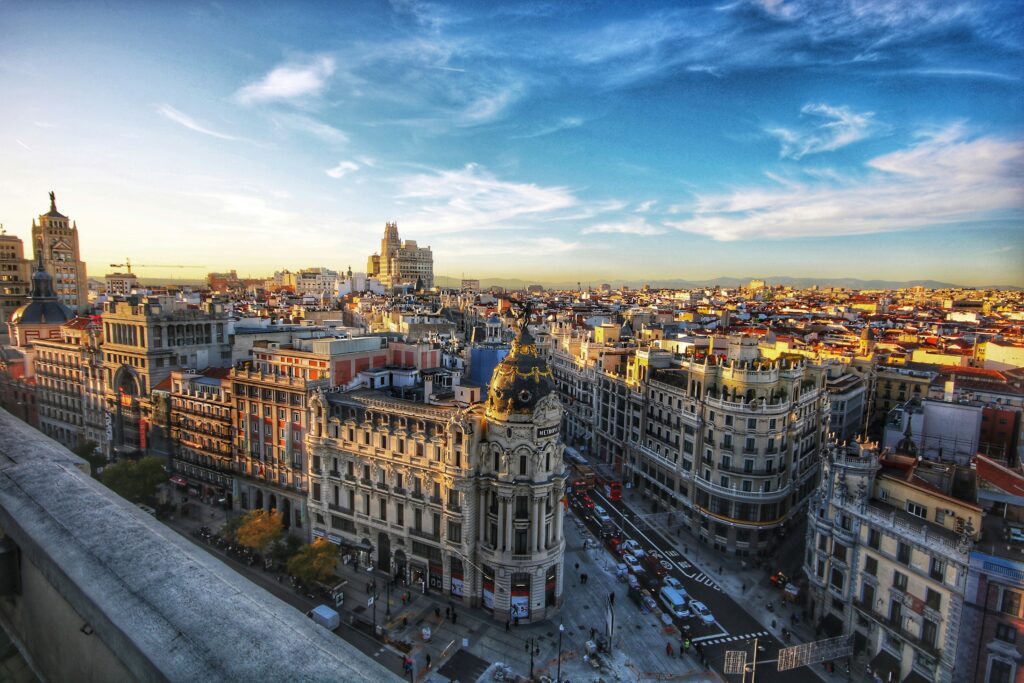
Puerta del Sol is kilometer zero of Spain, literally. All distances in the country are measured from a plaque in this square. Gran Vía, the broad commercial boulevard running northwest, is lined with Zara, H&M, and El Corte Inglés stores between metro stations Sol and Gran Vía.
Staying here puts you closest to the Royal Palace, Plaza Mayor, and the main shopping drag. The metro connections are unbeatable: Sol is a major hub where Lines 1, 2, and 3 converge. You can reach Chamartín station for trains, the airport, or the Santiago Bernabéu (for Real Madrid matches) without transfers.
The downside? Many restaurants around Sol and Plaza Mayor cater to tourists with generic poster-board menus advertising bad paella. The food quality within a two-block radius of Plaza Mayor is some of the worst in the city for the price. Walk five minutes in any direction, and it improves dramatically.
Hotels concentrate heavily here, from budget hostels with dorm beds starting around EUR 8-15 near Plaza de España to solid mid-range options in the EUR 80-150 range. This is where you’ll find the highest density of accommodation at every price point.
Barrio de las Letras
This is the neighborhood where Cervantes and Lope de Vega once lived, and the streets still have their quotes embedded in brass on the sidewalks. It’s sandwiched between Sol and the Museum Triangle (Prado, Reina Sofía, Thyssen-Bornemisza), which means you’re within a 10-minute walk of both the tourist hub and three of the world’s best art collections.
Plaza Santa Ana anchors the social life here. The square fills up by early evening with people drifting between tapas bars, and Calle Huertas turns into one of Madrid’s best nightlife strips after 10pm. Hotels here skew mid-range to luxury, with doubles typically running EUR 60-150. Budget travelers can find B&Bs and smaller guesthouses for EUR 55-100 for a double.
Skip this area if noise bothers you. Calle Huertas gets loud on weekends, and rooms facing the street will test your patience past midnight. Ask for interior-facing rooms when booking.
Budget-Friendly Where to Stay in Madrid Options
Malasaña is Madrid’s bohemian heart. The streets around Plaza del Dos de Mayo are packed with vintage clothing shops, independent record stores, and cafés that haven’t been corporatized. Hostels here offer single rooms for EUR 30-40 and doubles for EUR 40-50. That’s half what you’d pay in Barrio de las Letras for a comparable room, and you’re only a 15-minute walk from Gran Vía.
One thing to know: Malasaña attracts late-night crowds that can get rowdy. It’s not dangerous (Madrid overall has low crime rates for a major European capital), but it’s worth considering if you’re a light sleeper or traveling with family.
Chueca, just east of Malasaña, is Madrid’s LGBTQ+ district and one of the trendiest neighborhoods in the city. Calle Fuencarral, which runs along its western edge, has transformed into a corridor of independent fashion boutiques and local designer shops. Budget hotels and B&Bs here charge EUR 30-60 for singles, EUR 55-100 for doubles.
Lavapiés, south of Sol, is the most multicultural neighborhood and where you’ll find the cheapest dorm beds in the city (from EUR 8). The food scene here reflects its diversity, with restaurants serving cuisines from across Africa, Asia, and Latin America alongside traditional Madrid taverns.
Where to Book
Érase un Hotel (Google rating: 4.5, 5,550 reviews) on Calle de Bravo Murillo is one of the most reviewed affordable hotels in the city. Guest reviews consistently highlight it as a clean, comfortable option for solo travelers and couples who don’t need to be in the absolute center. It’s in the Tetuán district, connected to the center by metro in about 15 minutes. A strong pick if you want to save on the room and spend on food instead.
Luxury Accommodations: Where to Stay in Madrid for Premium Experiences
Calle Serrano is Madrid’s equivalent of Fifth Avenue. Loewe, Carolina Herrera, Manolo Blahník, Cartier, and Yves Saint Laurent all have flagship stores here. Calle Ortega y Gasset adds Chanel, Versace, Hermès, and Dolce & Gabbana. This is Salamanca, and it’s where Madrid’s money lives.
The streets are wider and quieter than in the center. Five-star hotels here start around EUR 200+ per night and climb steeply from there. What you get: concierge services, proximity to Retiro Park’s northern entrance, and restaurants that cater to well-heeled locals rather than tourists.
A practical note: Salamanca has its share of pickpockets, especially around Avenida de América station. The wealth attracts opportunists. Keep belongings close, same as anywhere.
Recoletos, the strip between Salamanca and the Paseo del Prado, offers a slightly more accessible luxury tier. You’re walking distance to the Prado and Thyssen-Bornemisza, and the neighborhood feels residential once you step off the main boulevard. Hotels here run EUR 150-300+ depending on the property.
Where to Stay Near Madrid’s Main Attractions and Landmarks
- Prado Museum, Reina Sofía, Thyssen-Bornemisza (Museum Triangle): Stay in Barrio de las Letras or along Paseo del Prado. All three museums cluster within a few hundred meters of each other.
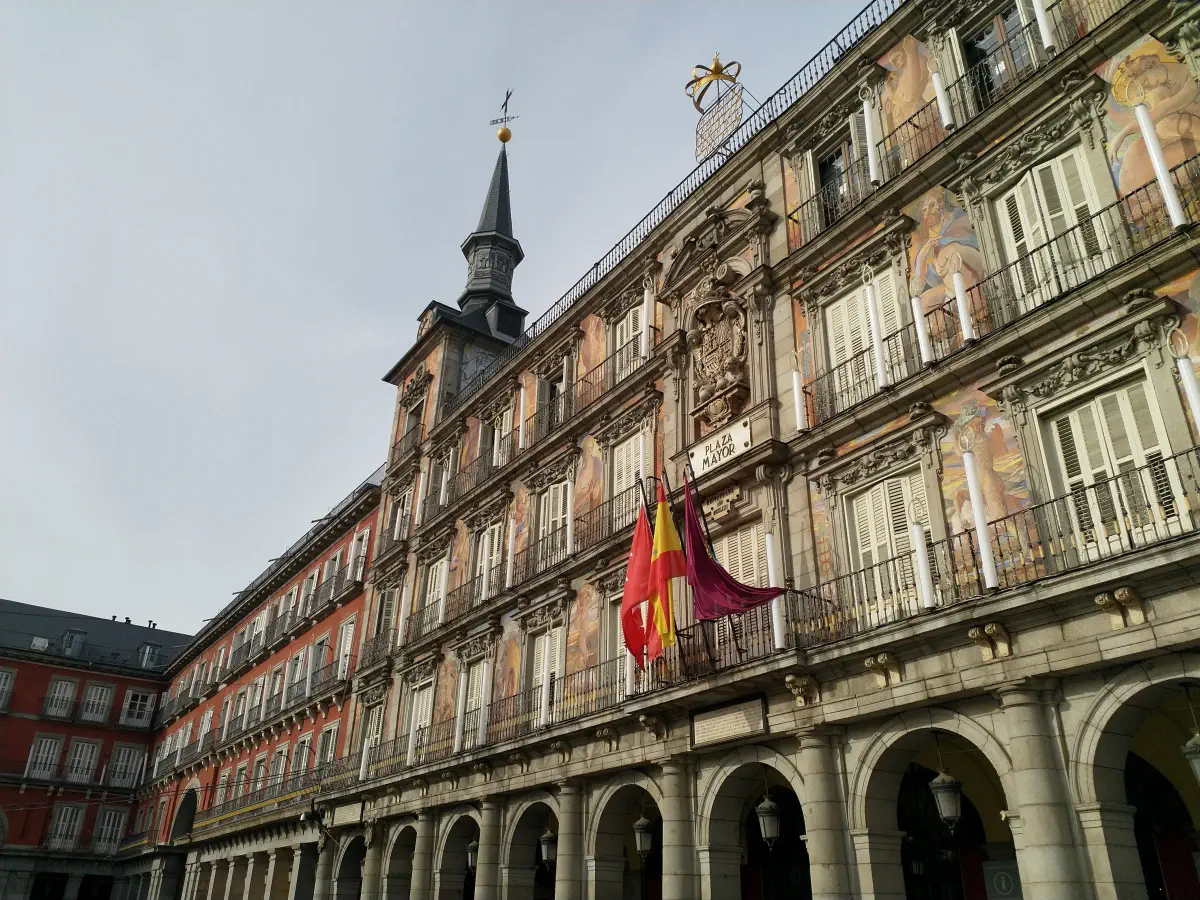
- Royal Palace and Plaza Mayor: Sol, or the Austrias district immediately west of Sol. The Barrio de las Austrias has some of Madrid’s most characterful accommodation.
- Retiro Park: Salamanca (north side) or the Jerónimos area near the Prado (west side). Both put you at a park entrance within 5-10 minutes on foot.
- Santiago Bernabéu (Real Madrid): The stadium sits on Paseo de la Castellana in the northern part of the city. Metro Line 10 stops directly at Santiago Bernabéu station. On match days, the metro handles the crowds efficiently, so staying nearby is optional. But if attending a Madrid match is your main reason for visiting, the Castellana corridor has solid mid-range hotels.
- Metropolitano (Atlético de Madrid): Line 7 stops at Estadio Metropolitano. Like the Bernabéu, you can reach it easily from most central neighborhoods, so don’t feel locked into the northern suburbs.
Where to Book on the Castellana Corridor
Canopy by Hilton Madrid Castellana (Google rating: 4.4, 2,310 reviews) stands out for repeat visitors who keep coming back. It’s on Plaza de Carlos Trías Bertrán, with direct access to the Castellana business district. Meliá Castilla (Google rating: 4.5, 8,512 reviews) is a large-format hotel on Calle del Poeta Joan Maragall with spacious rooms and walk-in rain showers, based on guest reviews. Both fall in the mid-range bracket. The Westin Madrid Cuzco (Google rating: 4.6, 284 reviews), further north on Paseo de la Castellana 133, gets consistent praise for professional check-in and a polished lobby. All three are within metro reach of the Bernabéu. Compare rates across hotel booking sites and check each hotel’s own website directly, as many Spanish properties offer better rates or throw in breakfast for direct bookings.
Where to Book in Moncloa-Aravaca
Residencia Don Quijote (Google rating: 4.5, 2,145 reviews) on Avenida del Dr. Federico Rubio y Galí is in the Moncloa-Aravaca district, west of the center. Reviewers praise the food and the Don Quixote theming. It’s a different kind of stay, further from the tourist core but well-connected by metro and appealing if you want something outside the usual hotel circuit.
Vacation Rentals and Apartments for Extended Stays in Madrid
Madrid has cracked down on short-term rental regulations in recent years, but serviced apartments and platforms like Airbnb still operate widely. For stays longer than a week, an apartment with a kitchen can cut your food costs significantly. Shopping at local markets, supermarkets, or small alimentación stores and cooking a few meals yourself is how most Madrileños actually live.
Chamberí, about 2 km north of the center, is the go-to for apartment stays. It’s a residential neighborhood with a genuine local feel: bakeries, neighborhood bars, small plazas where kids play in the evening. You won’t find tour groups here. Rates for a one-bedroom apartment run lower than equivalent hotel rooms in Sol.
Arganzuela, south of the center along the Manzanares river, is another option that’s gained ground with families. It’s well-connected by metro and has the benefit of Madrid Río park for kids to burn off energy. The trade-off is fewer restaurants and bars within walking distance compared to central neighborhoods. If you’re planning around weather in Spain, spring and autumn make apartment stays particularly appealing since mild temperatures make the walk to the center comfortable. Even autumn rainfall in Spain is manageable in Madrid, where most precipitation falls in brief bursts rather than all-day drizzle.
One important note: Madrid’s short-term rental market has regulatory restrictions that change frequently. If you’re booking an apartment, verify that the listing has a proper tourism license number displayed. Unlicensed rentals risk cancellation.
Where to Stay in Madrid for Nightlife and Entertainment
Madrid’s evening rhythm runs late. Dinner at 10pm. Bars filling up at 11pm. Clubs opening at midnight, staying open until 6am. That rhythm changes where you should stay if nightlife matters to you.
Calle Cava Baja in La Latina is the single most famous tapas street in the city. On Thursday and Sunday evenings, it’s shoulder-to-shoulder. Order cañas (200ml draught beers) as you hop between bars; most places will set out a small tapa with each round. La Latina also hosts the Rastro flea market on Sunday mornings, so you can stumble from Saturday night into Sunday browsing.
For bars and clubs with a younger, more alternative edge, Malasaña and Chueca are the centers. The streets around Plaza del Dos de Mayo have a concentration of cocktail bars, dive bars, and live music venues. Chueca adds a more polished bar scene alongside its restaurant offerings.
Barrio de las Letras works too. Calle Huertas has everything from traditional cervecerías to modern cocktail spots, and it’s probably the most accessible nightlife street for visitors who want variety without committing to one scene. For late-night fuel, find a chocolatería and order churros con chocolate. The fried-dough pastries dipped in thick hot chocolate are a Madrid tradition at 3am.
If nightlife is the priority, focus your search on these four neighborhoods. Salamanca and Chamberí are considerably quieter after midnight.
Booking Tips and Budget Breakdown
| Tier | Typical Nightly Cost | What You Get | Best Areas |
|---|---|---|---|
| Budget | EUR 8-50 | Dorm beds, basic private rooms, hostels with shared facilities | Lavapiés, Malasaña, Sol (near Plaza de España) |
| Mid-range | EUR 60-150 | Private rooms, en-suite bathrooms, good locations | Barrio de las Letras, Sol, Chueca, Castellana |
| Luxury | EUR 200+ | Five-star service, concierge, prime addresses | Salamanca, Recoletos, Paseo del Prado |
Madrid’s peak tourist season runs from April through June and September through October, when the continental climate is at its most pleasant. Hotel prices spike during these months, and popular properties in central neighborhoods sell out weeks ahead. Book at least a month in advance for spring and autumn visits.
July and August are hot (regularly above 35°C), so hotel prices drop as European tourists head to the coast. You can read more about how Spain’s weather varies by region to understand why Madrid empties out while the coasts fill up. January and February are the cheapest months, though nighttime temperatures hover near freezing.
Compare prices across multiple booking sites before committing. Rates for the same room can vary by 10-20% depending on the platform. Also check the hotel’s own website directly, as many Spanish hotels offer a best-price guarantee or throw in breakfast when you book direct.
FAQ
What is the safest neighborhood to stay in Madrid?
Madrid overall has some of the lowest crime rates among Europe’s largest cities. Police presence is visible, and streets stay populated even late at night. Salamanca, Chamberí, and Barrio de las Letras are all considered safe. The southern suburbs (Carabanchel, Puente de Vallecas) feel less polished, but areas near metro stations are generally fine. Standard precautions apply everywhere: watch your pockets on busy metro lines and around Puerta del Sol.
Which area is best for first-time visitors?
Barrio de las Letras. You can walk to the Prado, the Royal Palace, and the best tapas streets without ever needing the metro. Sol is the obvious alternative if you want to be at the absolute center of everything, but the food options around Sol are worse and noisier.
What’s the best time to book hotels?
For spring (April-June) or autumn (September-October) trips, book at least four to six weeks out. For summer or winter, two to three weeks is usually enough since demand drops. Prices are lowest in January and February.
Is public transport good from different neighborhoods?
Excellent. Madrid’s metro covers the city thoroughly, and buses use the same ticket system. Even neighborhoods like Chamberí or Arganzuela, which feel removed from the tourist center, are only a few metro stops away. The Multi Card system (€2.50 for the card, then load trips) makes it simple. One card works for your whole group since it’s anonymous.
Where should I stay if I’m visiting for a Real Madrid match?
You don’t need to stay near the Santiago Bernabéu. Metro Line 10 has a station at the stadium, and trains run frequently on match days. That said, hotels along Paseo de la Castellana put you within walking distance. The Canopy by Hilton and Meliá Castilla are both in that corridor and offer solid mid-range value.
What about Atlético de Madrid at the Metropolitano?
Same logic. Estadio Metropolitano is on Metro Line 7, in the northern part of the city. You can reach it from any central neighborhood in 20-30 minutes. There’s no need to base yourself nearby unless you’re attending multiple matches. If you are, the area around the stadium is residential and quiet, with fewer hotel options than the Castellana corridor but lower prices.
Get Spain travel tips in your inbox
Occasional, genuinely useful emails — best times to visit, local tips, and deals. No spam.
Plan your trip to Spain
- Trip.com: A great source for finding flights and airport connections. I have noticed that it finds flight connections that some other search engines miss.
- Booking.com: My favourite site for booking hotels and apartments (and occasionally flights). They have the best filters and I like the user friendly interface.
- Hotels.com: The most popular hotel booking platform in many countries, US included.
- Get Your Guide: A massive selection of tours and excursions. They have tons of options available in Spain, including walking tours, cooking classes, museum options, boat tours and more!
- DiscoverCars: Want to explore charming villages and get out of the busy cities? DiscoverCars pools together the best offers from car rental operators for your convenience.
- Omio: Want to find the best option to move between cities in Spain? I use Omio for that. Plus you get to book the ticket from the same amazing platform.
- Klook: Need a local SIM card for your trip to Spain? A stress free holiday nowadays (unfortunately) might start from a good connection, so get an affordable eSIM here.
- VisitorCoverage: Not interested in checking out Spanish public health care system on your holiday? (like I've managed to do..) A cheap travel insurance gets that stress out of the way.
Some links above are affiliate links. If you book through them I may earn a small commission, at no extra cost to you.