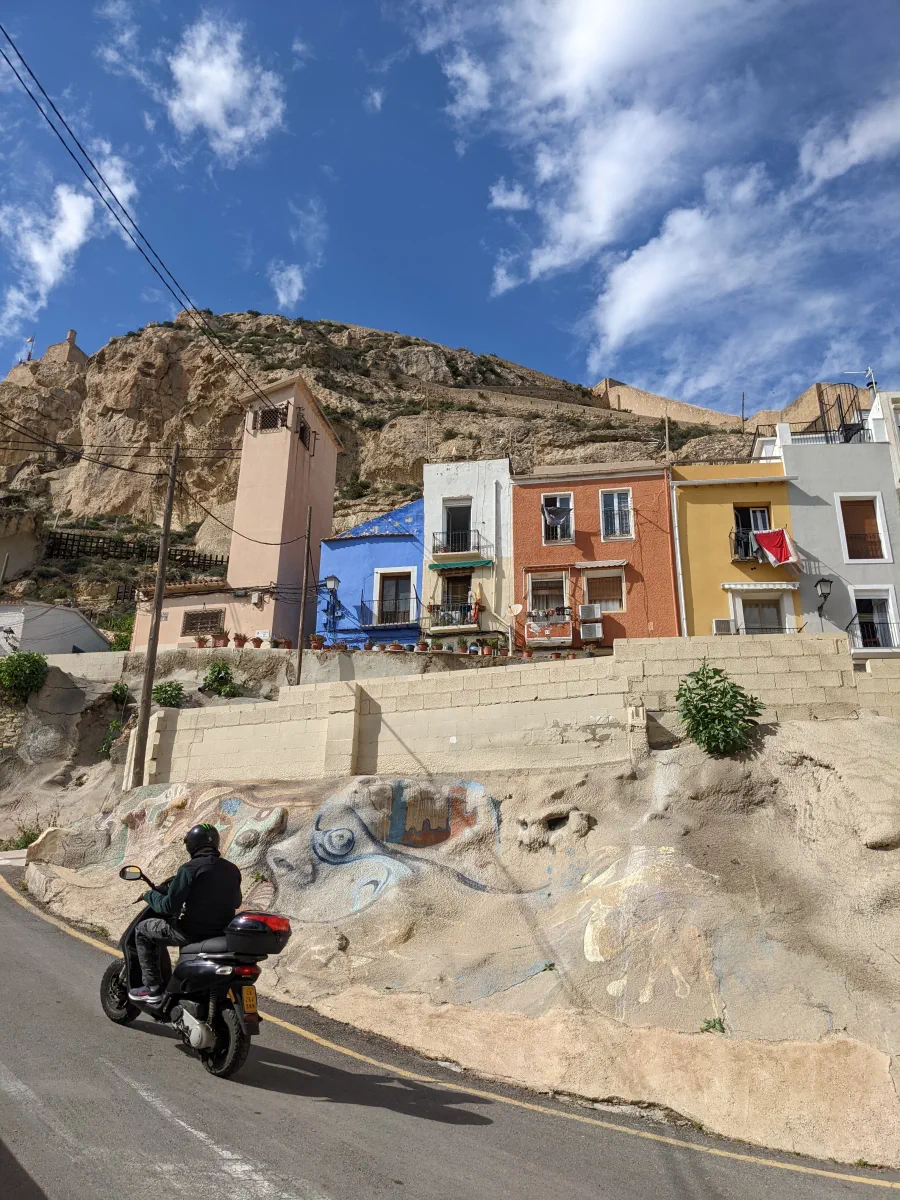
Getting Around Alicante: Complete Transportation Guide 2026
This post contains affiliate links. If you book through them, I may earn a small commission at no extra cost to you.
Alicante’s compact old town makes walking your best bet for sightseeing, but the city’s modern transport network handles everything else smoothly. The TRAM connects major districts and beach areas, buses fill the gaps, and taxis cost less than you’d expect in most European cities.
Your transport strategy depends entirely on where you’re staying and what you want to see. Staying in the old town triangle (between Rambla de Méndez Núñez, Explanada de España, and Mount Benacantil)? You can walk to the castle, cathedral, and main museums. But you’ll need wheels – or rails – to reach Playa San Juan, the university area, or day trips to nearby towns.
The golden rule: get a Bono Móbilis card if you plan more than seven rides on buses or trams. At 5.25€ for 10 trips (April 2026) plus 2€ for the physical card, it beats paying €1.45 per bus ride in cash. The card works on both systems within zone A, covering all tourist areas.
Public Transport in Alicante: Buses, Trams, and Trains
TRAM Metropolitano de Alicante runs four color-coded lines that’ll get you almost anywhere tourists want to go. Line 1 (blue) connects the city center with Universidad and Benidorm – yes, the beach resort is just 45 minutes away. Line 2 (green) heads to San Juan beach, while Line 3 (red) serves the airport and Elche.
The central hub is Luceros station, where all lines besides L5 which leaves from the Playa Postiquet, intersect. You can also hop on lines L1-L4 from Mercado and MarQ stops. From Luceros, Playa de San Juan (Costa Blanca stop) is 9 stops and about 20 minutes.
Subus Alicante operates the city’s bus network with routes covering areas the tram doesn’t reach. Most buses run 6:30-22:30, with night routes on weekends. The C6 airport bus deserves special mention – it’s the only public transport running 24/7, connecting the airport with the city center every 20 minutes for €4.50.
Regional trains connect Alicante-Terminal to Valencia (2.5 hours) and Madrid (3.5 hours via AVE high-speed rail). The station sits right in the city center, accessible by tram or a 10-minute walk.
Download the “Alicante Bus” app for real-time schedules and route planning. It works offline once downloaded, perfect for navigating without burning through mobile data. I am personally so used to Google Maps so I use it for the local transport as well.
Getting Around Alicante Airport to the City Center
Alicante-Elche Airport sits 15km southwest of the city, connected by three practical options that won’t break your budget.
Bus C6 is your cheapest bet at €4.50 per person. The bus stop is on the departure level (level +2) – don’t wander down to level -2 where charter buses park. The 20-minute journey follows a circular route through the city center, stopping at the bus station, Plaza Puerta del Mar, central market, and Plaza Luceros. Buses run 24/7, which is rare for European cities this size.
Taxis charge budget-to-mid-range rates to downtown, reasonable for up to four people with luggage. The taxi rank is on the arrival level (level 0). Spanish taxis are regulated, so you won’t get ripped off with inflated tourist prices. Nowadays you can also order an Uber, Bolt or Cabify from your app and they have their dedicated pick-up zones right before the regular taxis. The prices can vary a lot, so if you have 2 or more of them it’s really worth checking them all.
Car rental counters operate in the terminal with Avis, Europcar, and others. But unless you’re planning day trips to Costa Blanca beaches or inland villages, skip the rental – Alicante’s old town has limited parking, and public transport covers tourist areas well.
Renting a Car for Getting Around Alicante
Cars make sense for exploring the Costa Blanca coastline or reaching hilltop villages like Guadalest, but they’re more hassle than help within Alicante city limits.
The old town’s narrow streets date back to medieval times – they weren’t designed for modern vehicles. Parking is scarce and expensive, typically €1.20-1.80 per hour in blue zones (Monday-Friday 9:00-14:00, 16:30-20:00, Saturday 9:00-14:00). Hotels with parking charge varies from budget to mid-range daily rates.
Spanish driving rules follow standard European patterns: speed limits of 50 km/h in cities, 90 km/h on secondary roads, 120 km/h on autopistas (toll highways). Right-hand drive, roundabouts everywhere, and parking enforcement that’s stricter than it used to be.
Major rental agencies cluster at the airport and train station. Economy cars start at budget daily rates, with higher prices in summer when beach demand peaks. International driving permits are required for non-EU visitors.
The sweet spot for car rentals: base yourself in Alicante for city exploration, then rent for 2-3 days to hit Benidorm, Calpe’s Peñón rock, or Elche’s palm groves. Many agencies discount 3+ day rentals compared to single-day rates.
Taxis and Ride-Sharing for Getting Around Alicante
Alicante’s regulated taxi system keeps prices fair and service reliable. Meters start at €3.15 during the day (€3.77 at night), plus €0.98 per kilometer. Most rides within the city center cost budget rates, making taxis competitive with other transport for groups of three or four.
Taxi stands (paradas de taxi) are marked clearly throughout the city. You’ll find them at the train station, bus station, Plaza Luceros, and near major hotels. Spanish taxi drivers typically don’t cruise for fares like in some cities – use the stands or call ahead.
Uber, Bolt and Cabify operate in Alicante, but the selection is limited compared to traditional taxis. The app works fine for booking ahead, though you might wait longer for pickup than you would in Madrid or Barcelona.
Radio Taxi Alicante (+34 965 10 11 11) handles phone bookings in Spanish. Many hotels can call taxis for guests, which often arrives faster than hailing one on the street.
Taxis shine for specific situations: late-night returns after exploring the Puerto nightlife area (which has safety concerns), carrying luggage between transport hubs, or reaching Santa Bárbara Castle if the elevator is closed for maintenance.
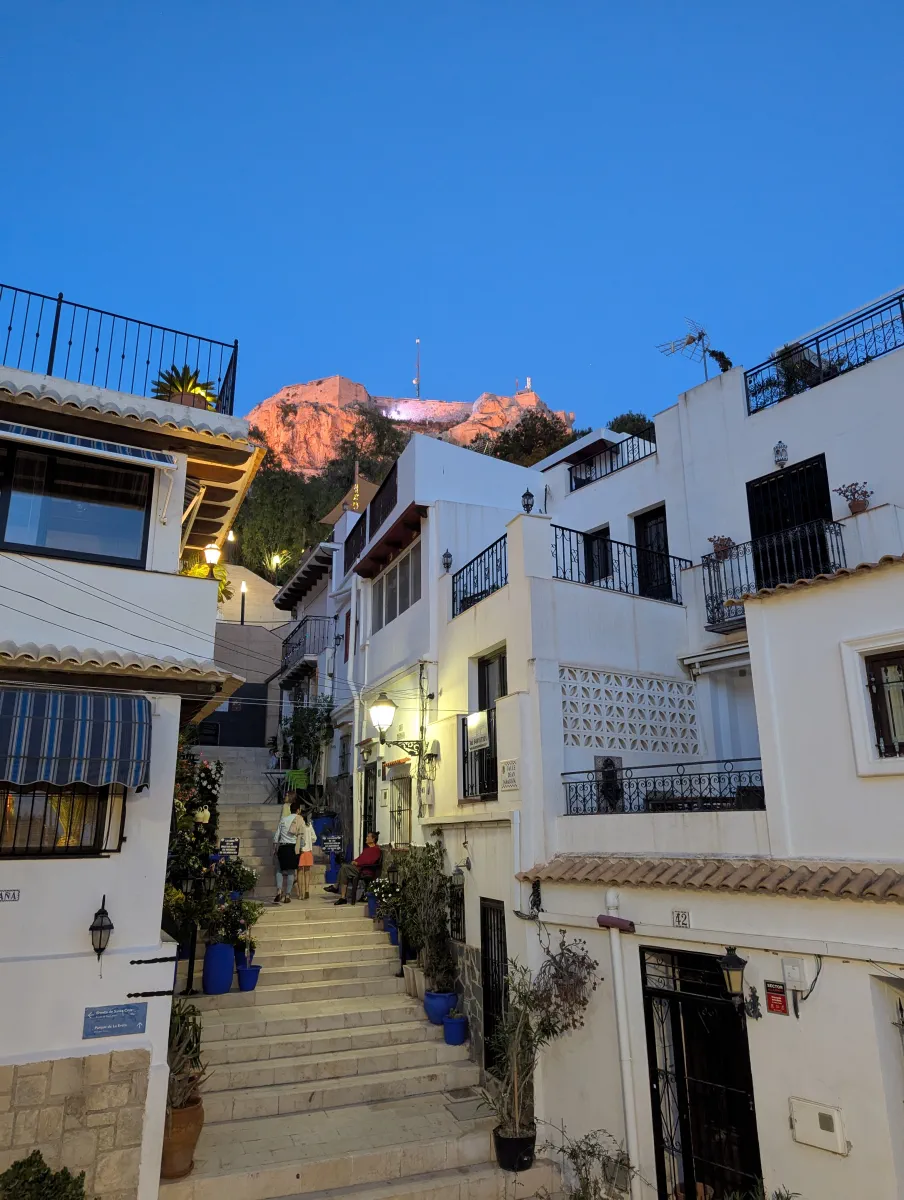
Walking and Cycling in Alicante’s City Districts
Alicante rewards walkers, especially in the old town where most attractions cluster within a 15-minute stroll. The seafront Explanada de España stretches for 500 meters along the marina, lined with palm trees and outdoor cafés – it’s practically mandatory evening exercise for locals.
The city center is flat, but the climb to Santa Bárbara Castle involves steep, winding streets that can exhaust unprepared visitors. Take the elevator (€2.70 round-trip) if you want to save energy for exploring the fortress itself.
Tourists can rent bikes at budget daily rates through private shops. The flat terrain along the coast makes cycling pleasant, though summer heat (regularly hitting 30°C+ in July-August) limits comfortable riding hours to early morning and evening.
The waterfront has dedicated bike lanes connecting the city center with San Juan beach area. It’s a scenic 30-minute ride that beats taking the tram if weather cooperates.
Avoid cycling in the old town’s pedestrian zones during peak hours (11:00-14:00, 18:00-21:00). The narrow streets get crowded with tourists, and locals aren’t always patient with cyclists weaving through foot traffic. You’ll notice that most of the people riding bikes for moving around are not Spaniards.
Best walking routes start at Plaza del Ayuntamiento, with its wave-patterned marble pavement, then wind through Calle Mayor toward the cathedral, up through the Santa Cruz neighborhood’s colorful houses, and down to the marina for sunset drinks.
Frequently Asked Questions About Getting Around Alicante
What’s the best transport for visiting Santa Bárbara Castle?
Take the elevator along Avenida Jovellanos for €2.70 round-trip. The walking route uphill takes 20-25 minutes and gets steep quickly. The elevator runs daily until 19:20 (23:30 in July-August), with free access after 19:45 during summer months.
Do I need a car for day trips outside Alicante?
Not always. TRAM Line 1 reaches Benidorm in 45 minutes. Buses connect to Elche (30 minutes) and other Costa Blanca towns. Cars help for multiple stops in one day or reaching mountain villages like Guadalest, but public transport handles most tourist destinations.
How accessible is Alicante’s transport for wheelchair users?
TRAM stations have step-free access and designated spaces. Most buses feature low floors and wheelchair lifts. The Santa Bárbara Castle elevator accommodates wheelchairs. However, the old town’s cobblestone streets and narrow sidewalks can be challenging.
What transport pass saves the most money?
The Bono Móbilis card at €8.70 for 10 rides beats individual tickets if you take more than six bus or tram rides. Alicante has repeatedly subsidised multi-trip passes at 50% – the last round ran to mid-2026 – so check whether one is running before you pay the full fare. Buy it at TAM Office on Calle Díaz Moreu, the central bus station, or participating shops.
Is it safe to walk around Alicante at night?
The old town and Explanada area are well-lit and patrolled. Avoid the port area neighborhoods to the west, especially around dawn when theft increases. The Puerto nightlife zone has security, but take taxis back to your hotel rather than walking through adjacent areas.
When do buses and trams stop running?
Most bus routes end at 22:30, with night services on weekends. TRAM lines typically run until 23:00. The C6 airport bus operates 24/7 – it’s your only public transport option for very late flights or early morning departures.
Get Spain travel tips in your inbox
Occasional, genuinely useful emails — best times to visit, local tips, and deals. No spam.
Plan your trip to Spain
- Trip.com: A great source for finding flights and airport connections. I have noticed that it finds flight connections that some other search engines miss.
- Booking.com: My favourite site for booking hotels and apartments (and occasionally flights). They have the best filters and I like the user friendly interface.
- Hotels.com: The most popular hotel booking platform in many countries, US included.
- Get Your Guide: A massive selection of tours and excursions. They have tons of options available in Spain, including walking tours, cooking classes, museum options, boat tours and more!
- DiscoverCars: Want to explore charming villages and get out of the busy cities? DiscoverCars pools together the best offers from car rental operators for your convenience.
- Omio: Want to find the best option to move between cities in Spain? I use Omio for that. Plus you get to book the ticket from the same amazing platform.
- Klook: Need a local SIM card for your trip to Spain? A stress free holiday nowadays (unfortunately) might start from a good connection, so get an affordable eSIM here.
- VisitorCoverage: Not interested in checking out Spanish public health care system on your holiday? (like I've managed to do..) A cheap travel insurance gets that stress out of the way.
Some links above are affiliate links. If you book through them I may earn a small commission, at no extra cost to you.