15 Best Things to Do in Malaga — Local Picks (2026)
This post contains affiliate links. If you book through them, I may earn a small commission at no extra cost to you.
Malaga has a problem – most people treat it as an airport. Fly in, transfer to the Costa del Sol, never look back. Which is a shame, because the city itself is one of the most enjoyable in southern Spain. The Moors built a fortress here that rivals anything in Granada (minus the three-hour queues). Picasso was born here. The tapas are better and cheaper than in most tourist-facing Andalusian cities. And yet, somehow, Malaga stays under the radar as a destination in its own right. Here’s what’s actually worth your time – and what you can skip.
Alcazaba and Gibralfaro Castle
If you only do one thing in Malaga, make it the Alcazaba. This 11th-century Moorish fortress-palace sits on a hillside above the old town, surrounded by gardens, archways, and courtyards that look like they belong in Granada’s Alhambra. The difference? You won’t be shuffling through in a crowd of 6,000 other tourists. On a weekday morning, you might share the place with a dozen people.
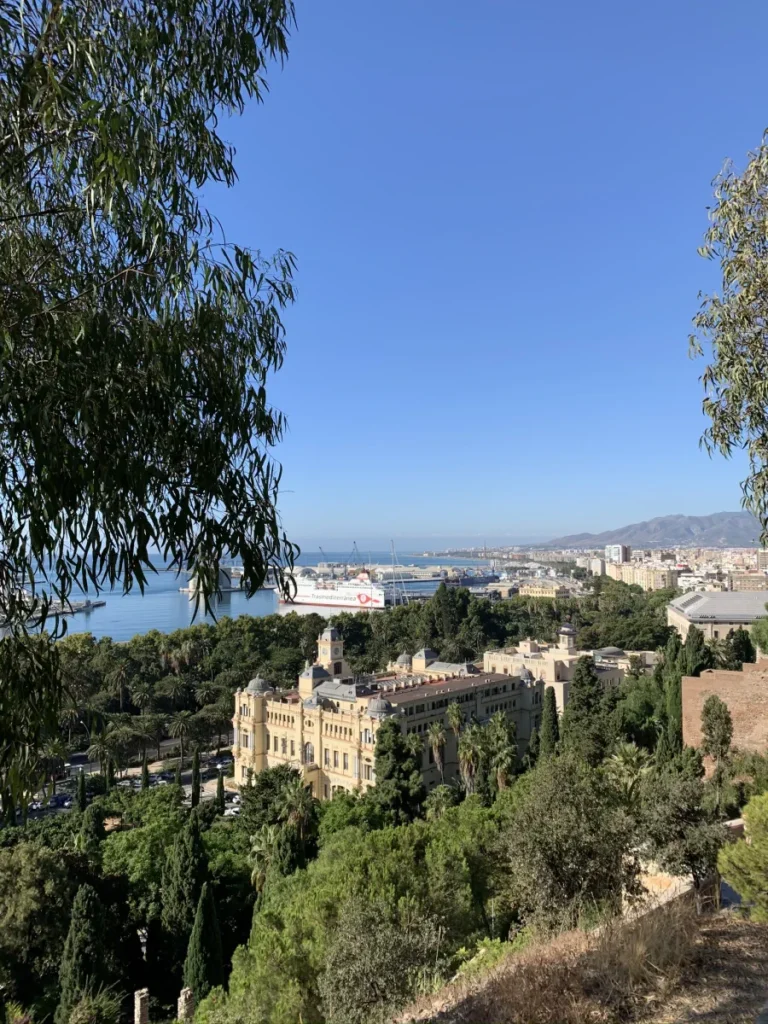
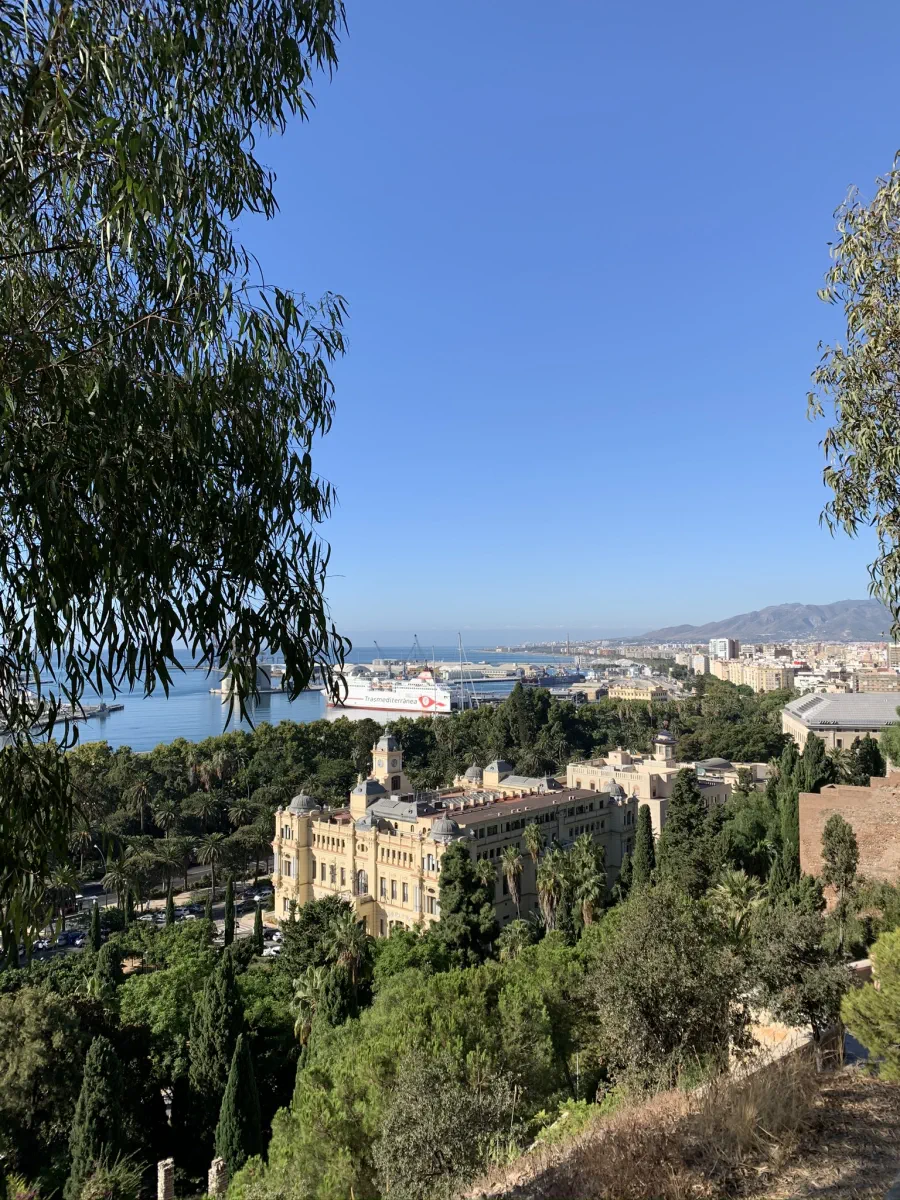
Above the Alcazaba sits the Castillo de Gibralfaro, a 14th-century castle with the best panoramic views in Malaga. The walk up is steep but shaded. From the ramparts you can see the bullring, the port, the cathedral, and the coastline stretching towards Torremolinos. On a clear day, you can pick out the African coast.
| Attraction | Price | Combined ticket | Hours (Apr-Oct) |
|---|---|---|---|
| Alcazaba | 3.50€ | 5.50€ | 9:00-20:00 |
| Gibralfaro Castle | 3.50€ | 9:00-20:00 |
Winter hours (Nov-Mar) close at 18:00. Last entry is one hour before closing. Reduced rate of 1.50€ for students, seniors, and children aged 6-16.
The Roman Theatre
Right at the foot of the Alcazaba, you’ll find the Teatro Romano – a 1st-century BC Roman theatre that was only rediscovered in 1951 when they were demolishing a building on top of it. It’s free, it’s open (Tuesday to Sunday), and there’s a small interpretation centre next to it. You don’t need more than 20 minutes, but it’s an impressive thing to walk past on your way up to the Alcazaba. Open Tuesday to Saturday 10:00-18:00, Sunday until 16:00. Closed Mondays.
Picasso Museum
Malaga is where Picasso was born, and the city has made the most of it. The Museo Picasso Malaga holds over 285 works in a restored 16th-century palace. The collection spans his full career – early academic paintings through cubism to the late ceramic work. It’s well laid out and not overwhelmingly large, which honestly is a plus. You can see everything in 90 minutes without rushing.
Tickets are 9€ for the permanent collection, 8€ for temporary exhibitions, or 12€ for a combined ticket. Under-17s go free, and students under 26 and over-65s get reduced rates. The museum is free during the last two hours every Sunday – expect it to be busy.
Hours vary seasonally but are typically 10:00-19:00, extending to 20:00 or 21:00 in summer.
Centre Pompidou Malaga
The big colourful glass cube at the port – you can’t miss it. This outpost of the Paris Pompidou has around 70 works by Kahlo, Bacon, Picasso, Miró, and others. Whether it’s worth 9€ depends on your interest in modern art. The collection is small. If you’re coming from a city with major galleries (London, say), it might feel slight. If you’re on a beach holiday and want a couple of hours of culture in air conditioning, it works.
Open Wednesday to Monday, 9:30-20:00. Closed Tuesdays. Free on Sundays from 16:00, and free for under-18s.
The Cathedral (La Manquita)
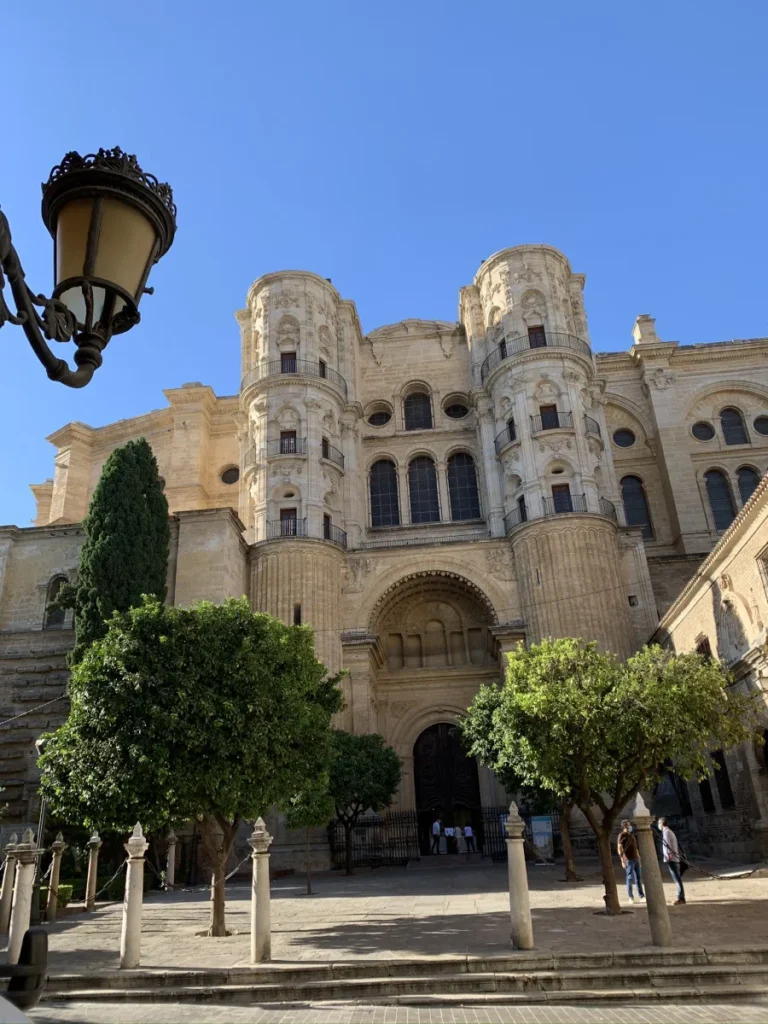
Malaga’s cathedral is known as “La Manquita” – the one-armed lady – because its south tower was never finished. Construction started in 1528 and went on for over 200 years before the money ran out. The tower stump is still there, unfinished, which gives the building an endearingly lopsided look.
The exterior and the story are honestly more interesting than what’s inside. If you love church interiors, the Renaissance nave is impressive and there’s a roof terrace tour (about 200 steps). But at 10€ for general entry (including audio guide, with reduced rates for students and seniors), it’s on the expensive side for a Spanish cathedral. There’s free entry Monday to Saturday 8:30-9:00 and Sunday 8:30-9:30, but that’s really just for mass.
Atarazanas Market
The Mercado Central de Atarazanas is Malaga’s main food market, set behind a beautiful 14th-century Moorish gateway. Inside: stalls selling fresh fish, olives, cheese, charcutería, and whatever fruit is in season. Several tapas bars inside serve breakfast and brunch – a coffee and a montadito surrounded by the noise and colour of a working market is one of the best ways to start a morning here.
Open Monday to Saturday, 8:00-14:00. Closed Sundays, and the fish hall is closed on Mondays. Go before noon for the best selection. Saturday is the busiest day – lively but crowded.
Calle Larios and the Old Town
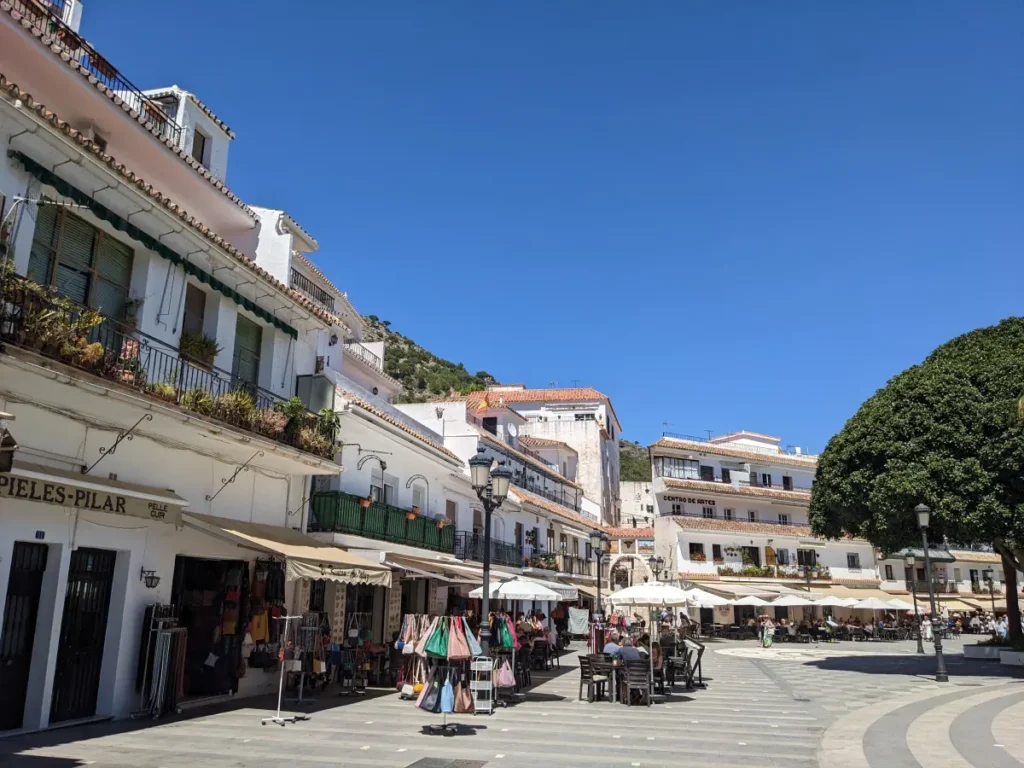
Calle Larios is Malaga’s main pedestrianised shopping street – marble-paved, lined with international chains and cafes, connecting Plaza de la Constitución down to the port. It’s pleasant for a stroll but not where you’ll find the real character of the city. That’s in the narrow streets leading off it.
For tapas bars with some personality, head to the streets around Calle Granada and Plaza de la Merced. The Soho district south of the old town has been transformed by the MAUS street art project since 2013 – murals by international artists like Obey, D*Face, and ROA cover entire building facades. It’s free, it’s open all the time, and teenagers will actually enjoy it.
The Paseo del Parque, a 900-metre subtropical promenade running from Plaza de la Marina to the bullring, is worth a walk in the morning or evening – exotic trees, fountains, shade. Not exciting, but a nice way to move between the port and the old town.
Food and Drink
Malaga’s tapas scene is one of the best in Andalucía, and noticeably cheaper than Seville or Granada’s tourist-facing options. Most bars offer free tapas with drinks or charge 2-4€ per tapa.
What to eat
Espetos de sardinas – sardines threaded onto bamboo skewers and grilled over an open fire on the beach. This is THE Malaga dish. You eat them at chiringuitos along Pedregalejo and El Palo, not in the old town. Ajoblanco – a cold almond and garlic soup, served before gazpacho season. Porra antequerana – like a thicker, creamier gazpacho, served with ham and egg. Gambas al pil pil – prawns in sizzling garlic oil.
Where to drink
Antigua Casa de Guardia on Alameda Principal has been pouring wines from the barrel since 1840. It’s Malaga’s oldest bar and the place to try the local sweet Malaga wines (muscatel). Atmospheric, cheap, and completely unlike anywhere else. El Pimpi, the big bodega near the Alcazaba, is famous and inevitably touristy – but the courtyard is atmospheric, the wine list is good, and it’s earned its reputation.
Rooftop bars
Malaga has several good rooftop bars, most with views toward the Alcazaba and the port. They tend to be on top of hotels in the old town. Drinks cost more than at street level – expect cocktails in the 10-14€ range – but the views are worth it at sunset. Ask at your hotel for the nearest one. Pre-dinner drinks from 20:00-21:00 is the sweet spot: the light is good, the heat is fading, and the bars aren’t full yet.
Beaches
Malaga is a city with beaches rather than a beach resort. The main stretch, Playa de la Malagueta, is a 10-minute walk from the cathedral. Dark sand, chiringuitos, sunbed rental for around 8-12€ a day. It does the job if you want to swim between sightseeing, but it’s not a destination beach.
| Beach | Character | Getting there |
|---|---|---|
| Malagueta | Main city beach. Convenient, busy in summer. 1.2 km of dark sand. | 10-min walk from centre |
| Pedregalejo | Former fishing village. Small coves, best chiringuitos in the city. Where locals go for espetos. | Bus 11 from centre |
| El Palo | Authentic fishing neighbourhood east of Pedregalejo. Less touristy, great fried fish. | Bus 11 from centre |
| Huelin | West of port. Quieter, local families. Near Soho district. | Walking distance from Soho |
If espetos are on your list – and they should be – head to Pedregalejo or El Palo. The chiringuitos there cook sardines the traditional way, over wood fires on the beach. It’s a completely different experience from eating at a restaurant in the old town.
Other Museums Worth Knowing About
The Museo Carmen Thyssen holds 19th-century Spanish and Andalusian painting in a restored Renaissance palace. It’s 10€ (reduced 6€), open Tuesday to Sunday 10:00-20:00, and free on Sundays from 17:00. Good if you have a spare afternoon and like traditional painting.
The CAC Malaga (Contemporary Art Centre) in Soho has been closed for renovation since September 2024 and is expected to reopen as MuCAC Malaga in spring 2026. Check before you go – it was always free when open.
For families, the Museo Interactivo de la Música (MIMMA) in the old town lets kids play instruments – 5€ adult, 3€ child. Good for a rainy day, which admittedly is rare in Malaga. The port promenade at Muelle Uno has playgrounds and splash fountains at the Palmeral de las Sorpresas that younger children love.
Nightlife
Malaga is not Marbella. The nightlife is more relaxed city-bar culture than clubs and bottle service. The evening runs on Spanish time: pre-dinner drinks from 20:00, dinner around 21:30-22:30, bars from midnight. Dinner before 9pm means eating alone. By 10pm, the restaurant fills up. By midnight, Spanish families with small children are still arriving. You will never understand this.
Plaza de la Merced and the streets around Calle Granada have cocktail bars and live music venues. In summer, the chiringuitos along Pedregalejo stay open late. Clubs cluster around Plaza de la Constitución and near the port, but Malaga’s real strength is the terrace-bar scene, not the dancefloor.
Frequently Asked Questions
Is Malaga worth visiting, or just an airport for the Costa del Sol?
Malaga deserves at least two full days on its own. The Alcazaba, Picasso Museum, and old town tapas scene are genuinely excellent – not just “good for a transfer city.” Many visitors who stop for a night end up wishing they’d booked more.
How does the Alcazaba compare to the Alhambra in Granada?
The architecture is similar – Moorish arches, gardens, tile work, fountains. The Alhambra is larger and more famous, but the Alcazaba is a fraction of the price (3.50€ vs 22€), has virtually no queues, and doesn’t require booking weeks in advance. If you can’t get Alhambra tickets, the Alcazaba is a genuine alternative, not a consolation prize.
Where should I eat espetos in Malaga?
Head to the chiringuitos along Pedregalejo or El Palo beach, east of the centre. Bus 11 gets you there from the old town. The sardines are grilled on bamboo skewers over open wood fires right on the sand – a completely different experience from ordering them at a restaurant in the centre.
Can I visit Malaga’s attractions for free?
Yes, with some planning. The Alcazaba, Gibralfaro, Centre Pompidou, and Carmen Thyssen all offer free entry windows on Sundays. The Roman Theatre, Muelle Uno, Soho street art, and Paseo del Parque are always free. The Picasso Museum is free during its last two hours on Sundays. You could fill an entire day without spending a euro on entry fees.
Get Spain travel tips in your inbox
Occasional, genuinely useful emails — best times to visit, local tips, and deals. No spam.
Plan your trip to Spain
- Trip.com: A great source for finding flights and airport connections. I have noticed that it finds flight connections that some other search engines miss.
- Booking.com: My favourite site for booking hotels and apartments (and occasionally flights). They have the best filters and I like the user friendly interface.
- Hotels.com: The most popular hotel booking platform in many countries, US included.
- Get Your Guide: A massive selection of tours and excursions. They have tons of options available in Spain, including walking tours, cooking classes, museum options, boat tours and more!
- DiscoverCars: Want to explore charming villages and get out of the busy cities? DiscoverCars pools together the best offers from car rental operators for your convenience.
- Omio: Want to find the best option to move between cities in Spain? I use Omio for that. Plus you get to book the ticket from the same amazing platform.
- yesim: Need a local SIM card for your trip to Spain? A stress free holiday nowadays (unfortunately) might start from a good connection, so get an eSIM with unlimited or prepaid data.
- NordVPN: Hotel, café and airport Wi-Fi in Spain is shared with everyone else on it. A VPN keeps your banking and bookings private, and lets you watch the services you already subscribe to at home while you are away.
- VisitorCoverage: Not interested in checking out Spanish public health care system on your holiday? (like I've managed to do..) A cheap travel insurance gets that stress out of the way.
Some links above are affiliate links. If you book through them I may earn a small commission, at no extra cost to you.