
Where to Stay in Alicante: Best Areas, Hotels & Neighborhoods 2026
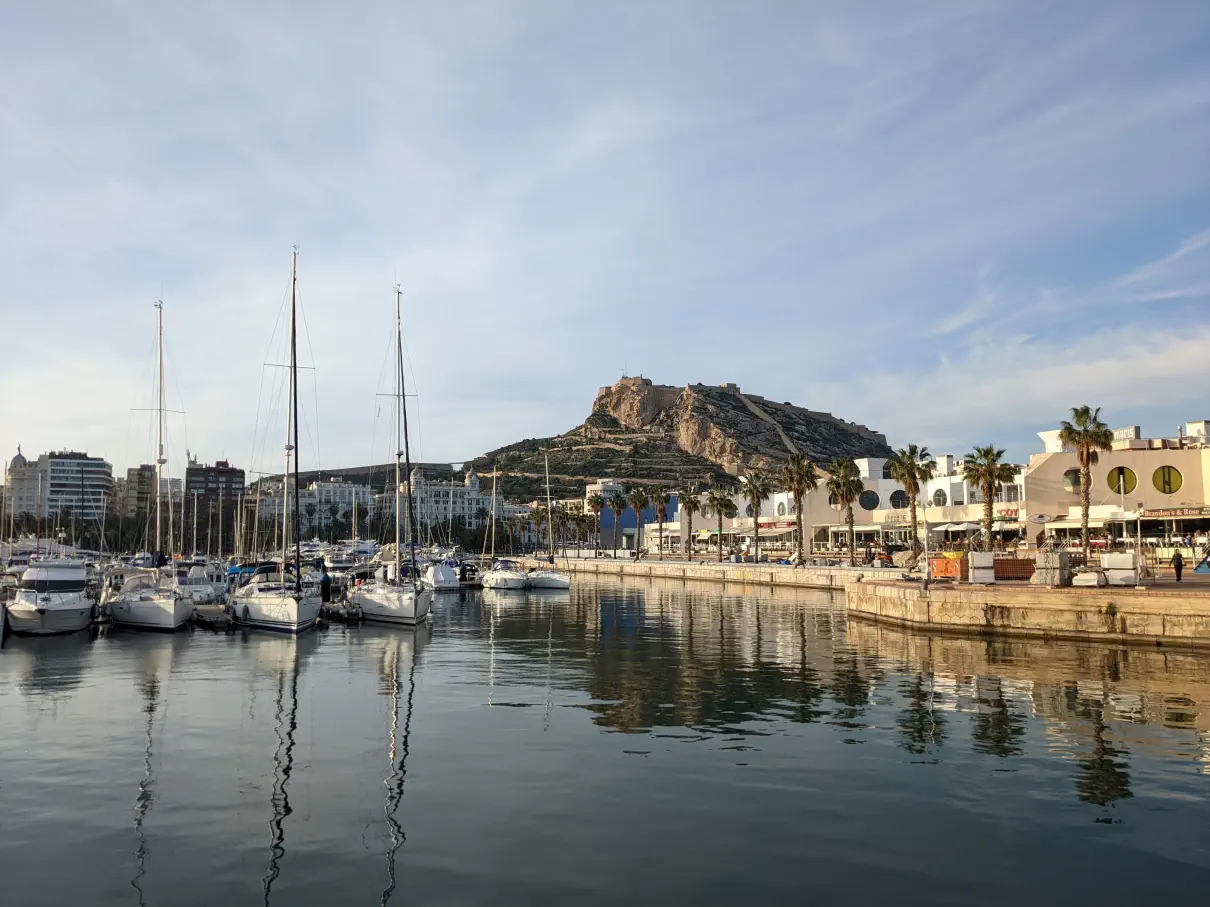
Before I moved to Alicante, I used to live in Barcelona and Valencia, but those cities, despite having great pedestrian roads, always felt like I very often needed a taxi or a subway to move around the city. One of the things I love about Alicante is that it very walkable. Everything that you might want or need on a vacation is less than a kilometer or a two away: a beach, old town, tons of great bars and restaurants, cozy plazas (squares), a mercado (market place), a castle with great views.. Alicante often uses the phrase “City&Beach” to promote itself, and not for nothing.
Deciding where to stay in Alicante depends on your priorities – beach access, nightlife, or authentic Spanish atmosphere. The compact coastal city features distinct neighborhoods, each with different advantages. You can walk from the medieval old town to central Playa del Postiguet in just 10 minutes, making location less critical than in larger cities.
| Neighborhood | Best For | Price Level | Distance to Beach |
|---|---|---|---|
| Old Town (Barrio) | Culture & nightlife | Budget to Mid-range | 10-minute walk |
| Playa del Postiguet | Beach lovers | Mid-range to Luxury | On beach |
| Rambla Méndez Núñez | Central location | Mid-range | 5-minute walk |
| Puerto (Marina) | Nightlife & dining | Mid-range | Waterfront |
| San Juan Beach | Families & space | Mid-range to Luxury | On beach |
Where to Stay in Alicante by Neighborhood: Best Districts by Interest Type
Old Town (Barrio) – Our Top Pick
The Old Town is really two neighborhoods stacked on top of each other. Up the hill, Santa Cruz wraps around the slopes of Mount Benacantil beneath Santa Barbara Castle. Whitewashed houses line cobbled alleys so narrow you could literally touch both walls. It’s quiet during the day, almost village-like, with flower pots spilling off balconies.
Below, El Barrio is a different story. This is where Alicante goes out. The bars and tapas joints along its pedestrian streets don’t really get going until 11pm, and the music (salsa, jazz, whatever’s on) keeps running until early morning. If you’re a light sleeper, book on the Santa Cruz side and walk down when you want the action.
The historic center delivers the most authentic Alicante experience. Stay here to walk to Santa Bárbara Castle in 15 minutes, explore narrow medieval streets, and access the city’s best (tapas) bars along Calle Castaños. The neighborhood buzzes with energy – If you feel like partying you could check out bars like Havana Barrio or Havana in Calle Castaño which is technically just outside the Old Town. If you feel like having a quiet cocktail I personally recommend The Whisper Cocktail Company which is just on the other side of la Rambla.
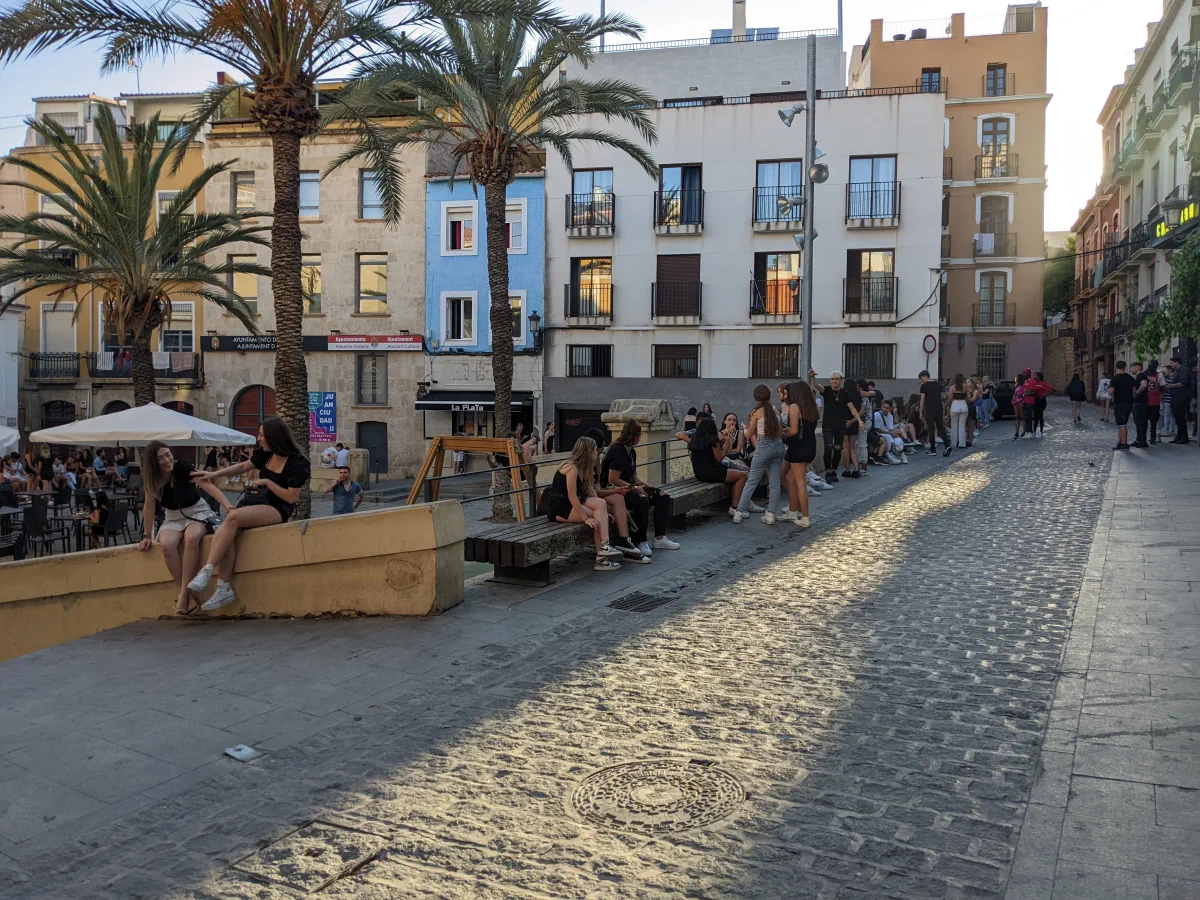
You’ll also find some great lunch options here, with menú del día meals for 12-15€ at local restaurants. This central location puts you walking distance to all the top attractions and experiences in Alicante.
One word of caution: I would strongly suggest checking if there any any carnevals happening while you are in Alicante, as they are typically VERY loud, and can last until the wee hours. Just last weekend 20-21st of February, Plaza del Carmen in the old town had bands starting to play at 10pm, and finishing after 4am.. If that is the case, I suggest booking a hotel in the downtown area, preferably away from any square or la Rambla.
The area, like all the most popular ones, is safe, though if you really want to play it safe, stick to main streets after midnight especially if you’ve had a few cervezas or sangrias. Unlike in Barcelona, I have never had any safety issues in Alicante.
Alicante only has a few rooftop bars, and my favourite is on top of the La Milagrosa Bed & Breakfast. So, if you want to enjoy a quiet evening cocktail or a morning coffee on a terrace, this is a great option. As their name suggests, it’s also a hotel that is located in a beautifully restored building and the location is much, much quieter than a couple hundred meters further in the heart of the old town. Highly recommended.
Rambla Méndez Núñez – Best Central Base
Most first time visitors end up here, and I can’t argue against it. This tree-lined avenue runs straight through Alicante’s heart, connecting the central market (mercado) and a tram stop (also called Mercado) to the marina. Hotels here, like Alicante Gran Sol (mid-range pricing), provide easy access to both business and tourist districts. They also have a restaurant with amazing views on the 26th floor. I’ve been there quite a few times and the prices are still very reasonable for a place like this. Just check out these views..
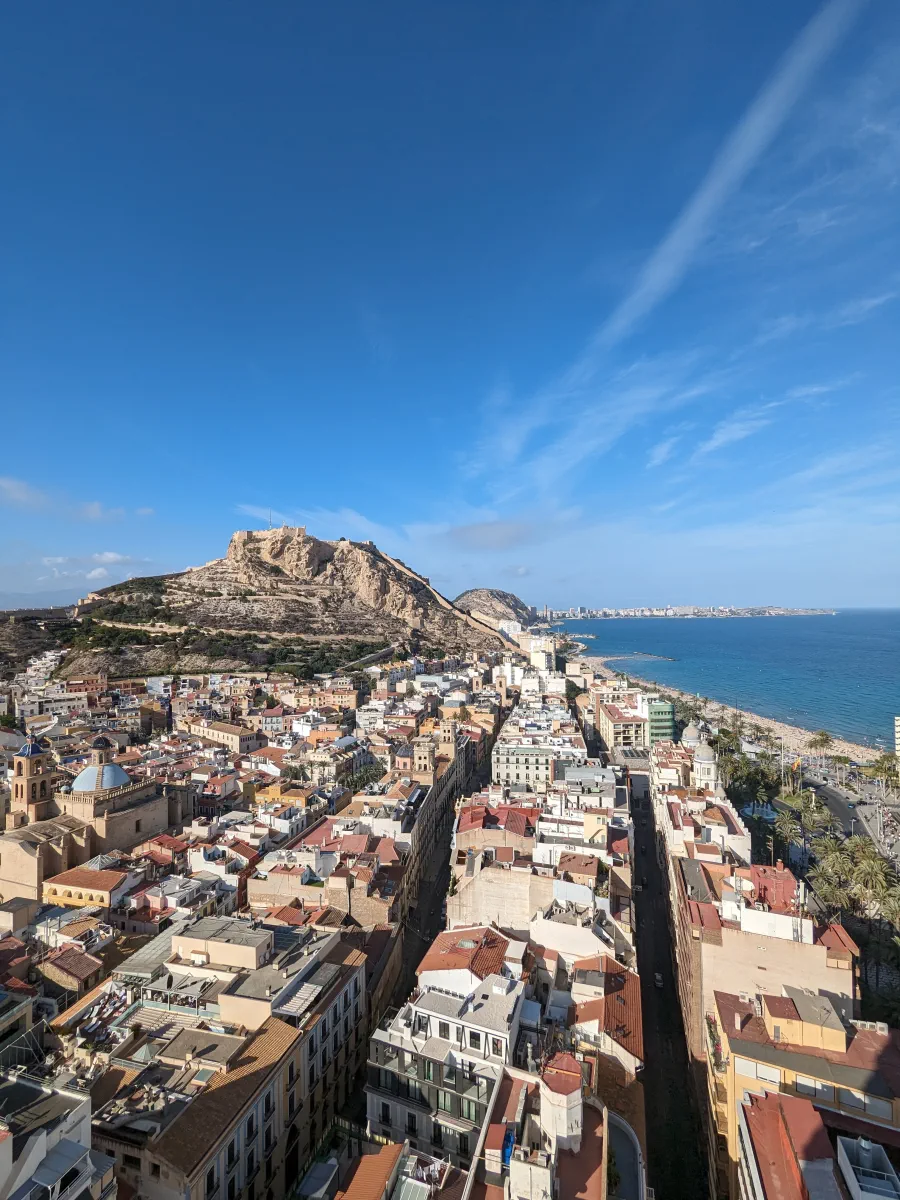
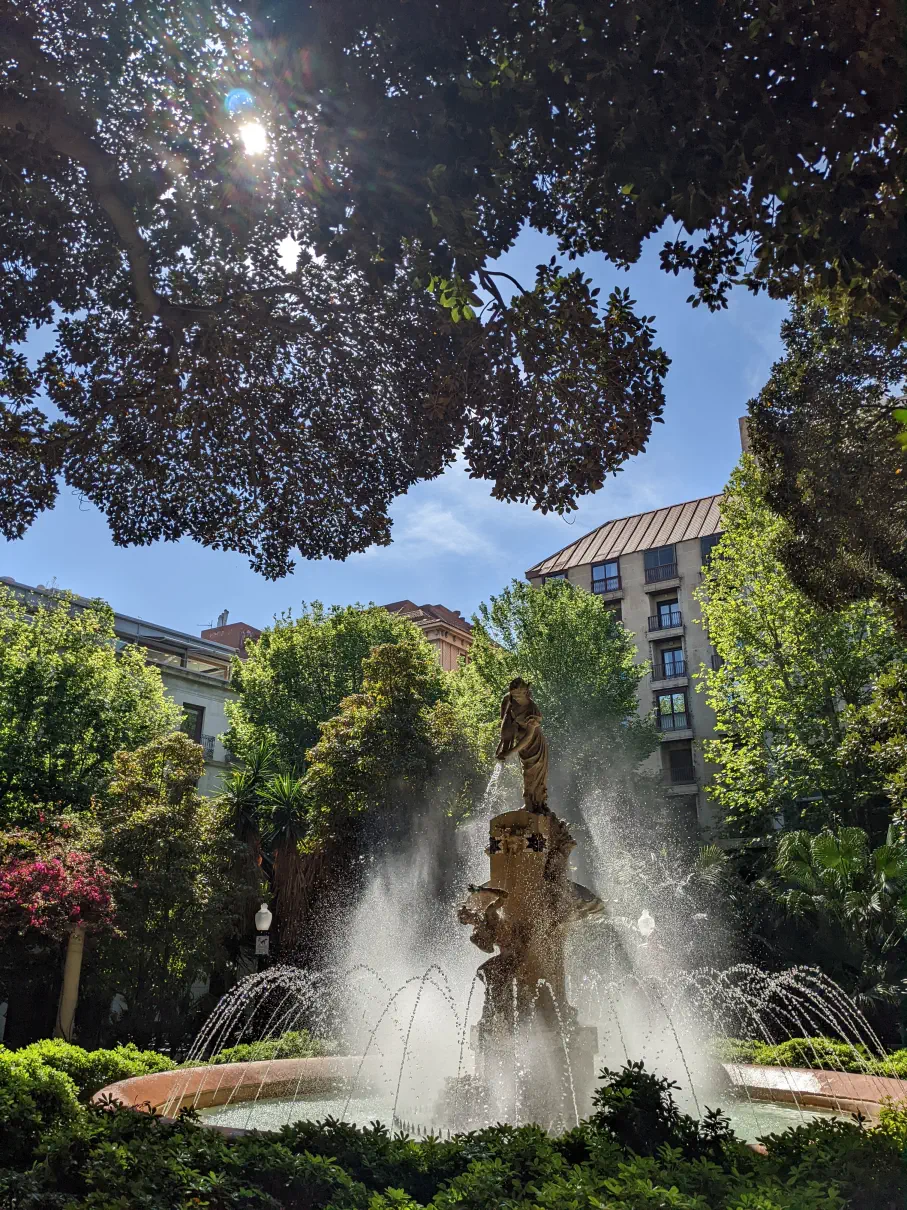
The location works perfectly for day trips – the tram sits at one end, while buses to the airport stop nearby. You’ll pay slightly more than the old town but gain modern amenities and proximity to major sights such as the Explanada in the image above. And the high floors mean that you are further away from the party goers which should help you sleep better.
Puerto (Marina) – Skip Unless You Love Late Nights
The eastern marina district transforms after dark into Alicante’s party central. Clubs around Casino Mediterráneo stay open until 6am, making this area either perfect or terrible depending on your sleep schedule. I’ve only enjoyed a late night there a couple of times, but the noise levels from drunken Spaniards and tourists were quite impressive.
If you really want to stay in Melia or one of the other hotels in that area I would reacommend ensuring that you will at least get a room on the beach (north) side of the hotel.
Like I said, noise concerns arise here late at night, especially near dawn when the party goers start going home singing (the Spaniards love singing, even at night..). Most tourists find better value and safety in other neighborhoods, though the waterfront dining especially during the sunset hours is a beautiful experience, especially if you are traveling with your special one.
Best Beachfront Hotels and Resorts Where to Stay in Alicante
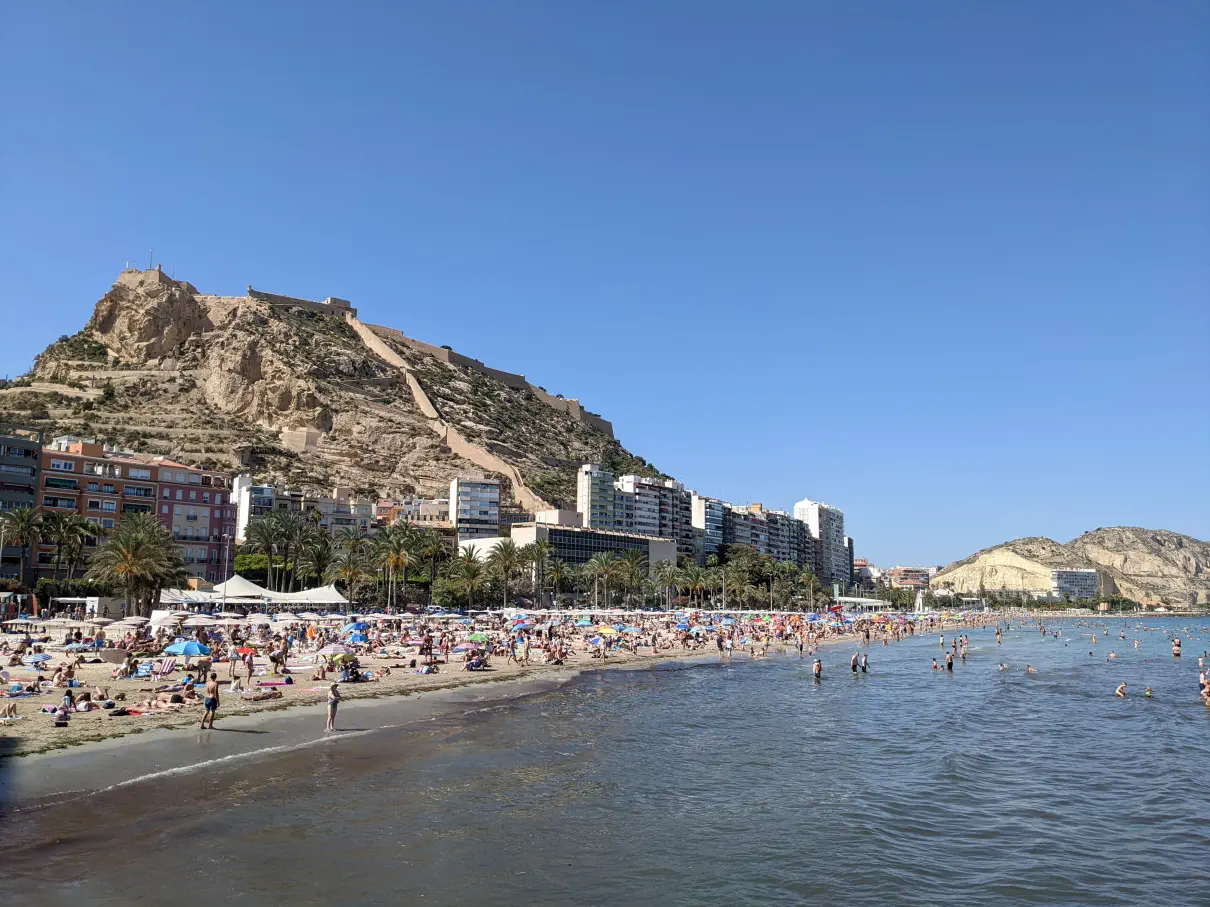
Alicante’s coastline features two distinct beach experiences. Playa del Postiguet sits in the city center, while San Juan Beach stretches northeast with more space and family-friendly resorts.
Central Beach Hotels (Playa del Postiguet)
Properties directly facing this urban beach charge premium rates but deliver unbeatable convenience. You can grab morning coffee, spend the day on sand, then walk to dinner in the old town – all within a 10-minute radius.
The beach spans just 900 meters, so it fills up quickly in summer. However, the city maintains it impeccably with regular cleaning, lifeguards, and shower facilities. Hotels here typically feature sea-view rooms (expect to pay 30-40% more) and standard city-view options.
If you’re planning a broader Spanish coastal adventure, consider how Alicante connects to other destinations. The city makes an excellent base compared to Valencia’s larger urban environment when you want both beach relaxation and historic charm. For advance hotel bookings, platforms like Booking.com and GetYourGuide frequently list package deals that combine accommodation with attraction tickets.
San Juan Beach Resort Area
This 7-kilometer stretch northeast of the city center provides a more relaxed beach experience. The wide sandy beach has space even in peak season, with the tram lines 1&3 providing easy connections to downtown Alicante in 20 minutes. As always, use Google Maps for the timeslines. The local app is a frustrating experience.
The neighborhood around it feels more residential than touristy, and I also live around here. Locals come here for weekend paella at the beachfront restaurants, and the chiringuitos (beach bars) stay lively through summer evenings. The first one looks like it’s ready to open late March as I am updating this article! There’s surfing, kayaking, and jet skiing if you want it, and the southern end near Playa de las Huertas has some of the clearest water along this stretch of coast.
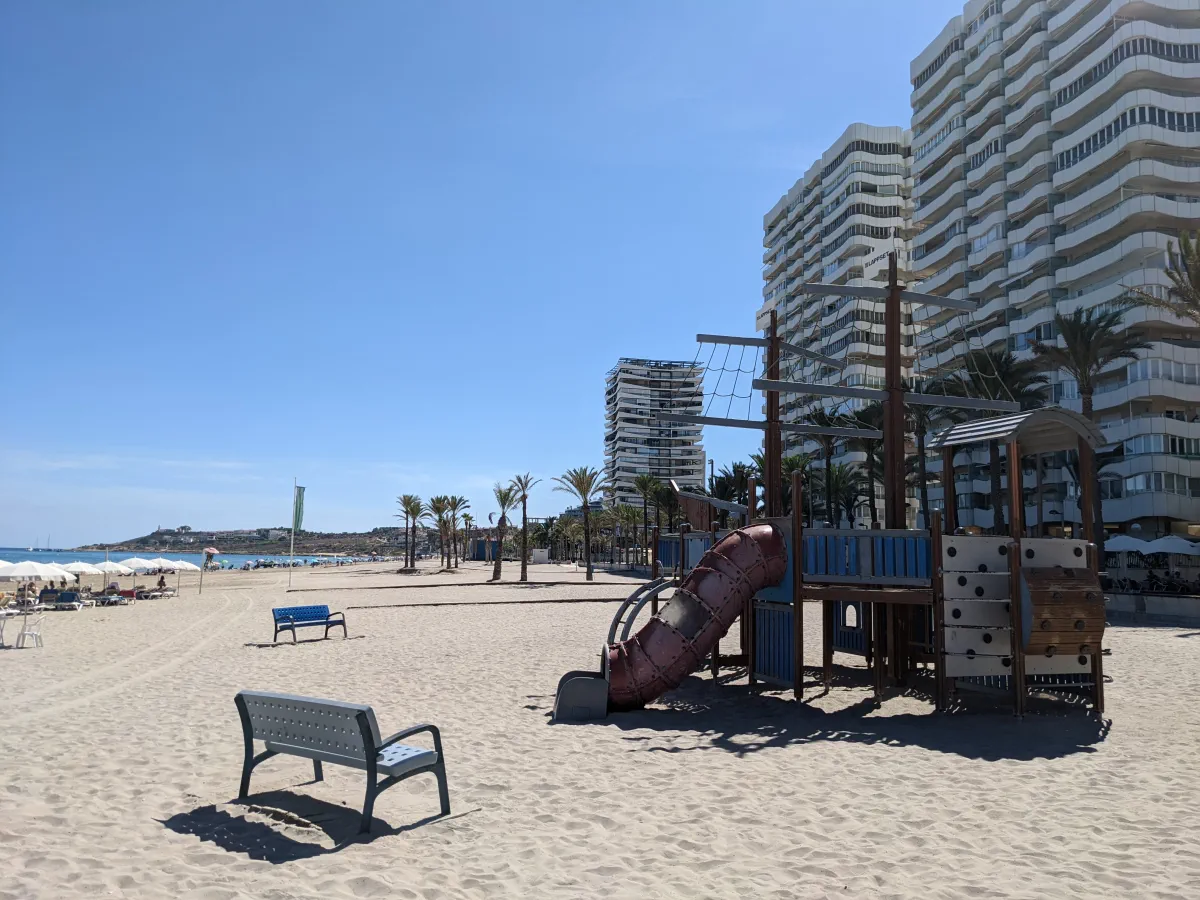
Family resorts dominate this area, featuring pools, kids’ clubs, and all-inclusive options. The beachfront promenade lined with restaurants and cafes creates a self-contained vacation environment. Tourist Information maintains a seasonal office here (July-August) at Avda de Niza.
For me, the San Juan beach (Playa de San Juan) is the best beach next to ANY Spanish city. And yes, I did think so before moving to the area as well:)
La Albufereta
A small, sheltered cove about 400 meters long, tucked between the city center and Playa de San Juan. The Cabo de Huertas headland blocks most of the waves, which means calm, shallow water that barely reaches your knees for the first several meters. Kids can splash around safely. Adults can snorkel along the rocky edges.
This is a neighborhood, not a resort zone. Accommodation is mostly apartments and holiday rentals at mid-range prices, and the area is quiet enough that you’ll hear the sea at night. The center is about five minutes away by car or tram, so you’re not isolated. But if nightlife or restaurant variety matters to you, this isn’t the spot. It’s a base for people who want a calm beach and an early bedtime.
Where to Stay in Alicante Near the Airport: Convenient Accommodation Options
Alicante Airport sits 12 kilometers south of the city center. While most visitors prefer staying downtown, airport proximity makes sense for very early flights or short stopovers.
Bus C6 runs 24/7 between the airport and city center, taking 20 minutes at budget-friendly rates. The service departs every 15 minutes (not 20 mins as it says on quite a few websites), stopping at major points including the train station, central market, and Plaza Luceros before returning to the airport.
Taxi service to downtown costs about 20-25€, making the bus economical especially if you are traveling alone. Families with luggage often find taxis worthwhile, especially late at night when dragging suitcases through the city becomes cumbersome. Note that starting in 2025 you can order an Uber or a Cabify to the same floor as the taxis.
Few hotels operate directly at the airport, so “airport hotels” typically mean properties in nearby Elche or along the coastal road. These provide free shuttle services but limit your dining and entertainment options compared to staying in Alicante proper. For the most current shuttle schedules and availability, check Booking.com, Viator, or contact hotels directly.
Budget-Friendly Where to Stay in Alicante: Hostels and Affordable Hotels
Alicante’s budget accommodation scene centers on the old town, where historic buildings house affordable guesthouses and the city’s only true backpacker hostel.
Best Budget Choice: X Hostel Alicante
Located on Carrer del Tucuman, this remains Alicante’s only dedicated backpacker hostel. Dormitory beds start around €17, including free breakfast and Wi-Fi. The rooftop terrace provides space to meet other travelers, while the guest kitchen helps cut food costs.
The hostel maintains cleanliness and security standards above typical Spanish budget accommodations. Its location in the old town puts you walking distance to major sights and the city’s cheapest restaurants.
Budget Hotels Worth Considering
Hotel San Remo on Calle Navas features budget-friendly doubles with free Wi-Fi and non-smoking rooms. The location near the central market provides authentic local atmosphere and easy access to fresh produce for self-catering.
La Milagrosa Bed & Breakfast bridges budget and mid-range categories. The thoroughly renovated rooms, rooftop terrace, and kitchen facilities justify the slight premium over basic hotels.
Budget travelers should consider timing carefully. During Spain’s peak summer season, even budget accommodations increase rates significantly, making shoulder seasons more economical. Klook and similar platforms sometimes list last-minute hostel deals during quieter periods.
Luxury Accommodations Where to Stay in Alicante: Premium Hotels and Resorts
Alicante’s luxury scene focuses on historic properties and beachfront locations rather than international chain resorts.
Hotel Hospes Amérigo – Top Luxury Pick
This converted 16th-century Dominican monastery on Calle Rafael Altamira represents Alicante’s most distinctive luxury accommodation. The property includes an outdoor pool, sauna, fitness center, and restaurant within beautifully preserved religious architecture.
The location in the old town provides authentic atmosphere while maintaining luxury amenities. Rooms blend historic details with modern comfort – think exposed stone walls with marble bathrooms.
Free Wi-Fi throughout and private parking address practical needs without compromising the historic ambiance. The on-site restaurant serves regional cuisine in what once housed monks’ dining halls.
Other Premium Options
The earlier mentioned Alicante Gran Sol on Rambla Méndez Núñez delivers modern luxury in a central location with fitness facilities and private parking. While less historically significant than Hospes Amérigo, it provides contemporary comfort with easy access to the beautiful Explanada.
Beachfront luxury properties command higher rates, especially during summer months when sea-view suites reach premium pricing. These hotels focus on resort amenities – pools, spas, and direct beach access – rather than historic charm.
Where to Stay in Alicante During Different Seasons: Climate and Temperature Considerations
Alicante’s Mediterranean climate might actually change how you want to think about your booking. Understanding seasonal weather helps choose the right neighborhood and hotel type for your visit.
October and November
Alicante temperature in October (my favourite month of the year in Alicante btw.) averages 20°C (68°F), making it ideal for combining beach time with city exploration. Hotels maintain summer rates through early October, then prices drop significantly by November when Alicante temperatures cool to 16°C (61°F).
This shoulder season provides the best value – warm enough for terraces and outdoor dining, cool enough to climb Santa Bárbara Castle comfortably. Beach hotels remain open but start reducing services like poolside bars. Sea water is still around 20-21°C as well.
December and January
Alicante temperature in December averages 13°C (55°F), while Alicante temperature in January drops to 11°C (52°F). Beach accommodations feature their lowest rates, though many beachfront restaurants close until March. Focus on old town hotels where indoor attractions, museums, and covered markets provide entertainment regardless of weather.
Room heating becomes important during these months. When booking winter stays, verify heating availability directly with properties to ensure comfort during cooler Alicante temperatures.
Summer Peak Season
July and August see Alicante temperatures reaching 30°C (86°F) with minimal rainfall. Every accommodation type increases rates by 50-100%, especially beachfront properties. Book well in advance and expect crowds at all major attractions.
Air conditioning becomes essential during these months. Even budget hostels typically include AC in their rates, recognizing that guests need climate control in Mediterranean summer heat.
How to Choose the Right Area
No car: Stick to the city center or Old Town. Everything is walkable. Playa de San Juan works too, but you’ll depend on the tram (frequent, cheap, but adds 20-30 minutes each way).
Beach vs. old town: If your priority is sand and water, Playa de San Juan or La Albufereta. If you’d rather walk cobblestone streets and eat tapas at midnight, the Old Town. Want both? The city center splits the difference, with Postiguet beach a short walk east.
Families: Playa de San Juan for older kids who want space to run, La Albufereta for toddlers and young children who need calm, shallow water. Avoid the Old Town (steep streets, nightlife noise).
Couples: Santa Cruz in the Old Town for atmosphere, or the city center for walkable restaurants and the Explanada at sunset.
Budget travelers: Old Town guesthouses or Playa de San Juan apartments. Book in shoulder season for the best balance of price and weather.
How I Selected These Accommodations
My recommendations combine verified guest experiences and practical considerations for different traveler types. Because I live in Alicante, I haven’t personally stayed in any of these hotels.
We prioritized neighborhoods based on safety data available through local tourism sources, accessibility to major attractions, and transportation connections. The old town consistently ranks highest for authentic experiences and walkability, while beachfront areas excel for leisure-focused stays.
Price ranges reflect 2026 rates during mid-season months (April-May, September-October). Summer rates typically increase 50-100%, while winter rates drop 20-30% from quoted prices.
How to Book Your Alicante Accommodation
Specialized platforms often provide better rates than direct booking.
High season (June-September) requires advance booking, especially for beachfront properties and the limited luxury options. Shoulder seasons allow more flexibility, but popular properties like Hotel Hospes Amérigo maintain high occupancy year-round.
I tend to check the options first from Booking.com as I like their map and filters better than on the other sites, and when I find a good option for me, I check that hotel on the other platforms to find the best price. Note that quite a few of those platforms offer cheaper “mobile only”. Why they have made booking with a computer more expensive, I do not know.
Frequently Asked Questions About Where to Stay in Alicante
What is the best area to stay in Alicante?
The old town (Barrio) delivers the best overall experience, combining authentic atmosphere with walking access to major sights. You’re 10 minutes away from the beach, 5 minutes to the best restaurants, and can climb to Santa Bárbara Castle without transportation.
Is it better to stay near the beach or city center?
Stay in the city center unless beaches are your primary focus. Alicante’s compact size means you can walk to Playa del Postiguet in 10 minutes, but staying centrally provides access to culture, dining, and nightlife that beach areas have less of.
What neighborhoods should I avoid in Alicante?
Northern neighborhoods like Campoamor and Virgen del Remedio have poor reputations among locals but feature no tourist attractions anyway. The marina’s party district (Puerto) requires caution after 2am.
How far is the airport from main accommodations?
Alicante Airport sits 12 kilometers south of the city center. Bus C6 takes 20 minutes to reach downtown hotels, running 24/7 every 15 to 30 minutes depending on the time of the day. Taxi service falls in the mid-range cost category and takes about 15 minutes depending on traffic.
Do I need air conditioning in my hotel room?
Air conditioning is essential June through September when temperatures exceed 28°C (82°F). Most accommodations include AC in their rates during summer months. Spring and fall visits can manage with fans, while winter stays require heating rather than cooling.
Can I walk everywhere from my hotel in Alicante?
Yes, if you stay in the old town or near Rambla Méndez Núñez. Major attractions, restaurants, and Playa del Postiguet all fall within a 15-minute walk of these central areas. Only San Juan Beach requires transportation – the trams 1&3 take 20 minutes from downtown (Mercado or Luceros stops).
What’s the best time to visit based on hotel prices?
November through March features the lowest rates, with hotels discounting 20-30% below peak prices. April-May and October provide the best weather-to-price ratio. Avoid July-August unless you book months ahead and accept premium rates.
Are there family-friendly hotels in Alicante?
San Juan Beach area specializes in family resorts with pools, kids’ clubs, and spacious rooms. In the city center, properties like La Milagrosa feature apartment-style accommodations sleeping up to 6 people.