
Where to Stay in Mallorca: 6 Best Areas by Trip Type
Where to Stay in Mallorca: Quick Answer
The best area depends entirely on what kind of trip you’re planning, but here’s the short version. Figuring out where to stay in Mallorca comes down to matching your travel style to the right corner of the island. Palma is the most versatile base – culture, restaurants, and no car needed. Sóller is the pick for hikers and mountain lovers. Alcúdia wins for families with young kids. Deià is where couples go to splurge. Cala d’Or and the east coast deliver the best beach-hopping. And Magaluf is still the nightlife capital, though it’s mellowed in recent years.
If you had to pick one base for a first trip? Palma. It’s the easiest launch pad for everything, and you won’t feel stranded if the weather turns.
Palma de Mallorca – Best for First-Timers and City Lovers
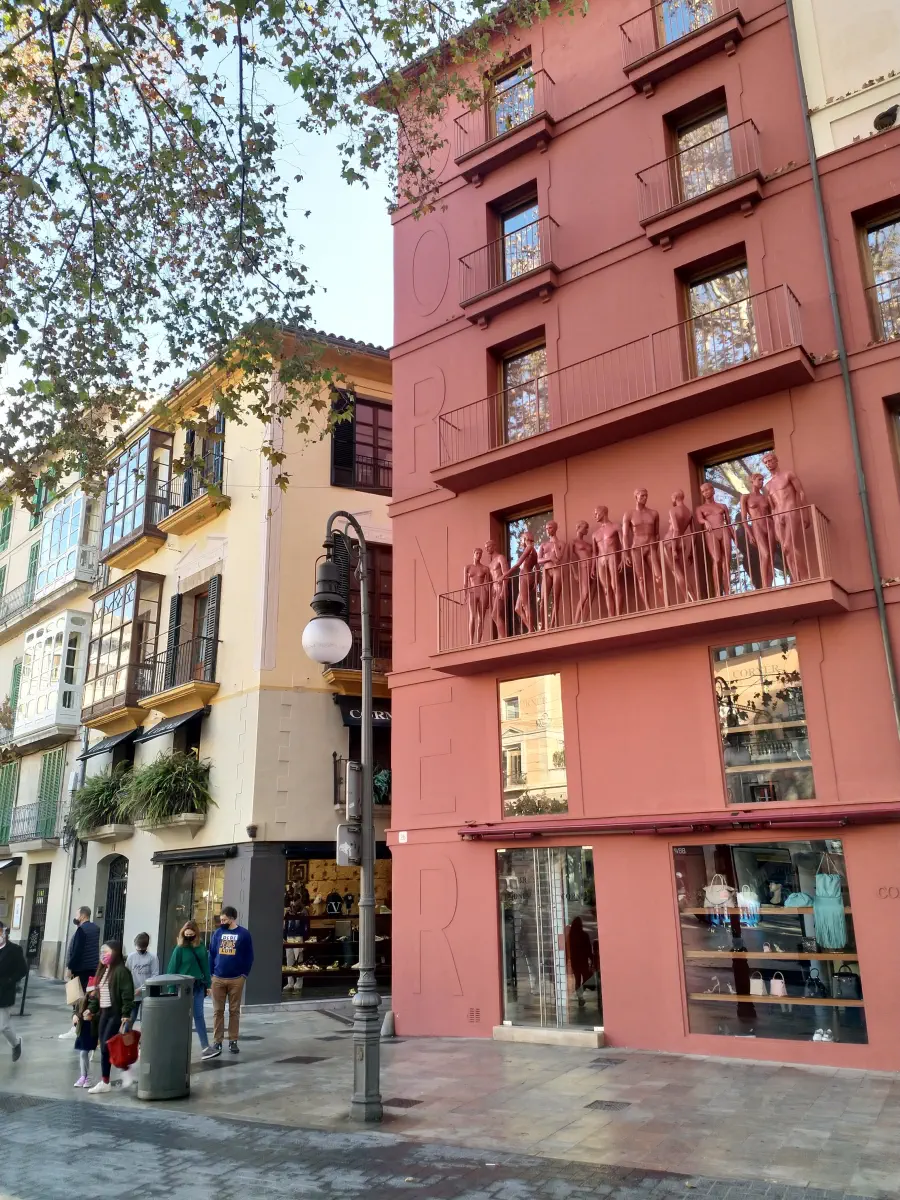
Palma is the capital, the cultural hub, and the only place on Mallorca that feels like a proper city. The Gothic cathedral dominates the waterfront, the Old Town is a maze of narrow streets with late-night tapas bars, and the restaurant scene has exploded over the past decade. It’s also just 15 minutes from the airport, which matters more than you think after a delayed flight.
Two neighborhoods to know: Santa Catalina is Palma’s foodie district, packed with wine bars and small-plate spots along Carrer de Fàbrica. The Old Town (Casco Antiguo) puts you within walking distance of the cathedral, the Arab Baths, and the Plaça Major. Both are walkable. Neither requires a car.
Hotels here span every budget. Hostels sit at the low end, converted townhouse boutiques at the higher end, and plenty of mid-range options fill the gap. Palma has the widest range of accommodation on the island at every price tier. It also connects to the rest of Mallorca by bus and train, so if you only want one base for a week-long trip, this is the safest bet.
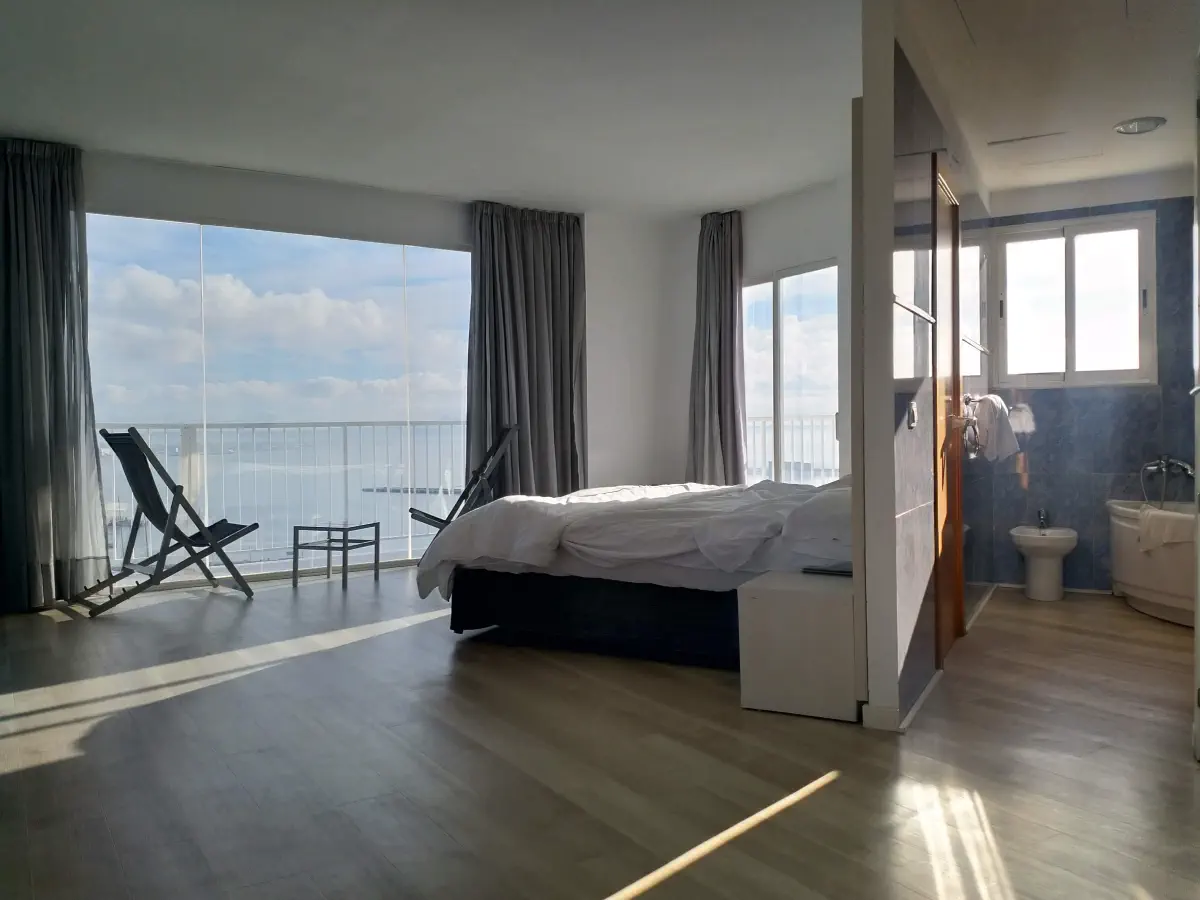
When I arrived to Palma late at night a friendly portier upgraded my room and I got this stunning huge room with incredible views to the city and to Puerto de Palma. The bath was an incredible luxury after a looong trip from Barcelona 🙂
Sóller and the Serra de Tramuntana – Best for Nature and Hiking
About 30 minutes north of Palma by car (or a memorable ride on the vintage wooden train built in 1912), the Sóller valley sits in the middle of the Serra de Tramuntana, a UNESCO World Heritage mountain range that runs along Mallorca’s northwest coast.
This is where the island looks nothing like a beach resort. Stone villages cling to terraced hillsides, orange groves fill the valley floor, and the GR221 long-distance trail passes through on its way between Andratx and Pollença. Day hikes range between easy coastal walks around Port de Sóller and serious ridge scrambles above 1,000 meters.
Accommodation here skews toward boutique fincas and agrotourism stays in converted farmhouses, so expect mid-range to higher pricing. A rental car helps, though the Sóller train and tram combo works fine if you’re based in the valley and doing day hikes. Port de Sóller adds a small beach and seafood restaurants to the equation if you want both mountain and coast.
Alcúdia and Pollença – Best for Families
Mallorca’s northern tip is family territory. Alcúdia beach stretches for several kilometers with shallow, calm water that barely reaches an adult’s knees for the first 50 meters. Parents with toddlers gravitate here for a reason. Behind the beach, the walled Old Town has ice cream shops, a Tuesday market, and enough cobblestone atmosphere to keep adults from going stir-crazy.
Port de Pollença sits around the bay, quieter and slightly more upscale. The seafront promenade is flat and stroller-friendly, and it’s the jumping-off point for drives to Cap de Formentor, where the road winds along clifftops to a lighthouse at the island’s northernmost point. Pollença town (inland) hosts a Sunday market worth the short drive.
Family-friendly aparthotels and resorts cluster along the Alcúdia strip, mostly in the budget-to-mid-range bracket. You’ll want a rental car to explore beyond the immediate area, but day-to-day beach life works fine on foot. The bus connection to Palma exists but takes over an hour.
Deià and Valldemossa – Best for Couples
If you’re deciding where to stay in Mallorca with your special one, these two hilltop villages in the Tramuntana are the answer. They’re expensive, they’re small, and they’re worth it.
Deià has attracted artists, writers, and musicians since Robert Graves settled here in the 1930s. The village tumbles down a hillside above Cala Deià, a rocky cove reached by a steep 20-minute walk. Restaurants are excellent and intimate. The whole place has a creative, unhurried energy that’s hard to replicate elsewhere on the island.
Valldemossa, ten minutes south, trades the bohemian edge for cobblestone polish. The Real Cartuja monastery, where Chopin spent a winter composing, draws day-trippers, but they clear out by evening. That’s when Valldemossa is at its best.
These are splurge destinations. Boutique hotels and converted estates here sit firmly in the upper price range, and availability is limited since most properties are small. Visit in May, June, or September to October. July and August bring tour bus crowds and scorching temperatures (it’s the hottest month in Spain territory). A car is essential here.
Cala d’Or and the East Coast – Best for Beaches
The east coast is Mallorca’s cala country. These small, sheltered coves with turquoise water are the postcard image of the Balearic Islands, and the highest concentration sits between Cala d’Or and Cala Millor.
Cala Mondragó (inside a protected natural park) is the standout. Two sandy coves backed by pine forest, no high-rises in sight. Cala d’Or itself is more developed, with a marina, restaurants, and a cluster of small beaches connected by a coastal path. Cala Millor is the most resort-oriented, with a long sandy beach and all-inclusive hotels lining the promenade.
This stretch works well for travelers whose main priority is swimming, snorkeling, and switching beaches daily. Accommodation tends to be more affordable than the west coast, with a good mix of rental apartments and mid-range hotels. A car opens up dozens more calas within a 30-minute drive, and self-catering at a rental apartment is a good way to save money on a Spain holiday.
Magaluf and Palmanova – Best for Nightlife
Let’s be direct: Magaluf is a party town. BCM nightclub is one of the largest in Europe, the main strip is loud, and the demographic skews young. If that’s what you’re after, you’ll have a great time. If it’s not, skip this section entirely.
That said, Magaluf has been undergoing a slow regeneration. New hotels have replaced some of the rougher budget spots, and the beach itself is genuinely good. Palmanova, the next bay over, shares the same coastline but feels like a different world. Calmer, more family-oriented, and still a five-minute taxi from Magaluf’s nightlife.
This is the most budget-friendly part of the island for accommodation. No car needed here. Buses to Palma take about 30 minutes.
When to Visit Mallorca (and How It Affects Where You Stay)
Season changes the equation completely. In July and August, the south and west coasts are packed, prices spike significantly, and anywhere near Palma Beach or Magaluf feels overcrowded. The quieter north (Pollença, Alcúdia) handles peak season better because the beaches are larger.
May to June and September to October are the sweet spot. Prices drop, the sea is warm enough for swimming (at least by late May), and every area on this list is accessible without fighting crowds. This is when Deià and Valldemossa really shine. If you’re flexible on dates, the cheapest time to visit Spain often overlaps with these shoulder months.
Winter (November to March) is a different trip. Palma stays alive year-round with its restaurant and cultural scene. But many coastal resort towns, including much of Cala d’Or and Alcúdia, essentially shut down. Hotels close, restaurants board up. If you’re visiting off-season, base yourself in Palma and treat the rest of the island as day-trip territory. Knowing the best time to go to Spain helps you plan around these closures.
How to Choose the Right Area: Summary Table
Use this quick-reference table to narrow down where to stay in Mallorca based on your priorities.
| Area | Best For | Vibe | Budget Level | Beach Access |
|---|---|---|---|---|
| Palma | First-timers, city lovers | Urban, cultural | All ranges | City beach (10 min) |
| Sóller / Tramuntana | Hiking, nature | Mountain village, quiet | Mid-range to high | Port de Sóller (tram ride) |
| Alcúdia / Pollença | Families | Relaxed, kid-friendly | Budget to mid-range | Long sandy beach, shallow water |
| Deià / Valldemossa | Couples, romance | Artistic, intimate | High / splurge | Rocky cove (steep walk) |
| Cala d’Or / East Coast | Beach lovers | Laid-back coastal | Budget to mid-range | Multiple calas within minutes |
| Magaluf / Palmanova | Nightlife, budget | Party (Magaluf) / calm (Palmanova) | Budget | Large sandy beach |
FAQ – Where to Stay in Mallorca
Is it better to stay in Palma or a resort?
Palma if you want culture, restaurants, and easy transport. A resort town if your priority is beach time and you don’t mind a quieter evening scene. For a first visit, Palma gives you more flexibility.
Do I need a car?
In Palma, no. Everywhere else, strongly recommended. Buses connect major towns but run infrequently, and reaching the best calas on the east coast or trailheads in the Tramuntana without a car is frustrating.
Where should couples stay?
Deià or Valldemossa. Both are small, quiet, and romantic, with excellent restaurants and mountain scenery. Book well ahead for peak season since boutique hotels here have limited rooms.
What’s the cheapest area?
Magaluf and Cala Millor tend to have the lowest nightly rates, especially at all-inclusive resorts. Booking during shoulder season (May or October) drops prices further across the entire island.